Vending Machine Filler Jobs: 2026 Earnings, Duties & Career Guide
Overview of Vending Machine Filler Jobs
Vending machine filler jobs involve transporting inventory, restocking automated retail hardware, retrieving cash collections, and performing field diagnostic maintenance across designated commercial routes. Restockers—also known as route drivers, vending merchandisers, or field restock technicians—operate as the logistical link between warehouse distribution and consumer point-of-sale machines.
The automated retail industry relies on restockers to maintain continuous inventory flow across office buildings, manufacturing plants, hospitals, and transportation hubs. Route merchandisers ensure product availability while managing inventory shrinkage, rotation dates, and hardware sanitation.
┌────────────────────────────────────────────────────────────────────────┐
│                   ROUTE RESTOCKER OPERATIONAL CYCLE                    │
└────────────────────────────────────────────────────────────────────────┘
  1. Warehouse Pre-Kitting ──> 2. Route Driving ──> 3. Machine Restocking
  4. Cash Harvest & DEX    ──> 5. Preventive Maintenance ──> 6. Daily Audit
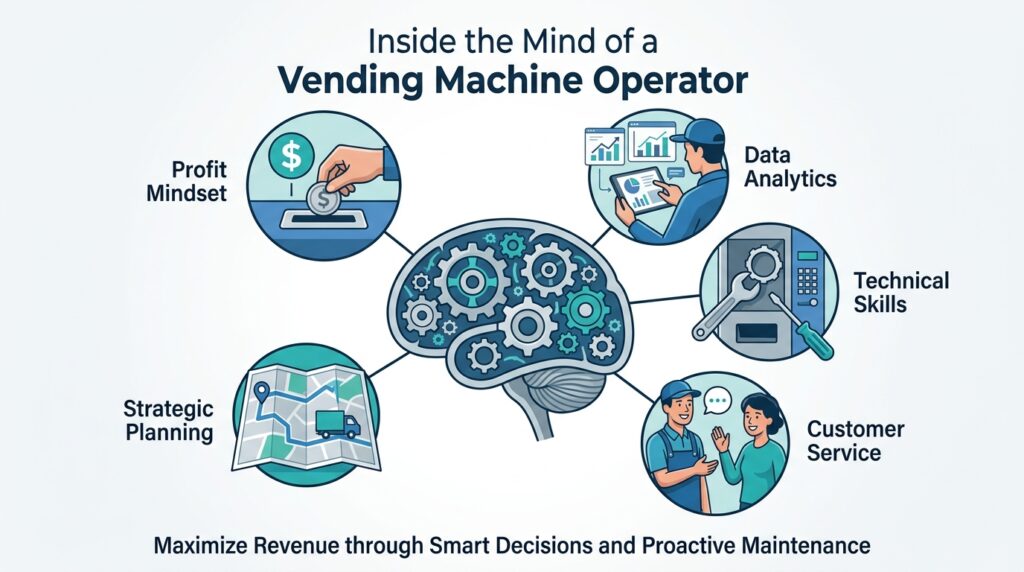
Understanding what is a vending machine operator clarifies how route merchandisers fit into broader commercial logistics frameworks. While independent business owners manage capital allocation and host location acquisition, restockers handle hands-on field operations.
Reviewing what does a vending machine operator do illustrates how daily inventory replenishment directly impacts machine sales velocity. Furthermore, analyzing vending machine operator jobs salary demonstrates the compensation trajectory between entry-level W-2 restockers and senior route managers.
Hourly Wages, Salaries, and Compensation Benchmarks
The average hourly wage for vending machine filler jobs in the United States ranges from $17.50 to $21.50 per hour, yielding an average annual salary of $36,400 to $44,720. Experienced route specialists and senior field technicians with advanced diagnostic skills earn up to $26.50 per hour plus performance bonuses.
National Compensation Tiers for Vending Restockers:
┌────────────────────────────────────────────────────────┐
│ Entry-Level Restocker (0-1 yrs):  $16.00 ── $18.50/hr │
│ Mid-Level Route Driver (2-4 yrs): $18.50 ── $22.00/hr │
│ Senior Route Technician (5+ yrs): $22.00 ── $26.50/hr │
└────────────────────────────────────────────────────────┘
Compensation rates fluctuate based on geographic cost of living, driver license classifications, and specific employer sector requirements. Route workers servicing high-volume industrial complexes or transit centers receive higher hourly pay rates due to rigorous security compliance and dense delivery schedules.
| Geographic Region / Sector | Hourly Pay Range | Annualized Salary Range | Overtime & Bonus Potential |
| West Coast (CA, WA, OR) | $21.00 – $26.50 | $43,680 – $55,120 | High (Daily OT & Performance Bonuses) |
| Northeast (NY, NJ, MA) | $20.00 – $25.00 | $41,600 – $52,000 | Moderate-High (Urban Density Stipends) |
| Midwest (IL, OH, MI) | $17.50 – $21.50 | $36,400 – $44,720 | Standard (1.5x Hourly Over 40 Hrs) |
| South / Sunbelt (TX, FL, GA) | $16.50 – $20.50 | $34,320 – $42,640 | Standard (Route Volume Incentives) |
| Industrial / Energy Facilities | $22.50 – $27.00 | $46,800 – $56,160 | High (Hazard & Security Premium) |
Wage growth accelerates when restockers acquire specialized technical skills. Drivers certified in EPA Section 608 refrigeration handling or trained in automated telemetry board diagnostics command top-tier hourly rates.
Core Duties and Daily Workflows of a Machine Restocker
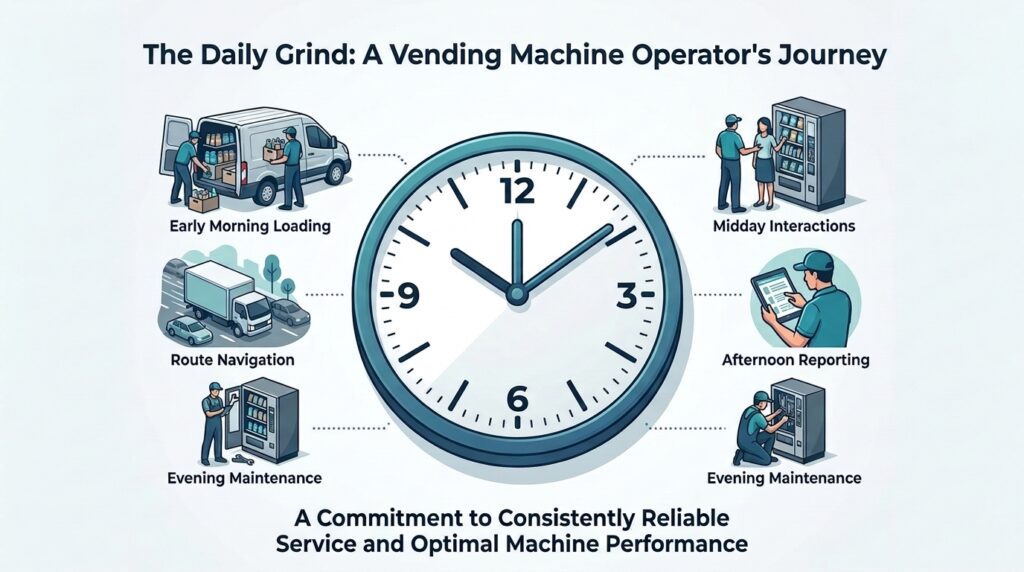
A vending machine filler’s primary operational goal is maintaining 100% product availability across assigned machines while minimizing product expiration and hardware downtime. Restockers execute structured daily workflows to complete 15 to 30 location stops per shift.
┌────────────────────────────────────────────────────────────────────────┐
│                      DAILY RESTOCKER WORKFLOW                          │
└────────────────────────────────────────────────────────────────────────┘
  05:30 AM  ──> Warehouse Inventory Pull & Vehicle Pre-Kitting
  07:00 AM  ──> High-Traffic Location Restocks & FIFO Rotation
  11:30 AM  ──> Field Diagnostic Checks & Cash Box Audits
  02:00 PM  ──> Vehicle Returns, Cash Unloading & Telemetry Logs
Warehouse Pre-Kitting and Inventory Staging
Restockers begin early morning shifts in central warehouses, pulling stock based on automated Data Exchange (DEX) pre-kitting reports. Pre-kitting reduces total vehicle payload because drivers load only the precise items needed to replenish depleted machine coils.
On-Site Coil Restocking and Product Rotation
Upon arriving at client accounts, restockers inspect glass panels, clear delivery bins, and refill coils using First-In, First-Out (FIFO) stock rotation principles. Technicians remove damaged or expiring products and log inventory shrinkage into handheld terminals.
Servicing specialty merchandise demands specialized loading techniques. Restocking a high-margin Pokemon card vending machine requires handling delicate foil packs to prevent dispenser jams. Understanding what are Pokemon vending machines and maintaining a strict schedule for Pokemon vending machines restock ensures valuable collectibles remain protected from mechanical damage and theft.
Cash Harvest, Coin Mechanism Refills, and Meter Audits
Restockers retrieve cash bill stackers and coin canisters during restock cycles. Technicians inspect internal coin tube levels, refill change reserves, and record audit counts using handheld data collection devices. Matching physical cash collections against telemetry meter reads prevents internal accounting discrepancies.
Basic Mechanical Diagnostics and Preventive Maintenance
Field merchandisers troubleshoot bill acceptors, credit card modems, coil motors, and internal refrigeration units. Cleaning dust from refrigeration condenser coils prevents compressor overheating, avoiding costly hardware replacements.
Equipment Types and Technical Operations
Restockers service diverse automated retail hardware, ranging from traditional glass-front snack units to connected smart kiosks and micro-market coolers. Commercial operators source commercial hardware through established manufacturers like VMFS USA to ensure equipment reliability.
┌────────────────────────────────────────────────────────────────────────┐
│                   HARDWARE RESTOCKING COMPLEXITY                       │
└────────────────────────────────────────────────────────────────────────┘
  Traditional Snack Coil  ──> Low Technical Complexity (Coil Alignment)
  Cold Beverage Stack     ──> Moderate Complexity (Heavy Weight Case Loads)
  Smart AI Micro-Cabinet  ──> High Complexity (Optical Sensor Calibration)
  Specialty Retail Kiosk  ──> High Complexity (Robotic Drop Sensors)
Traditional Glass-Front vs. Smart Automated Retail Systems
Traditional snack machines use mechanical spirals and optical drop sensors to confirm product delivery. Modern smart machines use optical camera arrays and weight sensors to enable frictionless grab-and-go transactions.
Restockers managing modern networks must understand what is an AI vending machine to calibrate internal vision sensors during inventory reloads. Reviewing an AI vending machines buyers guide helps technicians master diagnostic codes. Restockers servicing electronics vending machines driving smart cities handle high-value merchandise requiring anti-static loading protocols.
Maintaining Refurbished and Used Machinery
Operators frequently deploy refurbished machines to minimize capital expenditure when opening new routes. Restockers who reference a detailed guide to buy a used vending machine learn to inspect wire harnesses, bill validator alignments, and refrigeration seals to catch hardware failures early.
| Equipment Category | Product Assortment | Servicing Frequency | Technical Maintenance Required |
| Glass-Front Snack Coil | Chips, Candy, Pastries | 1–2 Times Weekly | Basic (Motor Coil Alignment) |
| Cold Beverage Can/Bottle | Sodas, Waters, Energy Drinks | 2–3 Times Weekly | Moderate (Refrigeration & Weight Loading) |
| Smart AI Micro-Cabinet | Fresh Meals, Salads, Dairy | Daily / Alternating Days | High (Optical Sensor Calibration) |
| Specialty Collectible Kiosk | Cards, Tech Accessories | 1–2 Times Monthly | High (Robotic Mechanism Diagnostics) |
Route Planning, Telemetry, and Stocking Mechanics
Modern vending route optimization relies on Internet of Things (IoT) telemetry to streamline driving routes and maximize inventory turnover. Connected hardware transmits real-time sales data to central route control dashboards via cellular modems.
Telemetry integration increases route driving efficiency by 25% because data-driven scheduling eliminates unnecessary truck stops at fully stocked machines.
Telemetry Modems and DEX Protocols
Data Exchange (DEX) protocols allow machine logic boards to communicate directly with handheld route terminals. Telemetry modems transmit live inventory counts, bill validator errors, and internal temperature alerts wirelessly every hour.
Dynamic Routing vs. Static Schedules
Static routes follow fixed weekly calendars, requiring restockers to visit machines regardless of fill levels. Dynamic routing analyzes live inventory velocity to construct daily driving loops based on machines dropping below 40% stock capacity. Drivers consult a smart vending machine locations placement guide to group service calls by location density.
Location Strategy and Account Management
Vending machine restockers act as front-line brand representatives, maintaining relationships with property managers across corporate, healthcare, and industrial accounts.
Servicing High-Density Account Types
Restockers service diverse commercial locations tailored to host property demographics:
- Discover high-traffic placement opportunities via places that need vending machine.
- Service corporate breakrooms using an office corporate vending playbook.
- Manage hotel amenities using a hotels hospitality vending playbook.
- Service entertainment hubs using a specialty venues vending playbook.
Partnering with Property Decision-Makers
Route operators expand their account portfolios by training restockers how to pitch property managers to place vending machines and utilizing cold emailing to win corporate vending accounts. When executing placement contracts, operators audit terms to prevent vending machine placement contract red flags, such as unfeasible commission payouts or restrictive delivery windows.
Transitioning from W-2 Restocker to Independent Route Owner
Working as an employee restocker provides foundational experience in inventory management, route mechanics, and machine maintenance. Restockers can leverage this field expertise to launch independent automated retail businesses.
┌────────────────────────────────────────────────────────────────────────┐
│                  RESTOCKER TO OWNER TRANSITION PATH                    │
└────────────────────────────────────────────────────────────────────────┘
  Step 1: Save $5,000–$10,000 in initial startup capital.
  Step 2: Acquire 2–3 commercial placement contracts.
  Step 3: Purchase refurbished or new commercial vending hardware.
  Step 4: Register a formal business entity for liability protection.
Independent route owners capture full product gross profit margins rather than earning fixed hourly wages. Owning a route enables operators to scale income by adding high-volume placements.
Legal Business Structure, Taxes, and Compliance
Establishing a formal business entity is essential for restockers transitioning into independent route ownership. Proper legal structuring shields personal assets from commercial liabilities, facilitates business banking, and ensures state sales tax compliance.
Operators evaluate several legal business entities based on route size and ownership structure:
- Individuals starting small starter routes often launch as a sole proprietorship.
- Co-founders forming a shared business establish a partnership for a vending machine business or configure a limited partnership.
- Technical partners managing multi-state operations can form an LLP for a vending machine business.
- Most independent route owners choose to form an LLC for a vending machine business to separate personal liability from business operations.
- Operators scaling multi-machine routes structure an LLC for a multi-machine vending business to isolate equipment assets across individual entities.
- Growth enterprises electing pass-through taxation utilize an S-Corporation, while companies seeking institutional investment choose a C-Corporation.
- Non-profit automated retail ventures operate under a nonprofit corporation for vending format.
- Maintaining active state registrations requires appointing an official registered agent for a vending machine business to receive legal notices.
Connecting Property Owners with Qualified Restockers
Commercial property managers require dependable vending restockers to maintain clean, fully stocked breakroom amenities. Property managers researching how to find vending machine operators rely on dedicated operator matching platforms to secure reliable service partners.
Need Reliable Vending Restock Services for Your Property?
Upgrade your property’s breakroom amenities without purchasing hardware or managing inventory:
- List your location (share space details and requirements).
- VPlaced finds and matches qualified operators.
- Compare and connect with interested operators to choose the best fit.
- Get vending setup hassle-free.
Pros and Cons of Vending Machine Restocker Jobs
Vending machine filler jobs offer independent daily schedules, steady pay, and active non-desk work environments. However, the role requires early morning start times and routine physical lifting.
| Career Aspects | Advantages (Pros) | Disadvantages (Cons) |
| Work Environment | High daily autonomy without direct office supervision. | Early morning start times (typically 5:30 AM or 6:00 AM). |
| Physical Activity | Active work environment away from computer screens. | Physical strain from lifting heavy beverage and snack cases. |
| Career Development | Hands-on experience in logistics, IoT telemetry, and field repairs. | Traffic exposure and extended daily driving times. |
| Job Stability | Consistent year-round demand and reliable overtime availability. | Exposure to weather during truck loading and deliveries. |
Frequently Asked Questions
What does a vending machine filler do?
A vending machine filler transports product inventory from warehouses to machine locations, reloads product coils using FIFO rotation, retrieves cash collections, and performs basic preventive hardware maintenance.
How much do vending machine filler jobs pay per hour?
Vending machine fillers earn an average hourly wage between $17.50 and $21.50 per hour in the United States. Experienced route technicians and drivers operating in high-cost metropolitan regions earn up to $26.50 per hour.
Do you need a CDL license for vending machine restocker jobs?
Most vending route delivery vans and medium-duty box trucks fall under 26,000 lbs GVWR, requiring only a standard Class D driver’s license. CDLs are only required for large freight transport vehicles.
What are the typical work hours for a vending machine restocker?
Restockers typically work early morning hours, starting between 5:30 AM and 6:30 AM to complete restocks before client business hours. Standard shifts run 8 to 10 hours per day, 4 to 5 days per week.
What physical requirements are needed for vending machine restocker jobs?
Restockers must be capable of lifting 40 to 50 pounds repeatedly, pushing heavy hand trucks loaded with inventory, and bending or kneeling to reach lower machine coils.
How do vending machine fillers know when a machine needs restocking?
Modern restockers use cellular telemetry modems connected via DEX protocols to view real-time inventory counts on handheld terminals. Automated pre-kitting software tells restockers exactly which items to pack before leaving the warehouse.
What is the difference between a vending machine filler and a technician?
A filler focuses primarily on inventory replenishment, cash harvesting, and basic sanitation. A field service technician handles complex mechanical repairs, logic board replacements, and refrigeration system overhauls.
Can a vending machine filler advance to route owner?
Yes, working as a filler provides practical experience in inventory management, route scheduling, and hardware maintenance. Restockers can transition into route ownership by acquiring capital and securing host location agreements.
How do restockers prevent inventory theft and cash discrepancies?
Restockers use handheld DEX readers to record exact machine transaction totals during every visit. Handheld software cross-references physical cash harvests against digital sales meters to flag discrepancies immediately.
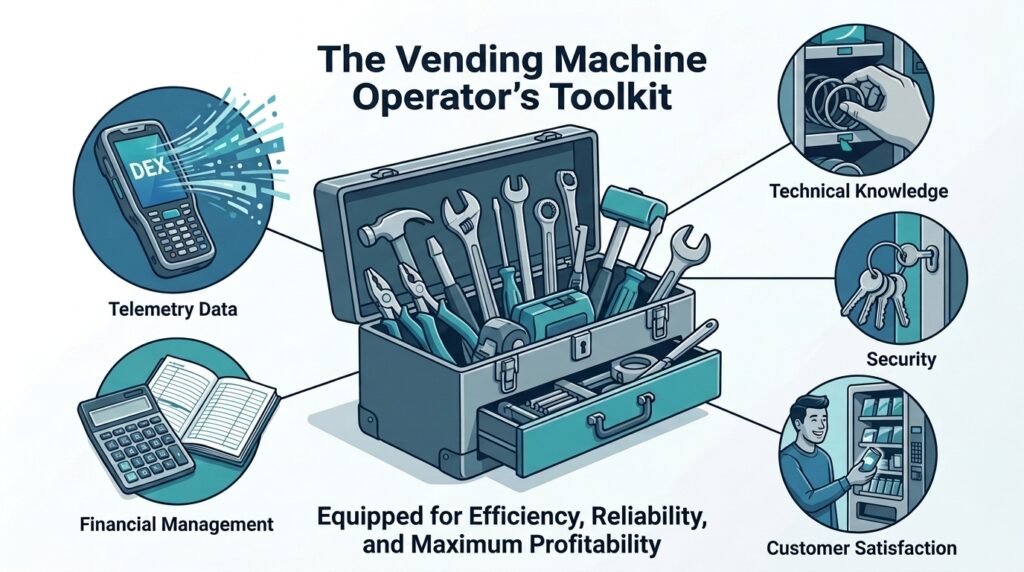
What tools do vending machine fillers use daily?
Restockers use DEX data handhelds, lock keys, coin tube refill bags, hand trucks, basic hand tools (screwdrivers, pliers), cleaning supplies, and multimeter testing devices.