
Marketing & Brand | Branded Vending | By the VMarketed Team | September 2026
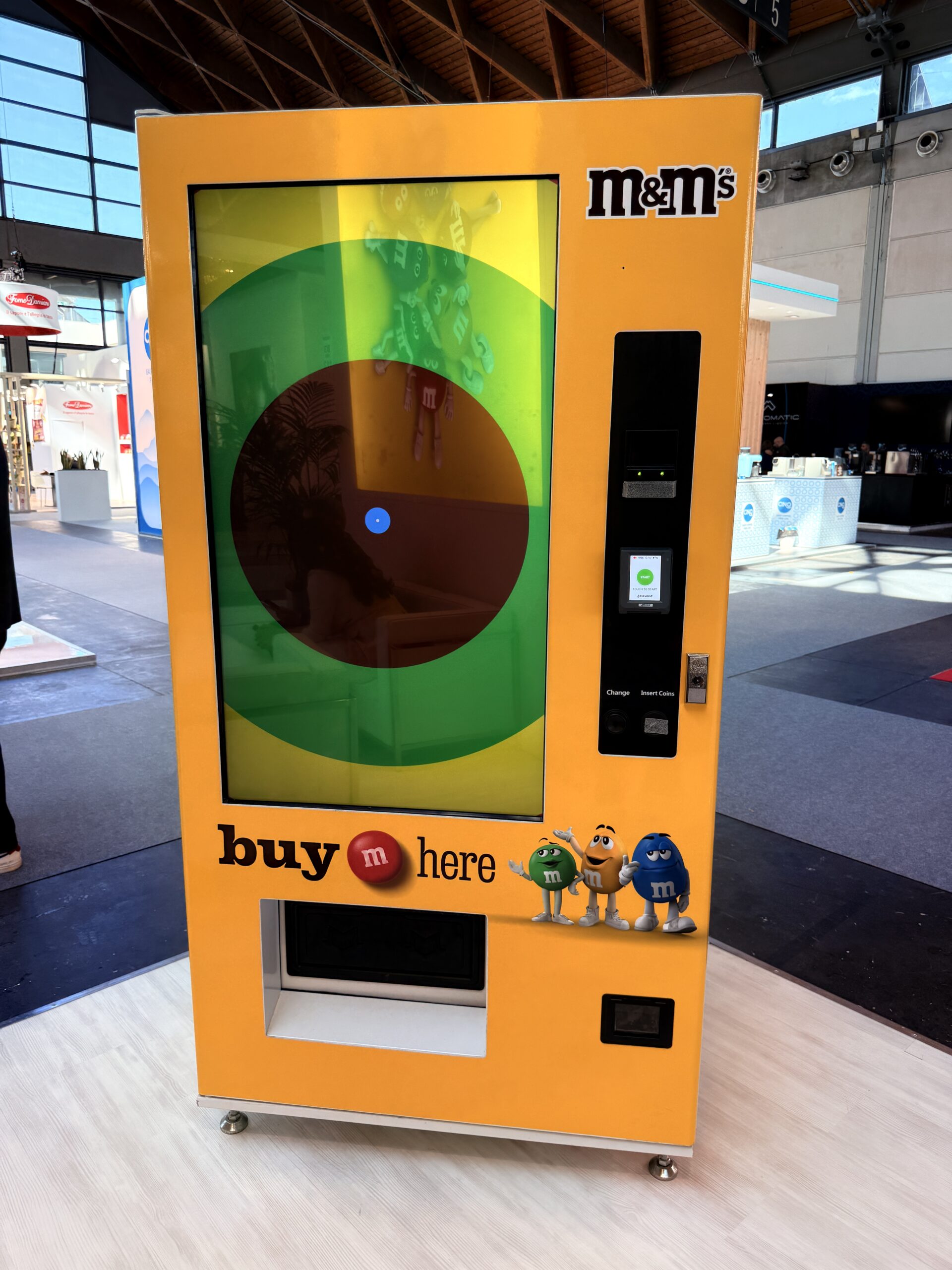
When a brand commissions a machine, almost all of the attention goes to the outside. There are renders, colour approvals, debates about the logo lockup and a photographer booked for the launch. The exterior gets treated as the deliverable, because it looks like the deliverable.
Then somebody asks about the screen two weeks before installation and it gets whatever the manufacturer ships by default.
Which is backwards, and once you see why it is hard to unsee. A customer looks at the outside of your machine for about two seconds and at the screen for the better part of a minute. The exterior gets them to approach. The interface is where they actually spend time with your brand, and it is routinely designed by nobody.
Where this comes from: marketing vending operations is our core business, and branded machines behave differently from operator machines because the machine is a brand asset before it is a revenue line.
Two Seconds Outside, Sixty Seconds In
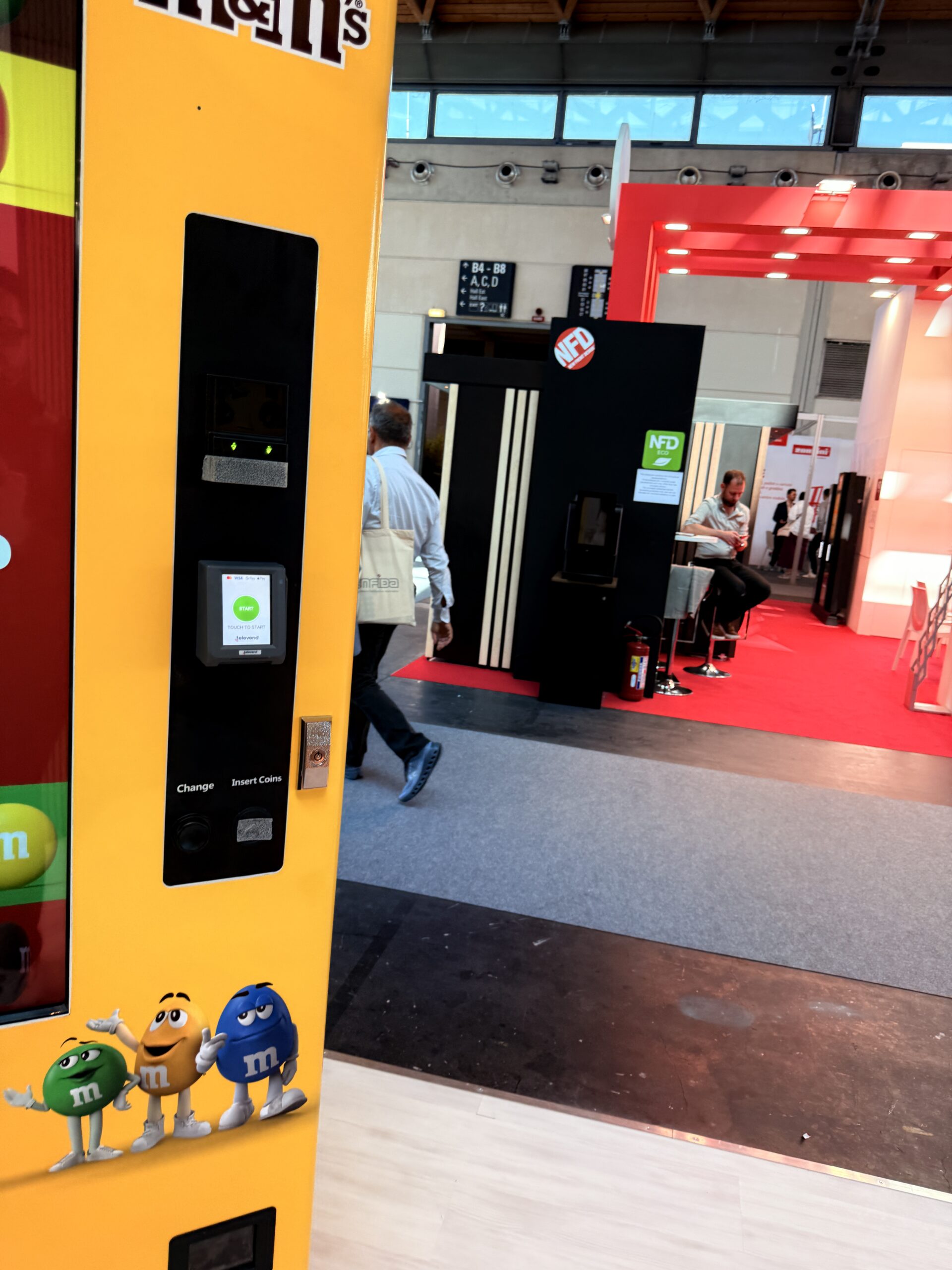
Think about the actual sequence. Somebody walks past, registers a colour and a logo, and decides whether to stop. That is the exterior’s entire job and it takes a moment. Then, if they stop, they browse, compare, select, pay and wait for delivery, which is anywhere from thirty seconds to well over a minute of undivided attention on a screen a few inches from their face.
Brands spend enormous sums buying a few seconds of attention in other media. Here you have a minute of it, from somebody who has already opted in, standing still, with nothing else to look at. And most branded machines fill it with a stock product grid in a typeface the brand does not use.
What the interface should be doing with that minute:
- Look like the brand. Your typeface, your colours, your photography, your tone of voice in the button labels. A default interface on a custom machine is the equivalent of a beautiful shopfront with a cash register from a different company.
- Say something worth reading. Product stories, ingredients, provenance, how to use it. This is shelf space with unlimited copy and no printing cost, which is a thing packaging can never be.
- Guide the choice. A first time buyer standing in front of eight products wants to be told where to start. Recommendations and bundles perform, and a retailer would never let you place them.
- Fill the wait. Delivery takes a few seconds and most machines show a progress bar. That is content time you already own.
- Do something after the sale. A thank you, a code, a reason to visit the site. The moment immediately after purchase is the most receptive one you will get and almost every machine wastes it entirely.
The recommendation we would give any brand commissioning a machine: budget the interface as a design project in its own right, alongside the exterior rather than after it. It is the only part of the machine your customer actually interacts with, and it is the cheapest thing on the whole build to get right.
This is also why we steer brands toward touchscreen units rather than mechanical ones wherever the budget allows. A machine with a proper screen is a brand channel. A machine with a keypad is a dispenser with a nice wrap, and the difference in what you can do with it is considerable.
Design the Exterior for the People Who Never Stop
None of which means the outside does not matter. It matters enormously, for a different audience.
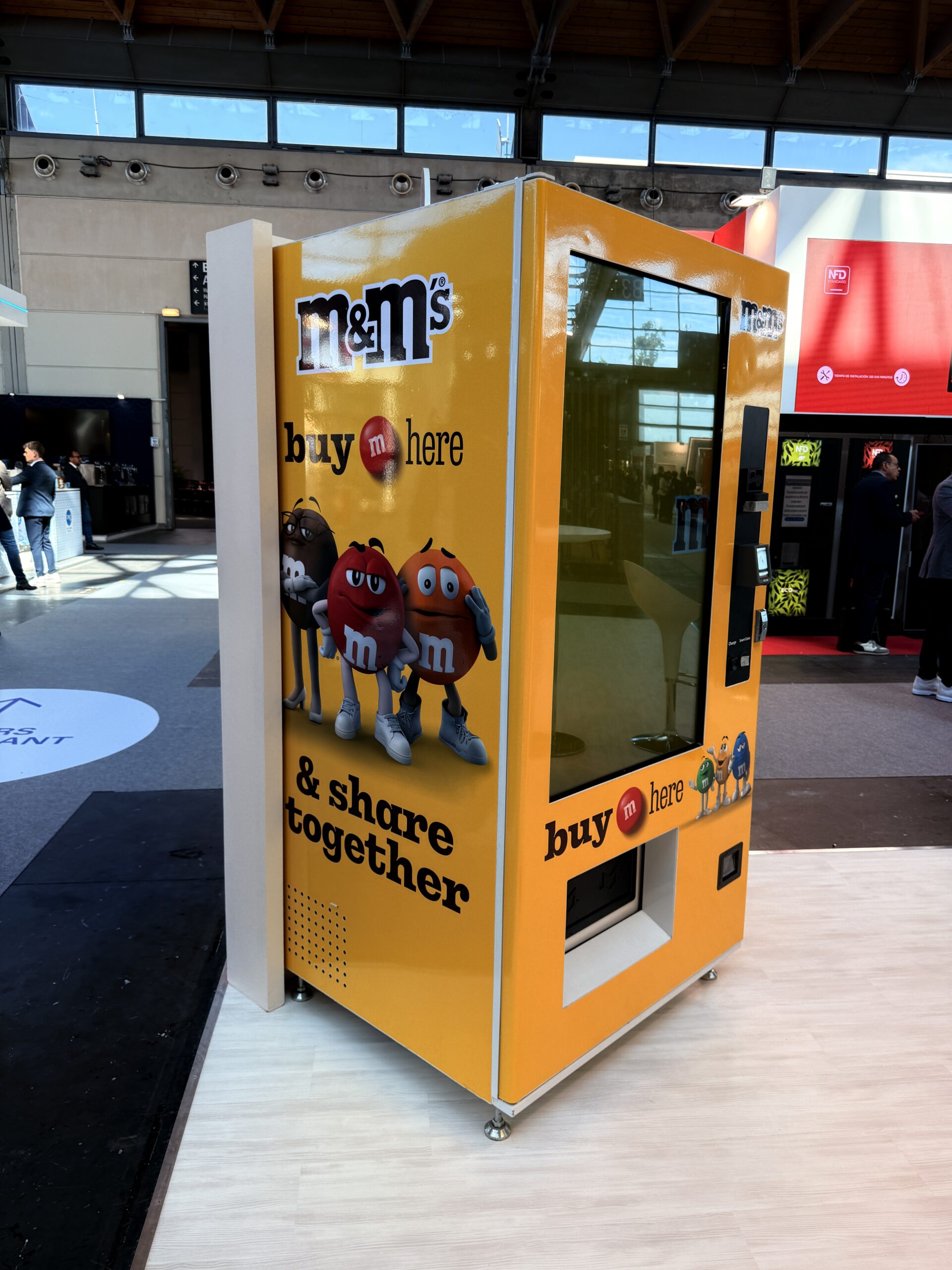
For every person who buys from your machine, a much larger number walk past it. They are not customers today and the machine is still working on them, which means the exterior is doing brand advertising rather than selling.
- Recognisable at distance and at speed. One strong idea readable across a lobby beats four ideas readable at arm’s length.
- Say what you sell, not only who you are. A logo alone leaves a passer by with no idea what the machine contains. Brand plus category is the minimum.
- Lit, because half the impressions happen in low light. Lobbies, corridors and evening hours all favour a machine that glows over one that sits.
- Finish over wrap for permanent sites. In premium venues a vinyl wrap reads as temporary and slightly cheap. A painted and properly finished cabinet reads as an installation, which is worth the difference in hotels and flagship placements.
- Photograph it deliberately. This machine is going in every deck you build for the next two years. Get a proper shoot rather than a phone photo in a corridor.
Getting the exterior and the interface designed as one piece of work is what our machine graphics and marketing material service covers, and what is physically possible on the cabinet itself is worth checking early through VMFS USA custom builds before the design is locked.
Measure It Like Media, Not Like a Shop
The single fastest way to kill a brand machine programme is to report on it using only revenue, because the revenue from one machine will always look small beside the cost of building it.
That is a measurement failure rather than a performance failure. A machine is producing four things at once and only one of them shows up in a sales report.
| What it produces | How to value it |
|---|---|
| Revenue | At full retail margin, since there is no retailer taking a cut |
| Impressions | Against what comparable out of home placement costs in that location |
| Data | Against what you would pay for research producing behaviour rather than stated intent |
| Trial | Against your usual cost to acquire a first time buyer |
| Association | Against sponsorship of a comparable venue or audience |
Set that framework before the machine is installed, not when somebody asks for a quarterly number. A programme evaluated on revenue alone gets cancelled in month four. The same programme evaluated across all five lines frequently looks like one of the better things the marketing budget bought that year, and the numbers have not changed at all.
The data line in particular tends to be undervalued because it is unfamiliar. A machine gives you hourly demand, real price sensitivity tested on live customers, and a comparison between a gym, an office and a campus running the identical range. Very few brands have any of that for their own products.
Price Like You Own the Shelf, Because You Do
Brands routinely price their machines at retail parity out of habit, which wastes the most interesting capability they have just bought.
You control the price, centrally, and can change it whenever you like. A few things that opens up:
- Genuine elasticity testing. Change a price on Monday, read the effect by Friday, on real buyers rather than a survey panel. This is close to impossible through retail and it is available to you immediately.
- Bundles that no retailer would run. Two products together at a combined price, promoted on screen, live the same day you think of it.
- Time of day pricing. A morning price and an afternoon price, if the demand data supports it.
- Venue specific pricing. Member rates at a gym, staff rates at an employer. A powerful negotiating chip and a real benefit to the host.
- Trial pricing on new products without going anywhere near your retail price architecture, which is usually the thing preventing this kind of experimentation elsewhere.
One caution worth taking seriously. Publicly undercutting your own stockists has consequences that do not appear in the machine’s sales figures, so pricing at or above retail is usually the safer default, with experimentation happening around bundles and promotions rather than on headline price. Your distribution agreements may have something to say about this too, which our partners at VAdviced can check before you set a price.
Use It to Sell Things You Cannot Sell in Shops
Here is a capability brands consistently forget they have bought. The machine is not bound by anybody’s range decisions, which means it can carry things retail will not touch.
That matters commercially and it matters for how you talk about the machine, because it gives you something to announce:
- The long tail of your own range. Every variant a buyer declined but a section of your customers genuinely want. Small volumes, loyal buyers, and no listing negotiation required.
- Machine exclusives. Something available only here. This is the strongest single tactic available to a brand machine, because it converts a convenience purchase into a reason to travel and a reason to post.
- Limited drops on a schedule. If your category supports it, a monthly or seasonal release gives regulars a reason to keep checking and gives you a recurring announcement.
- Formats retail will not stock. Sample sizes, travel formats, bundles and multipacks that do not fit a shelf plan.
- Merchandise alongside product. A machine can sell things that are not your core product at all, which no stockist would ever agree to shelve.
The exclusivity point deserves emphasis because it changes the machine’s whole character. A machine selling the same things as the shop across the road is a convenience. A machine selling something you cannot get anywhere else is a destination, and people will make a trip for it and tell others they did.
Give People a Reason to Film It
A branded machine is inherently more interesting than a generic one, and people do photograph them without being asked. That is free distribution to exactly the audience standing in your chosen venue, and most brands do nothing whatsoever to encourage it.
- Put the handle on the machine. Obvious, almost never done, and it is the difference between a post that credits you and one that does not.
- Make the dispensing moment watchable. If the mechanism is interesting, that is a video. Elevator delivery and unusual dispensing photograph considerably better than a product dropping into a bin.
- Limited or exclusive product drives the whole thing. Something available only from the machine gives people a genuine reason to post and a reason to travel, which is the strongest single tactic available here.
- Reshare what people put up. Costs nothing, and social proof from a real customer in a real venue outperforms anything you produce yourself. That side runs through social media management.
- Get the venue posting too. A gym or campus will happily announce something new for their members, and their audience is precisely the one standing in front of your machine.
Launching Properly
- Treat the venue as a media partner. They have an email list, a noticeboard and social accounts reaching exactly your target audience, and they are usually pleased to announce something new. This is the highest return launch activity available and it is free.
- Be there for the first few days. Somebody from the brand, handing out samples, watching how people actually use it. You will learn more in two afternoons than in two months of reports.
- Launch with something exclusive. A product, a price or a limited run available only here. It gives the announcement a reason to exist.
- Overstock the opening weeks. An empty branded machine in week two undoes everything the launch achieved, and first impressions on a machine carrying your name are unusually durable.
- Have the search side ready. People will look you up after seeing the machine, so the website and business profile should be in order before installation rather than after.
Worth listing the machine on VendingFinder as well, which matters more for brand machines than operator ones because customers genuinely hunt for exclusives and will travel for them.
The Thing That Ruins All of This
An empty machine with your name on it.
A generic vending machine that runs out is a mild inconvenience attributable to nobody. A branded machine that runs out is your company failing to deliver, in public, in front of the exact audience you chose specifically because they matter to you. It is one of the few marketing assets capable of producing meaningfully negative returns.
- Settle servicing before design. Ahead of graphics, ahead of the site, ahead of everything. Who restocks it, how often, and what the escalation is when something fails.
- Use remote monitoring. Knowing a machine is low before a customer does is the entire point, and it is the difference between a stocked machine and a hopeful one.
- Fix faults urgently rather than promptly. A broken machine carrying your brand is worse than no machine at all, and the calculation is not close.
- Clean it every visit. A grubby branded machine says something about the brand that nothing in your campaign can correct.
- Partner with an operator if you have no route. Most brands should. Finding the right one alongside the right site is what our partners at VPlaced handle.
A Realistic First Ninety Days
| When | What |
|---|---|
| Before build | Interface designed alongside the exterior, measurement framework agreed, servicing settled |
| Before launch | Proper photography, handle on the machine, venue announcement drafted, website ready |
| Launch week | Venue announces, brand present on site, machine overstocked, exclusive live |
| Month one | Zero downtime, learn the hourly pattern, reshare customer posts |
| Month two | First price or bundle test, adjust the range on real data |
| Month three | Report across all five value lines, then use it to justify the next sites |
You can see how we package this on our services page or pick individual pieces from the shop, and if you need something forwardable for internal approval, a media kit does that job. On the hardware side, whether a machine has a proper screen determines most of what is possible above, so it is worth starting from the touch screen range or the wider VMFS USA shop.
Frequently Asked Questions
What is the most overlooked part of a branded vending machine?
The screen. A customer looks at the exterior for about two seconds and spends the better part of a minute on the interface while browsing, selecting and paying. Most brands design the outside carefully and accept whatever interface ships by default, which wastes the only sustained attention the machine ever gets.
How should a brand measure a machine?
Across five lines rather than one: revenue at full retail margin, impressions against comparable out of home cost, data against research spend, trial against your cost to acquire a first time buyer, and association against sponsorship of a similar venue. Judged on revenue alone almost any single machine looks disappointing.
Should we price lower than retail?
Usually not on headline price, because publicly undercutting your own stockists carries consequences that will not show up in the machine’s sales figures. Price at or above retail and do the experimenting through bundles, venue specific rates and limited promotions, all of which you can change centrally whenever you like.
What ruins a branded machine programme?
An empty or broken machine carrying your name. A generic machine that runs out is nobody’s fault. A branded one is your company failing publicly in front of an audience you specifically chose, which makes it one of the few marketing assets capable of producing genuinely negative returns. Settle servicing before anything else.
Design the Minute, Not Just the Moment
We design the exterior and the interface as one piece of work, build the measurement framework before launch, and run the launch through the venue’s own audience. Tell us about the machine and where it is going.