
Marketing & Placements | Custom Print Vending | By the VMarketed Team | August 2026
Every vending pitch in history has been a version of the same sentence. Let me put a machine here, your people will find it convenient, and you get a percentage. It works in a modest way, and it puts you in a queue behind every other operator saying exactly the same thing to the same tired property manager.
With a custom print machine you get to say something nobody else in vending can honestly say. You are not offering convenience. You are offering the venue an attraction. Something their visitors will stop for, gather around, film, and post with the venue’s name in the background.
That single reframe is worth more than any commission percentage you could put on the table, and in our experience most operators never use it. They walk into a mall leasing office and start talking about revenue share, when the person opposite them is measured on footfall, dwell time and guest experience scores.
Where this comes from: marketing vending operations is our core business, and we studied this machine closely on the Venditalia show floor. What follows is how to actually land it in the venues worth having, and how to make it earn once it is in.
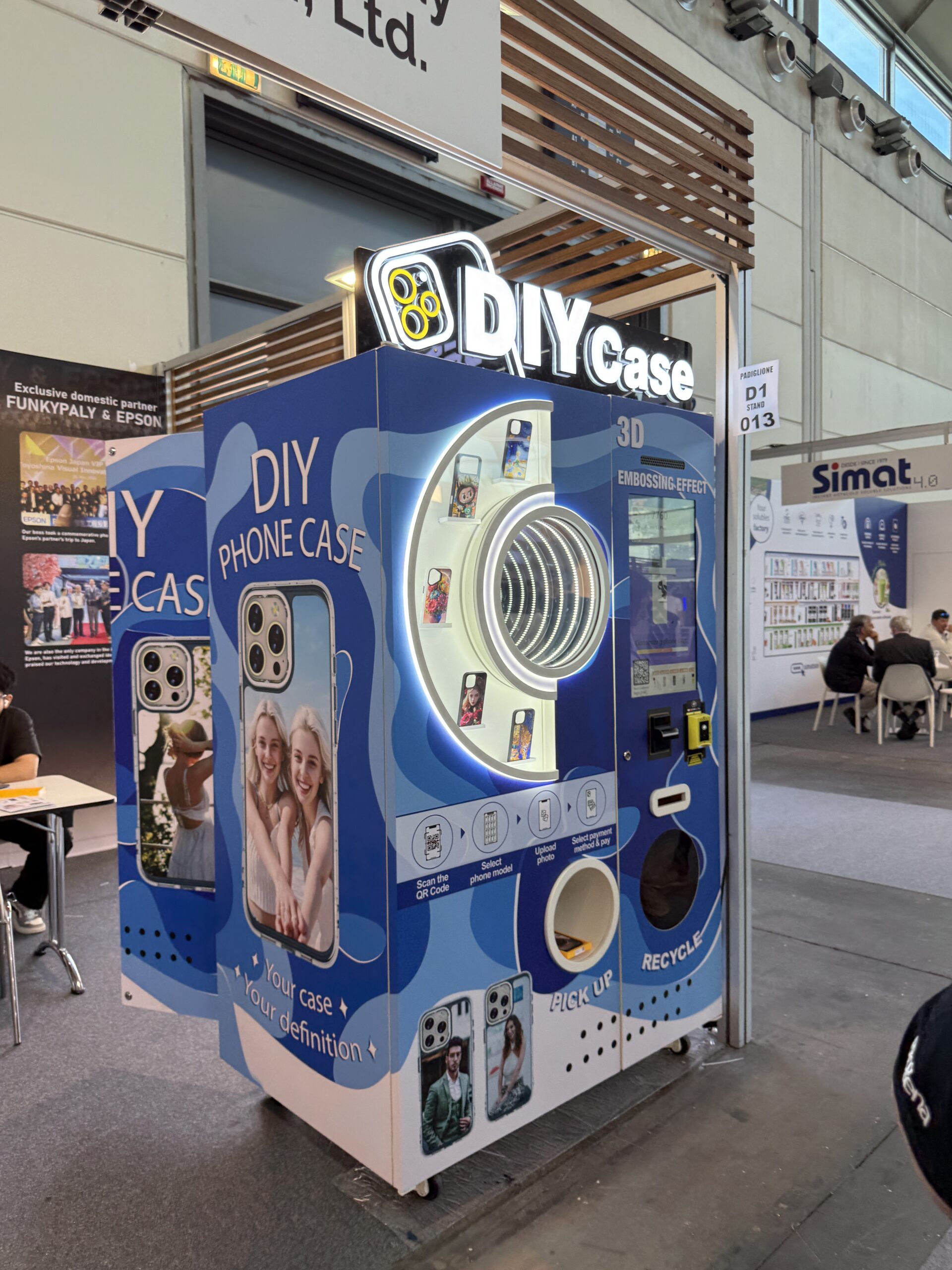
Sell the Attraction, Never the Machine
Start by understanding what the person across the table is actually judged on at their annual review. It is almost never vending commission. Then build the pitch entirely out of those things.
- It creates dwell time rather than consuming it. People stop, spend several minutes choosing a photo, then linger while it prints. Malls spend serious money engineering that outcome and here it arrives free.
- It draws a visible crowd. One person using it pulls two or three others over to watch. In a quiet corner of a concourse, that activity is worth something on its own.
- Visitors leave carrying a souvenir of being there. For an attraction that is enormously valuable and very hard to achieve otherwise. Every case walks out as a physical reminder of their venue.
- It generates social content nobody has to commission. People film the print because it is inherently watchable, and the venue is in shot.
- It is genuinely novel. Most venues have never hosted one, which means being first in their market carries a small bragging right they can use.
- It costs them nothing. No staffing, no stock risk, no capital outlay, no floor space they were monetising anyway.
The line that opens doors: “This is not a vending machine, it is an experience your visitors will photograph, and it costs you nothing to host.” Lead with that and you are having a completely different conversation from every other operator who contacted them this year.
One practical consequence of this framing: never use the word vending in your subject line, your opening paragraph or your leave behind. It summons an image of a beige box with a coin slot, which is precisely the mental picture you are trying to displace. Self service print studio, custom souvenir station, personalisation kiosk. Whatever fits the venue.
Show, Do Not Describe
This is the one vending category where a thirty second video closes deals on its own. Describing a machine that prints a photo onto a phone case sounds like a gimmick when written down. Watching one do it does not, and the gap between those two reactions is where your placements live.
Get one piece of footage made properly, once, and use it everywhere:
- The complete journey. Scanning the code, choosing the photo, paying, waiting, and lifting the finished case out. Uncut if possible, because the continuity is the point.
- A real reaction. Somebody’s face when the case comes out is the actual product you are selling. Do not use an actor.
- Close ups of print quality. This is the thing a sceptical manager quietly worries about and will never say out loud.
- A crowd shot. Other people watching, because that is the benefit you are actually pitching.
- The machine in a comparable venue. A mall manager wants to see it in a mall, not on a trade show floor.
Then wrap it in something forwardable, because the person you meet is almost never the person who signs. Your material has to survive being emailed to somebody who has never spoken to you. That is exactly what a proper media kit is for, and this format deserves a stronger one than most because the concept genuinely needs demonstrating rather than explaining.
Know Who Actually Signs
Pitching the wrong department wastes weeks and is the most common reason operators conclude these venues are impossible. They are not impossible, they are just organised differently from a break room.
| Venue | Ask for | Lead with |
|---|---|---|
| Shopping mall | Specialty leasing | Dwell time and a new attraction |
| Attraction, zoo, museum | Retail or guest experience | A souvenir line with no inventory risk |
| Theme park | Merchandise or concessions | Branded designs and guest engagement |
| Airport | Concessions | Passenger experience during dwell |
| Cinema | General manager | Something for the pre show wait |
| University | Student union manager | A student amenity at no cost |
Notice that malls and airports route through leasing and concessions rather than facilities. Those teams already handle kiosks, carts and pop ups, which means they think in terms of attractions and revenue per square foot rather than amenities. That is a much better conversation for you. Reaching those people is a discipline in itself, and our partners at VPlaced do exactly that work.
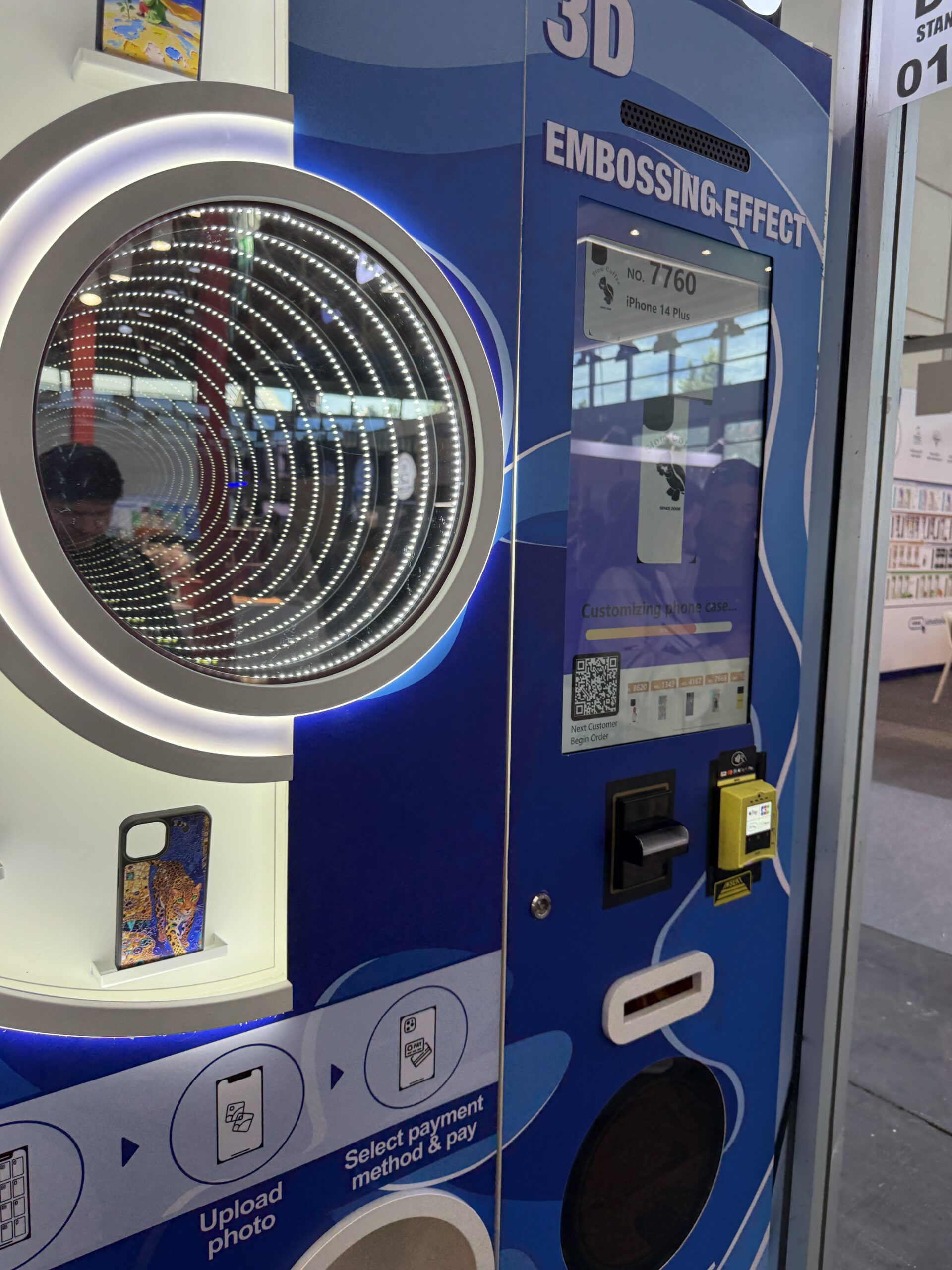
Answer the Three Objections Before They Are Raised
Venues considering this machine land on the same three worries almost without exception. Raising and answering them yourself, before they have to ask, is one of the most effective things you can do in the meeting. It reads as competence rather than defensiveness.
| They worry about | You answer with |
|---|---|
| Somebody printing something offensive in a family venue | Automated content screening plus a written policy they can keep |
| Somebody printing a brand logo or a character | Upload terms, image screening and a documented takedown process |
| Unhappy customers ending up at their information desk | A reprint policy and your support contact printed on the machine |
The first row decides family venues on its own, so treat it as the most important slide in your deck rather than an appendix. Get the underlying policies drafted properly with VAdviced before you start pitching, because arriving with real documentation rather than a verbal reassurance is frequently what wins the placement outright.
The Offer Nobody Else Can Make
Here is your closing move, and it is genuinely unique to this machine. You can put the venue’s own designs inside it.
A zoo can offer its own animal illustrations as a one tap choice. A museum can offer pieces from its collection. A sports venue can offer approved club artwork. A theme park can offer its own characters and park scenes. Visitors buy a souvenir carrying the venue’s brand, the venue takes a share, and it costs them nothing to produce beyond supplying artwork they already own and licensing it to you properly.
Think about what that does to the conversation. You stop being an operator asking for floor space and become a merchandising partner offering a new product line with no inventory, no staffing and no capital risk. Retail directors understand that proposition immediately, and it is the kind of thing that gets escalated upward rather than declined by a facilities manager who was only half listening.
It also happens to solve your biggest legal exposure, because a strong library of licensed designs gives the customer who wanted a cartoon character something appealing and lawful to choose instead. Better business and lower risk in the same move.
Make the Machine Sell Itself
Once it is installed, the machine has to explain itself to somebody walking past who has never seen one and has about two seconds of attention to spare. That is a design problem and it is entirely solvable.
- The four steps, large and obvious. Scan, choose, upload, collect. Anybody should understand the whole proposition from ten feet away without reading a paragraph.
- Samples at eye level, well lit. These do more selling than any text on the machine. Rotate them so regulars see something new.
- Price visible before engagement. Hiding it costs you the customers who would have bought and irritates the ones who start and then stop.
- Say how long it takes. Counterintuitive but important. People will happily wait four minutes if told, and will walk away from an unknown wait.
- Your handle on the machine. Every video posted should carry a route back to you, and people absolutely will post them.
All of that is machine graphics and marketing material work, and on a machine that costs what this one does it is not the place to economise. The wrap is your entire storefront and your only salesperson.
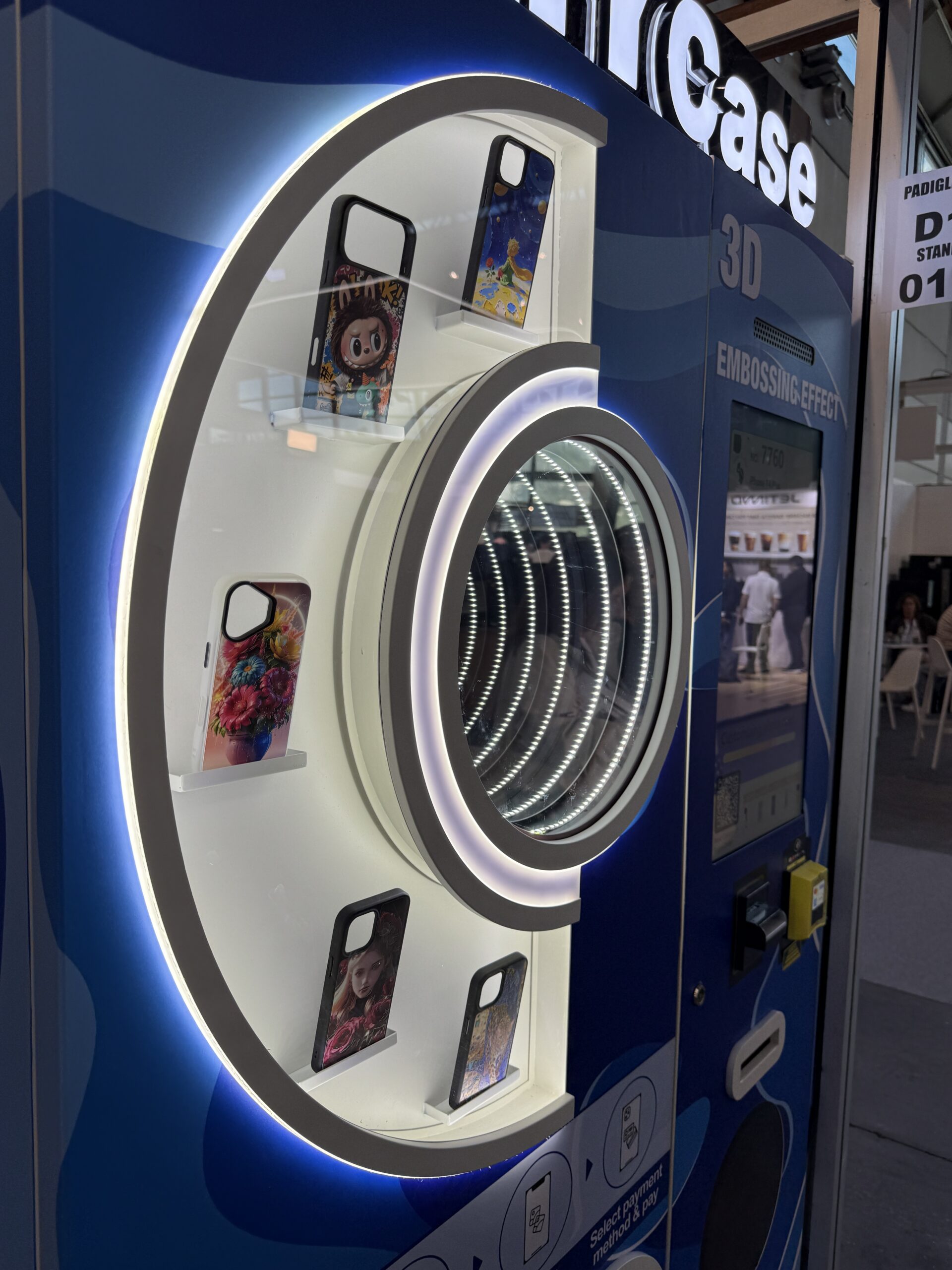
Launch Week Decides More Than It Should
A machine like this is novel enough that its first week produces a burst of attention you will not get again. Waste it and you are relying on passing curiosity forever. Use it and you build a base of people who already know what it is.
- Be there in person for the first weekend. Print a handful of free cases, demonstrate the flow, and let a crowd build. Nothing else works remotely as well on day one, because the barrier is not price, it is people not knowing what the machine is.
- Get the venue to announce it. They will happily post about a new attraction, and their audience is precisely the one you want. Ask for this in the agreement rather than hoping.
- Seed content deliberately. Encourage the first users to post and tag, then reshare everything. Early social proof compounds. We run this side as social media management.
- Tell the local press. First custom print machine in the county is a genuinely easy local story and it costs nothing to pitch.
- Have a reprint policy ready. An early bad experience in a small venue travels fast. Resolve the first few generously.
Getting Found by the Right People
Search works differently here than for most vending, and it works in two directions at once.
The first audience is venues. A leasing manager who receives your email will look you up before replying, guaranteed. If what they find is thin or amateurish, your carefully written pitch dies quietly. A credible presence when somebody searches your company name is worth more than ranking for any consumer term, which is what SEO and a proper website are for in this category.
The second audience is consumers, and this is where these machines behave unusually. People genuinely search for them after seeing a video, asking where they can find one nearby. That makes a maintained Google Business Profile for each machine location surprisingly valuable, because somebody searching that way is about as high intent as a customer gets. Being listed on machine finder directories helps for the same reason.
Keep It Earning After the Novelty Fades
Month one sells itself. Month six is the real test, and this is where operators lose sites they worked hard to win.
- Rotate the samples. A display that has not changed in six months tells regulars there is nothing new to see. Refresh it seasonally.
- Run seasonal design drops. Holiday artwork, local events, back to school. A reason to come back is a reason to buy again.
- Keep phone model coverage current. Nothing kills a placement faster than a customer being told their handset is not supported. Update blanks every autumn without fail.
- Report to the venue. Send the property manager numbers occasionally. Venues renew operators who make them feel informed and quietly drop the ones who go silent.
- Watch the reviews. People review these machines like small businesses, because that is what they feel like. Respond to the bad ones properly.
That fourth point is worth taking seriously. A short monthly note showing sales, visitor engagement and any social reach the machine generated costs you ten minutes and makes renewal conversations almost automatic. Most operators never do it.
A Realistic First Ninety Days
| When | What |
|---|---|
| Before pitching | Video shot, media kit built, content and trademark policies documented |
| Pitch stage | Right department identified, attraction framing, venue design offer prepared |
| Before launch | Wrap and screen content finished, business profile live, samples printed |
| Launch week | On site in person, free demos, venue posting, local press contacted |
| Month two | First seasonal design drop, samples rotated, reviews monitored |
| Month three | First report to the venue, then use those numbers to win site two |
You can see how we package all of this on our services page or pick individual pieces from the shop. On the hardware side, print quality and screen presentation are precisely what you will be judged on in a pitch, so it is worth starting with the right vending machines rather than discovering the limitation later. Property owners considering hosting one can go direct to VPlaced.
Frequently Asked Questions
How do you pitch a phone case printing machine to a venue?
Sell it as an attraction rather than as vending. Lead with dwell time, crowd draw, guest experience and free social content, all at no cost or effort to them. Bring video, because watching the machine work is far more persuasive than any description, and avoid the word vending entirely in your materials.
Who is the right person to approach?
Rarely facilities. Malls route through specialty leasing, attractions through retail or guest experience, theme parks through merchandise, airports through concessions. Cinemas and universities are faster, usually a general or student union manager. Pitching the wrong department is the most common reason operators write these venues off.
What is the strongest offer you can make?
Putting the venue’s own artwork in the machine. A zoo, museum, park or stadium can offer visitors a souvenir carrying their designs with no production cost and no inventory risk. That converts a floor space request into a merchandising proposal, which is a conversation that gets escalated rather than declined.
What will a venue object to?
Almost always the same three things: offensive content in a family space, customers printing branded or copyrighted images, and unhappy customers approaching their staff. Arrive with documented answers on screening, upload terms and reprints, ideally raised by you before they have to ask.
How do you keep it earning after the novelty wears off?
Rotate samples, run seasonal design drops, keep phone model coverage current every autumn, and send the venue a short performance report each month. That last habit costs ten minutes and makes renewals close to automatic, which is why it is strange that so few operators bother.
Pitch It As an Attraction
We build the video, the media kit, the machine graphics and the launch plan that get a custom print machine into venues worth having, then keep it earning after the novelty fades. Tell us where you want it.