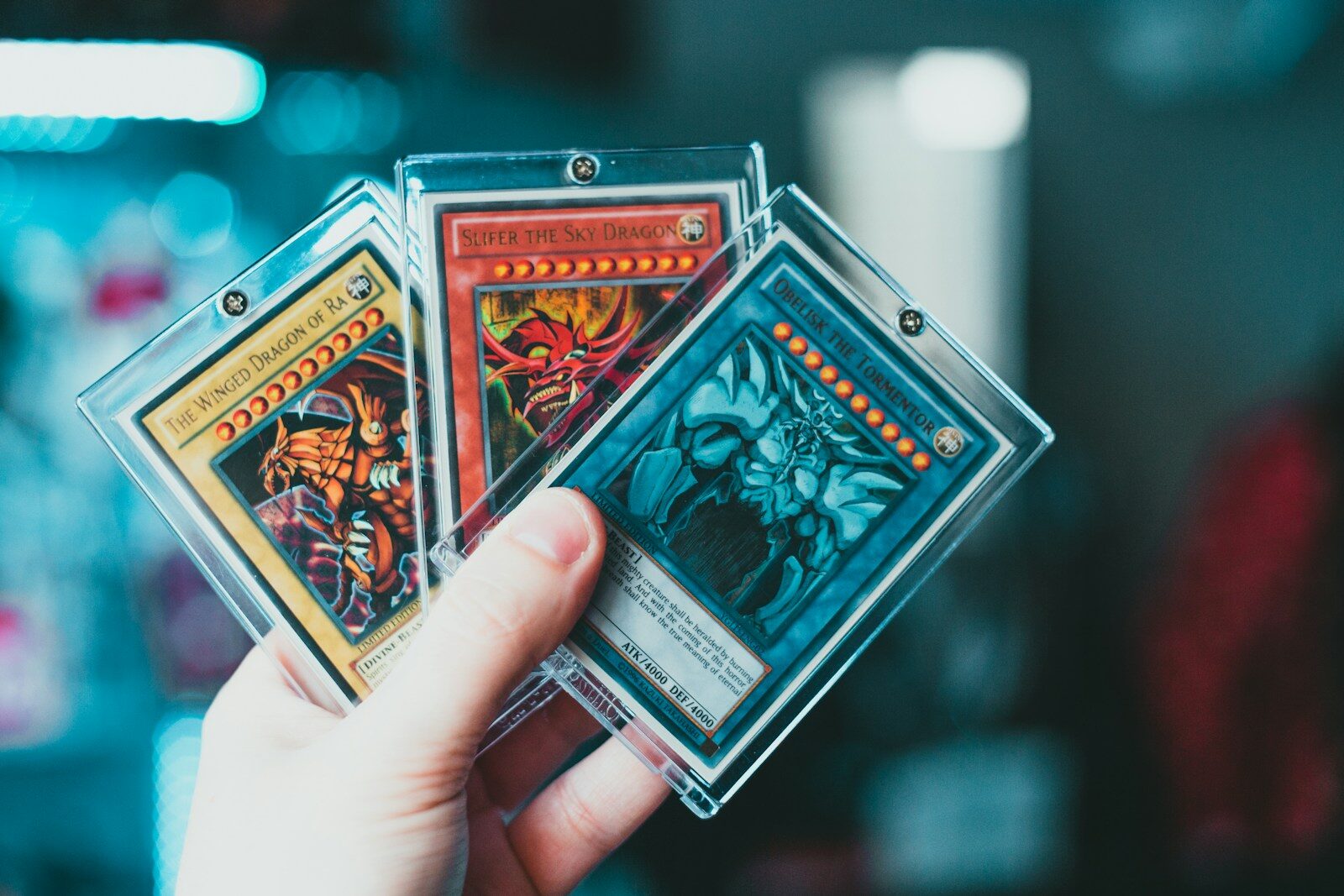

Marketing & Brand Partnerships | Trading Card Vending | By the VMarketed Team | August 2026
Every other vending category has to buy its audience. This one does not. When someone pulls a chase card from a ten dollar pack, they film it, they post it, and thousands of people watch a stranger open a pack in front of your machine. That is free distribution running around the clock, and it is the single biggest marketing advantage in automated retail right now. The operators winning this category are not the ones hoping that happens. They are the ones building for it deliberately. Here is how they do it, and how the same machine becomes something a brand will pay to be on.
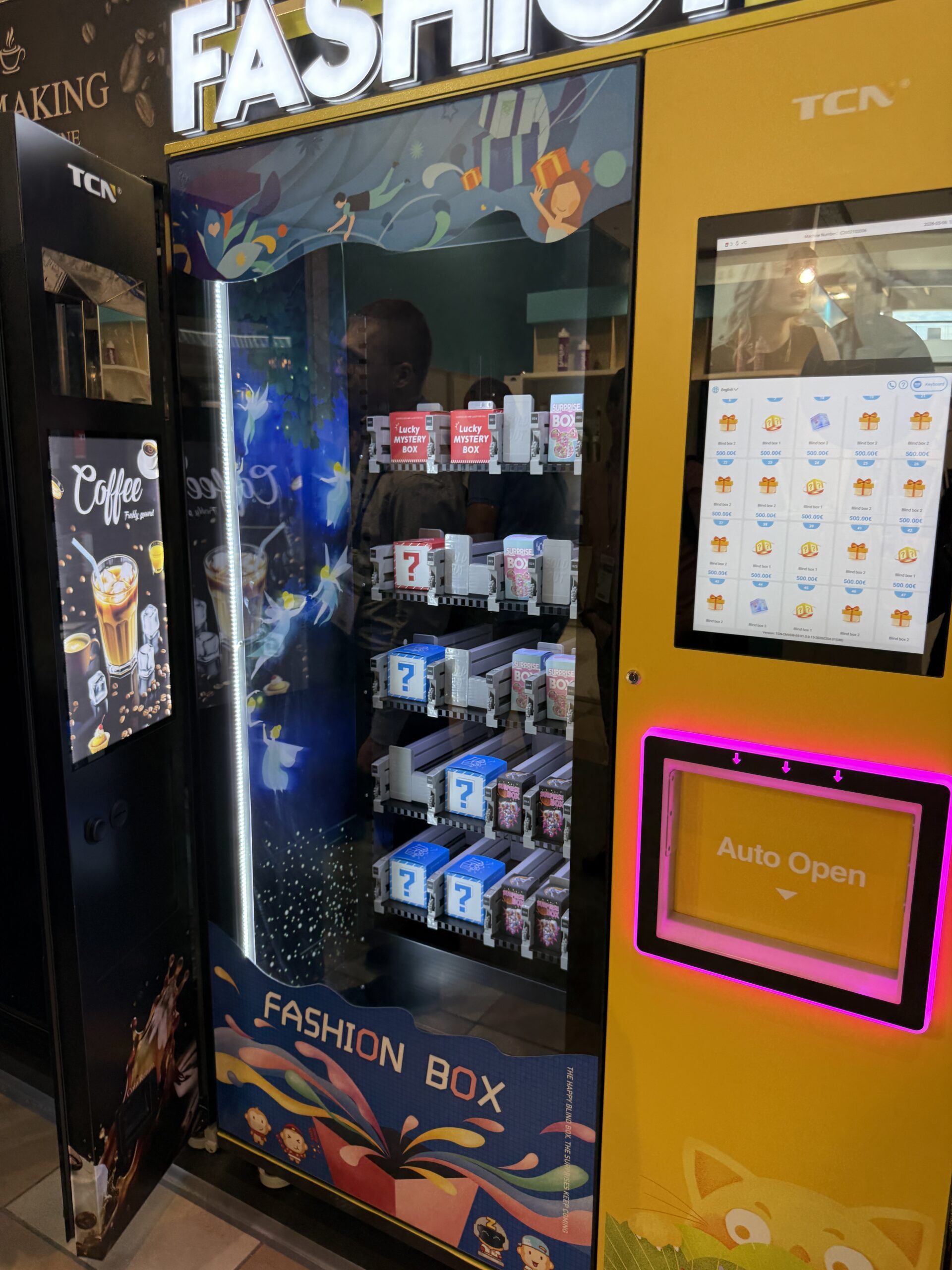
Where this comes from: marketing vending operations is our core business, and we examined this machine format closely on the Venditalia show floor. What follows is built around how these machines actually get discovered and shared, not generic marketing advice.
The Audience Is Already Enormous
Before tactics, understand the scale of what you are plugging into, because it reframes the whole exercise. The Pokemon Company reported roughly 2.9 billion dollars in revenue for its 2025 fiscal year, up more than 38 percent year over year, with over 10 billion cards produced. Walmart reported trading card sales up 200 percent in the same period. Recent US consumer research found that nearly one in five American adults now buys Pokemon cards for themselves, and only about a quarter of those adult buyers actually play the game. The rest collect, invest, or gift.
Read that last figure again, because it is the most useful marketing insight in this entire post. Three quarters of adult buyers are not players. They are collectors and impulse buyers, which means your machine is not serving a niche hobby audience, it is serving a mainstream consumer category that happens to look like a hobby from the outside. Market that way and your reach expands enormously.
The content ecosystem around it is bigger than most people assume too. Pokemon focused YouTube channels run into the millions of subscribers, with PokeRev above three million and Deep Pocket Monster above two million, and the card hashtags on TikTok have accumulated billions of views. Whatnot, the live selling platform, processed around six billion dollars in gross merchandise value in 2025, tripling from two billion the year before. This is not a small pond you are marketing into.
The Pull Video Is Your Marketing Engine
Here is the mechanic that makes this category unlike anything else in vending. A customer buys a pack, opens it on camera, and if the pull is good it travels. The mechanic is simple: when a machine sells a ten dollar pack that produces a card worth hundreds, that moment gets filmed and shared, and every share sends more people toward the next machine. No other vending format has a free marketing engine built into the product itself.
In our experience most operators leave this entirely to chance. The better move is to engineer for it, and the practical steps are unglamorous but effective. Make the machine filmable by ensuring there is room to stand back, that the lighting works on camera, and that your branding sits in frame when someone shoots vertically. Put your handle or a short hashtag physically on the machine so every video that gets posted carries an identifier back to you. Give people a reason to tag you, whether that is a repost, a feature, or a small perk. And when content does appear, reshare it fast, because creators repay attention with more content. If keeping that running consistently is the part you know you will let slip, our social media management service takes it off your plate.
Get Found Before You Get Visited
Something happens in this category that happens in almost no other part of vending. People actively search for machines. Search interest around finding card machines nearby is substantial, and communities maintain running threads and maps of where working machines are located. Collectors will genuinely drive to a machine they have heard is stocked.
That behavior is a gift, and it means local search is not optional here. Your machine locations should be findable, which starts with a proper Google Business presence and local listings that name the venue and what the machine carries. We handle this through Google Business Profile management and vending machine SEO, and in this category the return is unusually direct, because someone searching for a card machine near them is about as high intent as a customer gets.
Beyond search, get yourself into the places collectors already gather. Local hobby groups, regional collector communities, and city specific forums all trade information about where machines are and what is in them. Being a known, trusted presence in those spaces is worth more than advertising to strangers, and it costs nothing but participation.
Time Everything to the Release Calendar
Trading card demand is not evenly distributed through the year, and marketing that ignores that is marketing wasted. Set releases create genuine spikes. Reporting on the category describes the pattern bluntly: a major release means chaos at big box retailers, sold out machines, and scalpers moving product at multiples of retail before lunchtime. Empty shelves elsewhere are your opportunity, because a stocked machine on release week is solving a real problem for people who have already tried the store.
So build your calendar around theirs. Announce ahead of a launch so people know your machine will have product. Swap your screen graphics and any wrap elements to feature the new set on day one rather than a week later. Run a launch activation, whether that is being present at the machine, a small promotion, or simply posting that stock has landed. And plan for the quieter weeks between releases by leaning on collectible and blind box product, which does not follow the card calendar. The 2026 anniversary cycle for the franchise gives this year an unusually strong run of moments to build around.
Tournaments and Local Community Are Underrated
While everyone chases social reach, the highest conversion audience is sitting in a room down the road. Card tournaments and league nights run regularly at game stores and community venues, and the people attending are the most committed buyers in the category. A relationship with those organizers is worth more than a lot of paid reach, because it puts you in front of buyers at the exact moment they are thinking about cards.
Practical versions of this include sponsoring a local tournament with product from your machine as prize support, having a presence on league nights, and working with the venue so players know the machine is there. Conventions and hobby expos are the larger scale version of the same idea, concentrating thousands of buyers into one weekend. Use events to drive people back to your permanent locations afterward, with signage or a code that connects the two. On the placement side of that, our partners at VPlaced cover which venues and events are worth pursuing.
Trust Is a Marketing Asset in This Category
This is the point we push hardest with clients, because it gets missed in most marketing advice and it matters enormously here. Collector communities have long memories and they talk. The principle is consistent across this category: one bad experience costs more than any short term margin gain. If your machine gets a reputation for stale product, prices wildly above what people consider fair, or anything that feels less than authentic, that reputation spreads through exactly the communities you were trying to reach.
So make trust visible. Label clearly that your product is official and sealed, and be explicit that your machine is independent rather than affiliated with or endorsed by the card publisher. Post your returns position, since most operators sensibly use all sales final on sealed collectibles, and saying so upfront prevents disputes. Price at a premium if you like, since convenience genuinely commands one, but keep it defensible rather than opportunistic. In a category where community sentiment drives foot traffic, being visibly straight with people is a growth strategy.
The Screen Is Media, Not a Menu
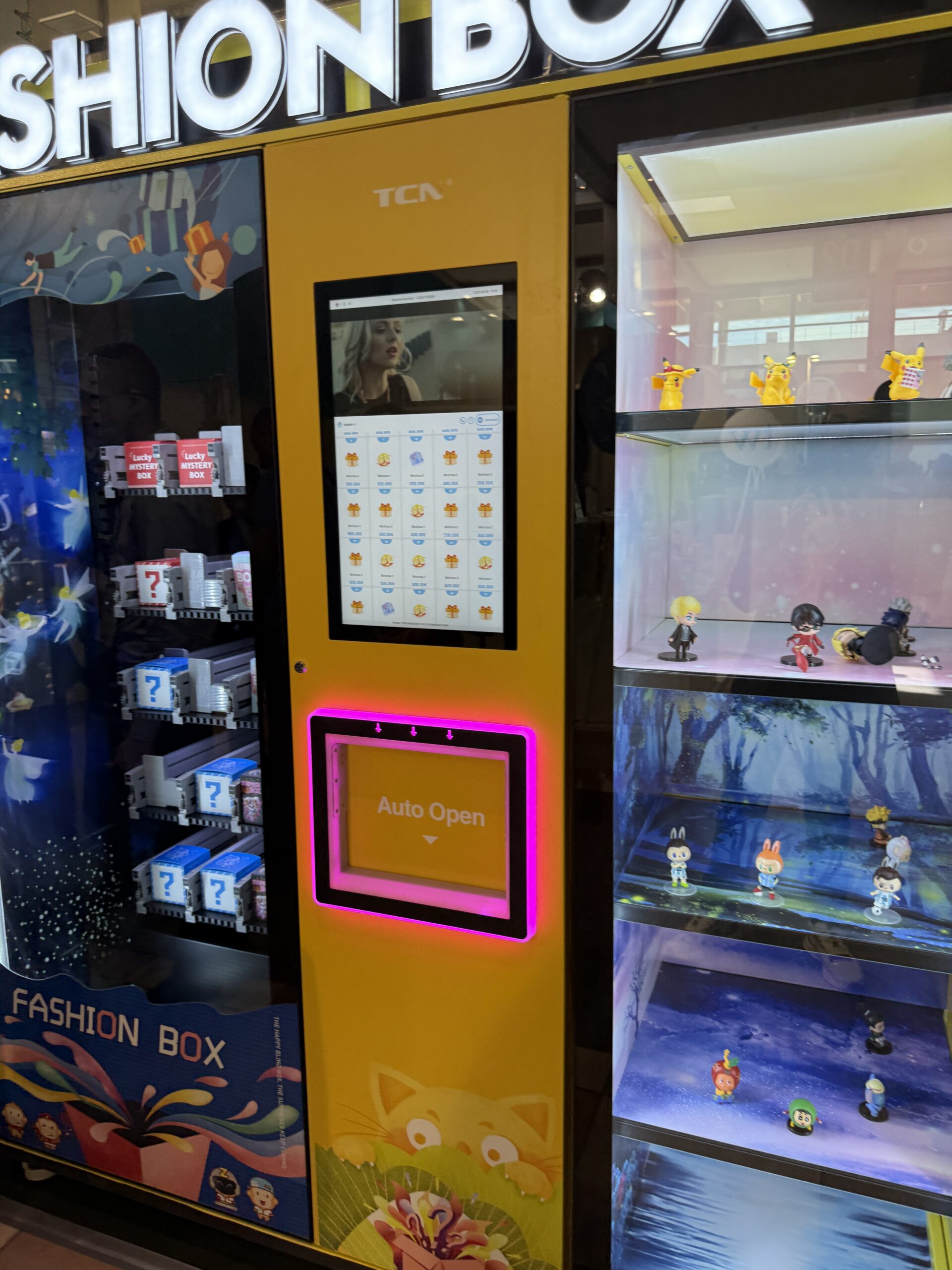
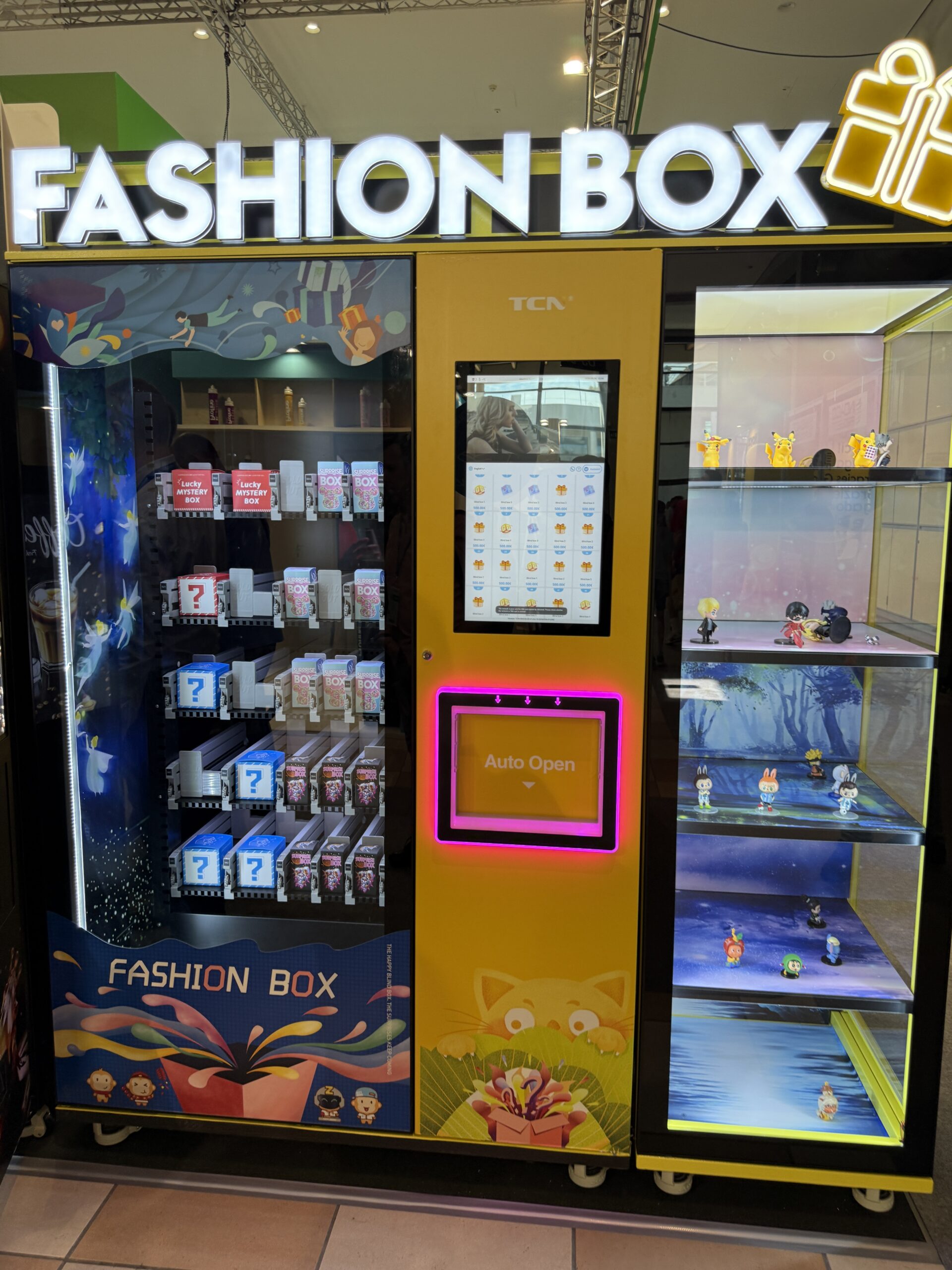
Now to the part that turns a machine from a sales point into an asset with its own revenue line. The machine we photographed carries a large vertical touchscreen presenting products as individual tiles with per item pricing. Screens on these units commonly run from around 22 inches up to 55 inches, and crucially they are not occupied most of the time. Between transactions that screen is doing nothing, and empty screen time in a high traffic venue is inventory.
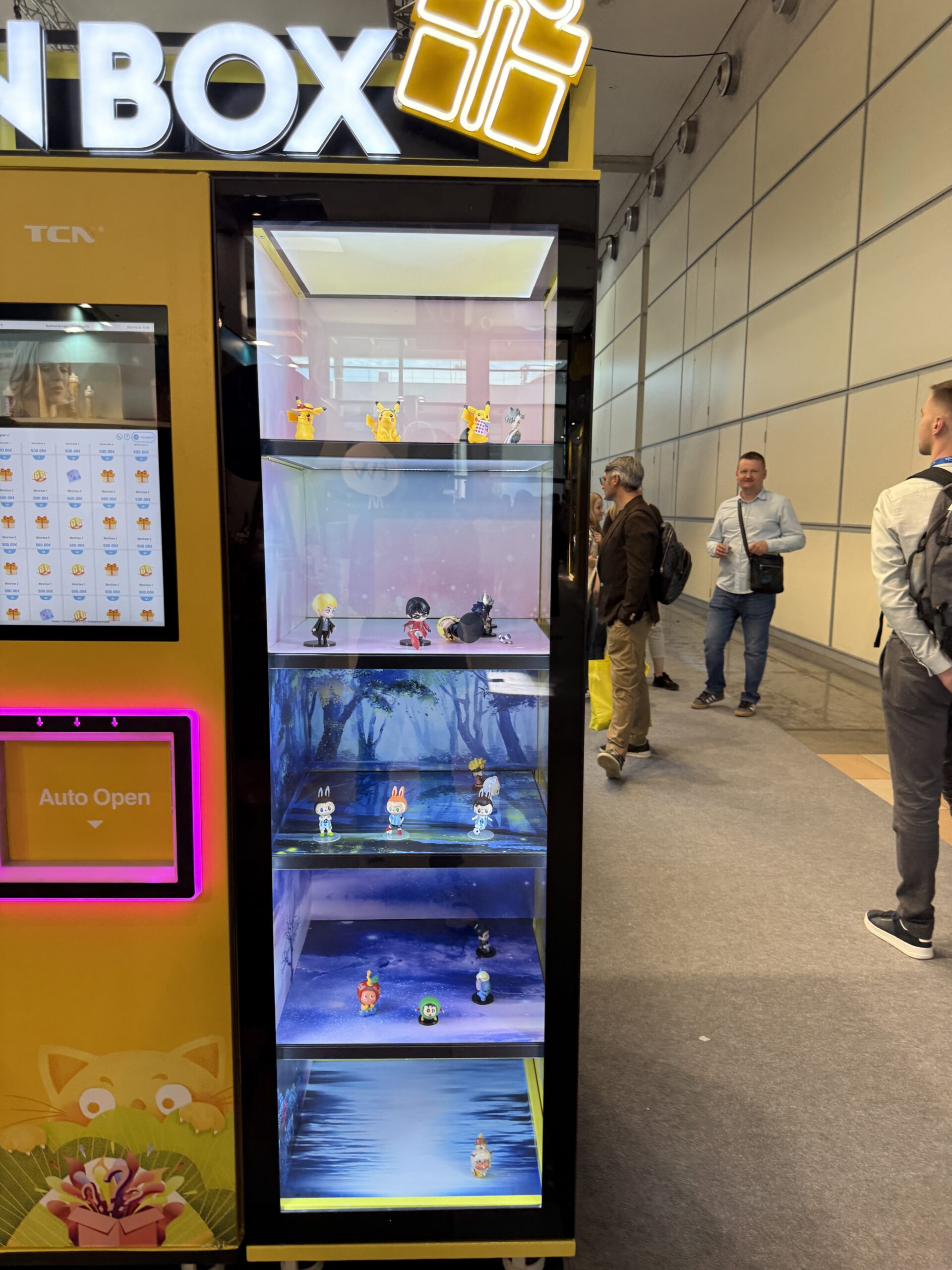
Use it deliberately. Run your own upsells to move people from a single pack to a bundle. Promote the higher ticket sealed product that a coil row cannot showcase properly. Announce set launches and restock timing. And once you have traffic data from a location, that idle screen time becomes something you can genuinely sell to a partner. Treating the display as a media surface rather than a glorified keypad is the shift that separates an operator from a media owner.
Turning the Machine Into a Brand Partnership
Here is the opportunity most operators never pursue, and it is worth understanding why it exists. The official card publisher machines are corporate assets, not for sale, and their footprint leaves enormous territory uncovered, with independent operators free to serve malls, arcades, hobby shops, campuses, and entertainment venues across the country. If you hold good placements, you hold something a brand cannot easily get for itself.
What a brand actually wants from your machine is straightforward. They want physical presence in a venue they are not otherwise in, an audience that is already engaged rather than interrupted, a format that generates its own social content, and a measurable outcome. You can offer all four. The assets you have to sell are a co branded machine wrap, screen takeover time, the display case as staged physical real estate for their product, exclusive or early access drops that give collectors a reason to come to you specifically, and joint activations at launches and events.
The display case deserves particular attention in this conversation, because it is the cleanest brand asset on the whole unit. It is lit, it is staged, it is at eye level, and it holds product without vending it. For a brand wanting their figure or their premium item seen by a specific audience in a specific venue, that is a physical placement with a clear story attached. Building the wrap and the presentation to a standard a brand will put their name on is what our machine wraps and marketing material service exists for.
When you approach a brand, bring evidence rather than enthusiasm. Location profiles, foot traffic, audience demographics, sales velocity, and any social reach your machines have already generated. A proper media kit turns that from a conversation into a proposal. Start local, since regional hobby shops, local card brands, and nearby entertainment businesses are far more reachable than a global publisher and make excellent proof cases for bigger conversations later.
A Ninety Day Plan
If you want a concrete starting sequence, this is the one we run with clients. In the first month, get the fundamentals right: a wrap and screen presentation built to be photographed, your handle physically on the machine, your Google Business listing and local search sorted, and your social accounts claimed and posting.
In the second month, go into the community. Introduce yourself to local hobby groups, connect with tournament organizers, offer prize support, and begin resharing every piece of customer content that appears. In the third month, build on the data you now have: identify your best performing location, put together a media kit around it, and open your first partnership conversation with a local brand. By the end of that quarter you have a machine that markets itself, a community that knows you, and something concrete to sell to a partner. Our full marketing services cover each of those stages if you would rather not run them yourself.
One Word of Caution on Hype
Attention in this category cuts both ways and it is worth naming honestly. Restock crowds during hyped releases have grown large enough that some retailers have pulled back, and there has been at least one widely reported incident of a confrontation escalating badly at a machine. Communities also police behavior actively, and stories about staff clearing machines before opening circulate quickly and damage the venue as much as the operator.
The practical response is not to avoid the hype but to manage it. Place in supervised venues, keep high value product secured, communicate restock timing in a way that spreads demand rather than concentrating it into a single scramble, and be transparent when stock runs out. Handled well, the attention is the best marketing asset you will ever have. Handled carelessly it becomes a problem for you and for the venue that trusted you, which is also why aligning with the compliance side through VAdviced is worth doing early, and why the vending machines built for this category include security features suited to the inventory value.
Frequently Asked Questions
How do you market a trading card vending machine?
Build around the content customers already create. Make the machine filmable, put your handle on it, reshare pull videos, and get found in local search since collectors actively look for machines nearby. Then layer on community work with hobby groups and tournament organizers, and time your activity to set releases when demand spikes.
Can you sell advertising on a card vending machine screen?
Yes, and it is one of the most underused assets on the unit. Screens on these machines commonly range from around 22 to 55 inches and sit idle between transactions. That time can run your own upsells and promotions, and once you have traffic and sales data for a location it becomes something a partner brand will genuinely pay for.
How do you get a brand to collaborate on a machine?
Lead with evidence, not enthusiasm. Bring location profiles, foot traffic, audience data, sales velocity, and any social reach your machines have generated, packaged in a proper media kit. Start with regional brands and local hobby businesses, since they are reachable and make strong proof cases for larger conversations later.
Why does community reputation matter so much in this category?
Because collectors talk, and the same communities that spread word about a good machine spread word about a bad one just as fast. Stale product, unfair pricing, or anything that feels inauthentic travels quickly. Labeling product clearly as official and sealed, being explicit that you are independent, and posting your returns position all protect the reputation your foot traffic depends on.
Make Your Machine a Destination
VMarketed helps vending operators build the wrap, the local search presence, the social engine, and the media kit that turns a machine into a destination and a brand partnership into a revenue line.