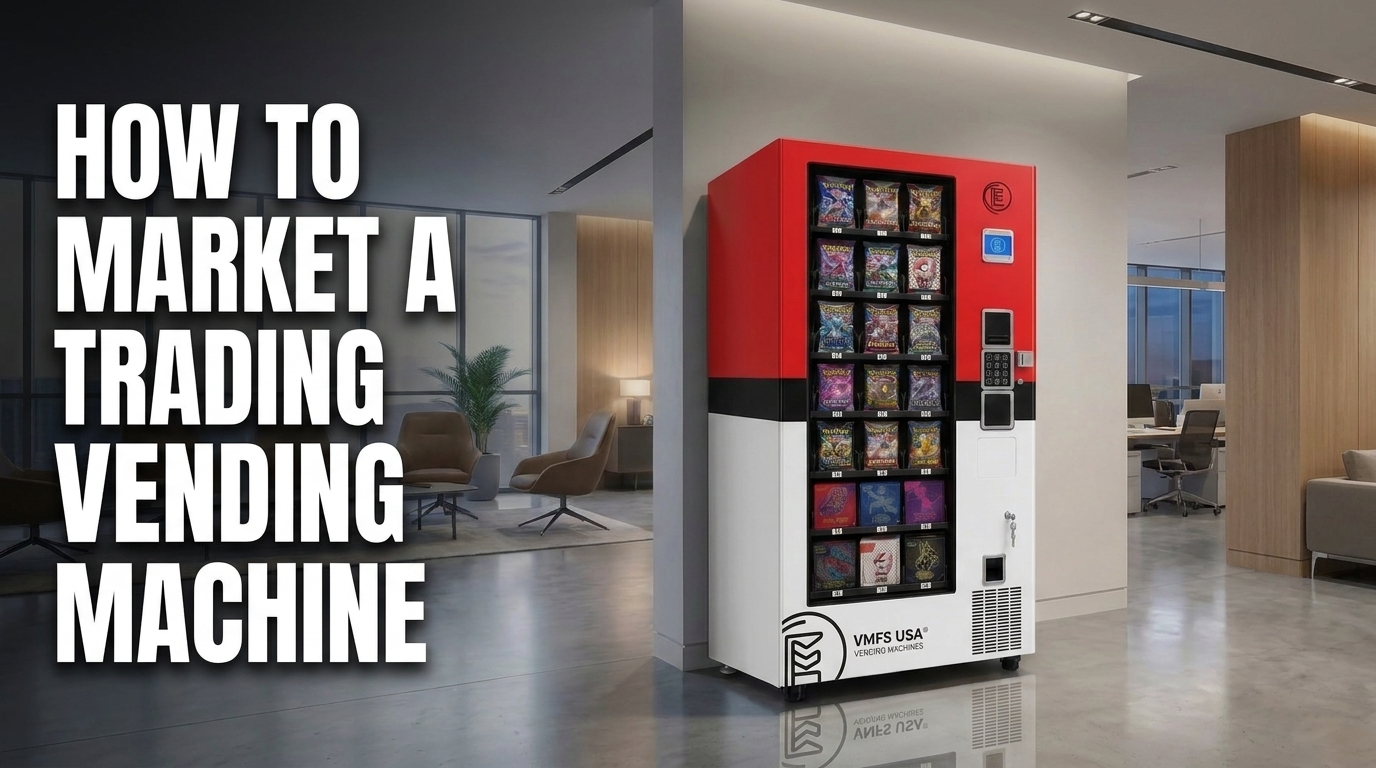
How to Market a Trading Card Vending Machine: The Definitive Operator’s Blueprint
The Trading Card Vending Business Ecosystem
A trading card vending machine is an automated retail platform designed to dispense booster packs, single cards, slabbed graded cards, and protective accessories directly to collectors and gaming enthusiasts.
Automating Trading Card Game (TCG) sales removes traditional brick-and-mortar overhead like staff wages, high square-footage commercial rent, and strict operating hours. Success requires integrating targeted physical placement, precise product selection, and real-time inventory tracking.
Modern card collectors range from casual impulse buyers purchasing single packs to serious investors searching for high-value graded cards. Premium automated hardware from VMFS USA enables operators to capture this market through secure, cash-free transactions available 24/7.
Understanding TCG Market Dynamics and Consumer Intent
Trading card game buyers are driven by scarcity, the excitement of opening packs, and competitive gameplay needs. Understanding these purchasing triggers determines how you stock and market your machines.
Casual buyers purchase low-friction items like single booster packs ($4 to $6) or mystery packs ($10 to $20) on impulse. Competitive players seek specific single cards, protective card sleeves, deck boxes, and playmats. Collectors and investors target sealed booster boxes, special edition bundles, and PSA or BGS graded cards ($50 to $300+).
Marketing your machine requires tailoring its visual branding and product layout to these distinct buyer segments. Vibrant vinyl machine wraps featuring popular card art instantly Signal product availability to nearby hobbyists.
Selecting the Right Vending Hardware
Dispensing delicate paper cards and high-value graded acrylic slabs requires specialized vending mechanics rather than standard snack coils. Dropping paper card packs from upper shelves can damage corners, instantly destroying their commercial value.
Operators utilize customized drop-shelf systems, elevator-conveyor mechanisms, or locker-style configurations to protect product condition. Specialized units found in the specialty vending machines collection feature smooth elevator delivery belts that transport products safely to the retrieval bin.
Smart retail technology has also introduced friction-free options. Operators deploying AI grab-and-go vending machines allow customers to swipe a credit card, open the transparent door, inspect graded card slabs directly, and automatically pay for the items they select.
Strategic Location Acquisition for Maximum Foot Traffic
Strategic location acquisition for a trading card vending machine involves identifying host venues with high foot traffic, long customer dwell times, and demographic alignment with TCG collectors.
Machine performance depends heavily on physical placement. Placing a machine in a location with high foot traffic but low demographic overlap yields lower conversion rates than placing it in a targeted venue with lower traffic but higher interest.
Evaluating potential locations requires measuring total daily foot traffic, assessing venue security, checking power supply access, and verifying reliable cellular signal strength for payment processing.
High-Converting Location Profiles
Ideal venues for TCG vending machines attract hobbyists who possess discretionary income and active interest in gaming or collectibles.
Local game stores (LGS), comic book shops, and esports arenas serve as primary locations. These venues generate high traffic during weekly tournaments, offering an ideal opportunity to capture sales when staff counters are busy or closed.
Secondary locations include suburban shopping malls, retro video game arcades, family entertainment centers, skate parks, and college student centers. Outdoor venues like night markets or strip-mall walkways can also work when housed inside durable outdoor vending machines equipped with climate control and reinforced security enclosures.
Operators analyzing prospective sites should review detailed site evaluation metrics by learning how to choose a profitable vending location to avoid underperforming placements. Researching established traffic patterns within the best vending locations provides baseline benchmarks for monthly transaction expectations.
Host Agreements and Commission Split Models
Securing location rights requires presenting a clean business proposal to property managers or business owners that highlights mutual profitability and added foot traffic.
Operators typically structure host agreements using a fixed monthly footprint rent ($100 to $300 per month) or a revenue-sharing model (5% to 15% of gross sales). Fixed rent guarantees predictable overhead, while commission splits align your financial performance with the host venue’s interests.
When negotiating revenue splits, review the standard breakdown of a vending machine revenue split operator vs location vs supplier to maintain target operating margins. Always formalize placements using an execution-ready vending machine contract template that establishes liability bounds, power consumption utility responsibilities, and clear term length guidelines.
Property owners with unused commercial space can list their location specifications to connect directly with active machine operators through VPlaced location services.
Product Curation, Pricing, and Inventory Rotation
Product curation for trading card vending machines balances high-velocity, lower-margin sealed booster packs with lower-velocity, high-margin singles, mystery packs, and protective accessories.
Stocking your machine correctly prevents dead inventory space while keeping customers engaged. A well-designed inventory grid builds trust through consistent availability of core products while encouraging repeat visits with rotating stock.
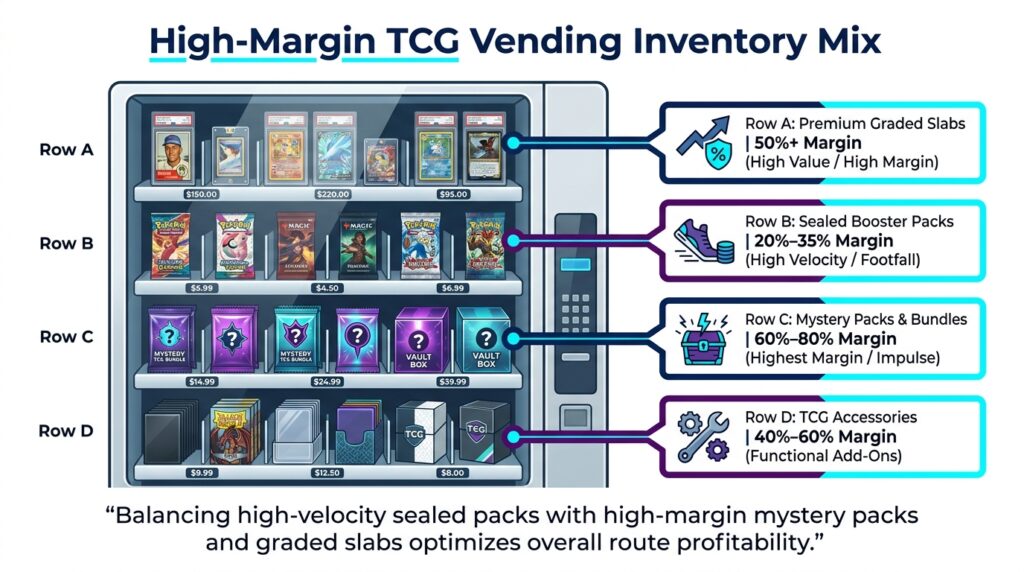
Operators should monitor collector trends, new card set releases, and tournament ban lists to align product selection with real-time market demand.
Building High-Margin TCG Product Mixes
A profitable machine inventory balances low-risk staple products with high-margin specialty items.
Sealed booster packs from major franchises—including Pokémon, Magic: The Gathering, Yu-Gi-Oh!, and One Piece—serve as core foot-traffic drivers. While wholesale prices on sealed booster boxes offer lower margins (20% to 35%), their consistent sales volume generates reliable cash flow.
Custom mystery packs created by operators generate margins exceeding 60% to 80%. These packs combine bulk single cards with a guaranteed holofoil or vintage card drop, offering high perceived value while clearing out excess inventory.
For machines with precise card drop technology, stocking a dedicated schedule like the Pokemon vending machine stocking schedule aligns restocks with set release dates and local tournament days.
Dynamic Pricing and Inventory Rotation
Dynamic pricing in automated TCG retail adjusts pack and card prices based on current secondary market values tracked on platforms like TCGPlayer and eBay Sold listings.
Because trading card prices fluctuate based on competitive popularity and collector trends, fixed pricing can cause items to become underpriced or overpriced. Digital price tags or telemetry-connected touchscreens let operators update pricing remotely across an entire route without printing new physical labels.
To maintain strong sales velocity, implement structured product rotation strategies. Reviewing operational tactics on how to price products for profit without losing sales helps protect your margins during broader market shifts.
Regularly refreshing machine selections maintains long-term customer engagement. Understanding the importance of product rotation in vending machines ensures slow-moving items are replaced with trending sets before sales slow down.
Digital and Guerrilla Marketing Strategies
Digital and guerrilla marketing for trading card vending machines combines local search visibility, geotagged social content, and community engagement to drive foot traffic directly to the machine’s physical location.
Unlike traditional vending operations that rely solely on passive foot traffic, TCG vending machines benefit from active online promotion. Collectors will travel significant distances if they know a machine contains rare packs, imported Japanese boxes, or high-value chase cards.
Integrating digital discovery channels with physical promotional drops creates predictable sales spikes around machine restocks.
Local SEO and Digital Map Optimization
Optimizing your local online footprint ensures collectors searching for trading cards nearby can quickly locate your machine.
Claim and verify a Google Business Profile listing for each machine placement using specific naming conventions, such as “[Brand Name] TCG Vending – [Location/Mall Name].” Category selections should include “Trading Card Shop,” “Collectibles Store,” and “Vending Machine Supplier.”
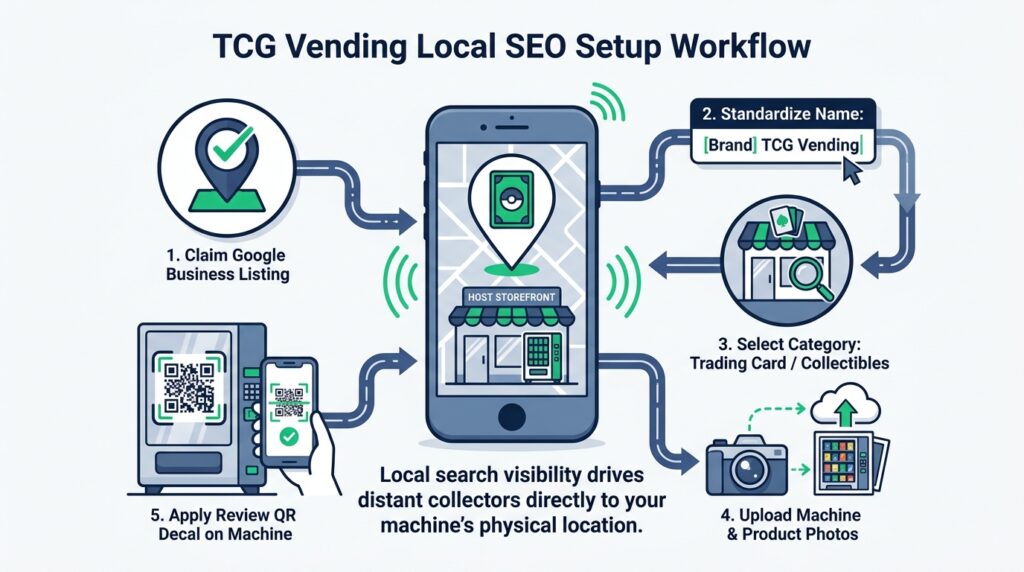
Upload clear photos showing the machine’s front design, touchscreen menu, credit card reader, and host store storefront. Consistently adding geotagged photos during restock visits signals active operation to local search algorithms.
Encourage customers to leave Google reviews by placing a small QR code sticker on the machine’s front panel that links directly to your review profile.
Social Media Hype, Chase Card Drops, and Community Engagement
Short-form video platforms like TikTok, Instagram Reels, and YouTube Shorts provide ideal channels for promoting trading card vending inventory.
Publish restock videos showing the machine being loaded with sealed booster packs, Japanese import boxes, or PSA 10 graded slabs. Film short clips of the machine dispensing packs, or share video footage from customers pulling rare cards directly from your machine.
Organize scheduled “Chase Card Drops” where a high-value card (e.g., a vintage Charizard or serialized card) is loaded into a specific mystery pack slot. Announce the exact drop time on Instagram and local Facebook collector groups to generate immediate foot traffic and line-ups at the machine.
Partnering with local gaming influencers or TCG content creators amplifies this reach. Offering creators store credit or free pack pulls in exchange for filming their experience introduces your automated retail location to an established local audience.
Machine Telemetry, Security, and Legal Protection
Machine telemetry, security, and legal protection form the operational backbone of a scaled trading card vending route.
Because trading card inventory carries high value per cubic inch, these machines require stronger physical security and inventory tracking than standard food and beverage equipment. Real-time telemetry systems prevent stockouts of high-margin items while alerting operators to technical or security issues immediately.
Establishing proper business entity protection isolates your personal assets from commercial liabilities as your automated retail footprint grows.
Security Protocols and Theft Mitigation
Protecting high-value TCG inventory requires combining physical hardware protection with continuous electronic monitoring.
Install heavy-duty bolt-down kits that secure the machine chassis directly to concrete flooring, preventing tipping or physical displacement. Equipping units with shatterproof polycarbonate front windows and anti-prying steel lock brackets deters physical break-in attempts.
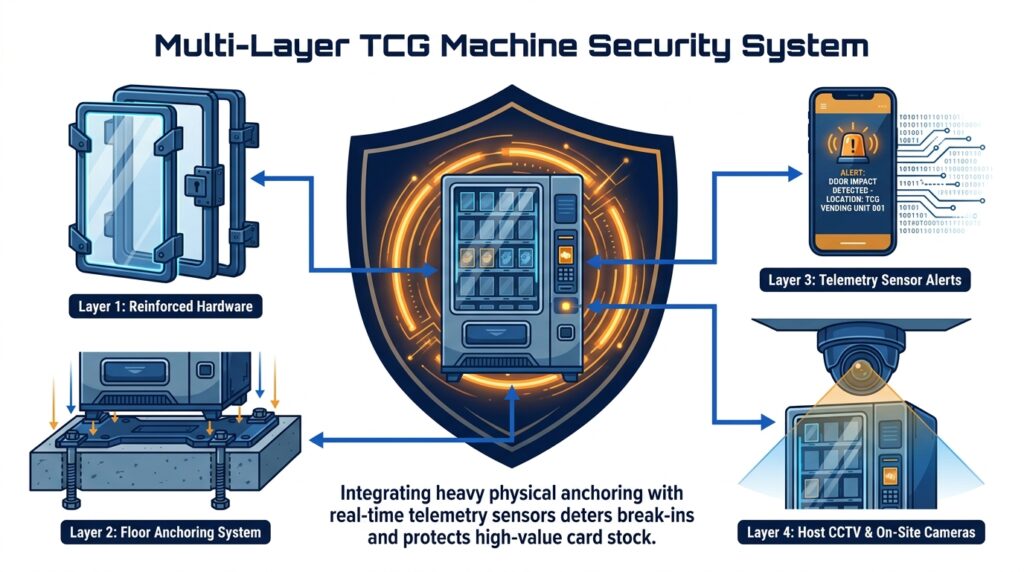
Telemetry hardware sends real-time alerts to your mobile device if a machine door opens unexpectedly or experiences physical impact. Reviewing essential practices for vending machine security helps protect your equipment and stock investments.
To ensure long-term uptime and protect inventory from environmental risks like humidity, implement routine maintenance protocols based on standard vending machine initial setup guidelines. Proper operational management turns automated retail into sustainable, passive income with vending machines.
Business Formation and Legal Infrastructure
Establishing an independent legal entity protects your personal assets and simplifies commercial contracting with property managers.
Operating as a Sole Proprietorship exposes personal assets to business liabilities, including property damage, product liability disputes, or contract claims. Forming a Limited Liability Company (LLC) creates a protective legal barrier between personal assets and commercial liabilities.
Operators setting up business structures can form an LLC for a vending machine business to ensure compliant state tax registration, correct sales tax structure, and proper liability protection.
Maintain separate commercial bank accounts, secure general liability insurance, and obtain local reseller permits to purchase inventory tax-free from official distributors.
Marketing Channel ROI and Performance Comparison
Selecting the right combination of marketing channels determines how quickly a new trading card vending machine reaches profitability.
Different marketing tactics vary in upfront acquisition cost, ongoing labor requirements, conversion rates, and long-term customer retention. Combining hyper-local organic digital channels with physical host partnerships delivers the highest return on investment for automated TCG retail.
The following table compares the primary marketing channels used by trading card vending operators:
| Marketing Channel | Upfront Cost | Time Commitment | Conversion Rate | Primary Target Audience | Overall ROI |
| Google Maps & Local SEO | Low ($0 – $100) | Low (1 hr/week) | Very High (30%+) | Active searchers seeking cards nearby | Exceptional |
| TikTok & Instagram Reels | Low ($0 – $50) | Medium (3-5 hrs/week) | High (15%-25%) | Young collectors, impulse buyers | High |
| Host Store Cross-Promotion | Very Low ($0) | Low (Setup only) | High (20%-30%) | Established hobby store foot traffic | High |
| Local Tournament Sponsorship | Medium ($50 – $200) | Low (Event-based) | High (15%-20%) | Competitive players, core collectors | Moderate to High |
| Paid Geofenced Social Ads | Medium ($100 – $300) | Medium (2 hrs/week) | Moderate (5%-10%) | Broad local demographics | Moderate |
| On-Machine Vinyl & Signage | Low ($100 – $250) | Low (One-time) | Immediate (Impulse) | Existing venue foot traffic | Exceptional |
Pros and Cons of Trading Card Vending Machines
Evaluating the operational advantages and challenges of trading card vending helps operators allocate capital effectively and avoid common setup mistakes.
Pros
- Low Operating Overhead: Eliminates retail store staffing costs, utility bills, and large commercial lease commitments.
- High Margin Potential: Custom mystery packs, single cards, and accessories can yield gross profit margins between 40% and 80%.
- 24/7 Sales Capability: Generates revenue outside normal hobby shop hours when placed in high-traffic, accessible venues.
- Compact Physical Footprint: Requires only 4 to 8 square feet of floor space, making placement pitches appealing to host locations.
- Agile Inventory Management: Real-time telemetry monitoring allows operators to track stock remotely and adjust prices instantly.
Cons
- High Theft Target Risk: Small, high-value inventory items attract potential theft and require enhanced physical machine security.
- Inventory Price Volatility: Secondary market card prices shift rapidly, requiring active monitoring and price adjustments.
- Product Vulnerability: Delicate paper card packs require specialized drop-shelf or elevator delivery systems to prevent edge damage.
- Distributor Access Hurdles: Securing wholesale accounts for official sealed product boxes often requires established business credentials.
Frequently Asked Questions
How do I market a trading card vending machine to local collectors?
Market directly to local collectors by creating a Google Business Profile listing for the machine, posting restock videos on Instagram and TikTok, and sharing updates in regional Facebook collector groups. Announce mystery pack additions and rare chase card drops to encourage direct visits.
Where is the most profitable place to put a trading card vending machine?
The most profitable locations include local card shops, comic book stores, shopping malls, video game arcades, family entertainment centers, and esports arenas. These venues provide high foot traffic from enthusiasts who already have discretionary income and interest in collectibles.
How much profit margin can you make on TCG vending machines?
Profit margins range from 20% to 35% on standard sealed booster packs, and up to 50% to 80% on custom mystery packs, single cards, and protective accessories. Overall profit depends on your inventory mix, machine location foot traffic, and host commission terms. You can review detailed benchmarks in our vending machine profit margin guide.
What type of trading cards sell best in automated vending machines?
Sealed booster packs from major franchises like Pokémon, Magic: The Gathering, and Yu-Gi-Oh! drive consistent sales volume. Custom mystery packs, Japanese import edition booster packs, and PSA-graded singles generate the highest profit margins per transaction.
How do chase card drops boost vending machine sales?
Chase card drops create excitement by adding a high-value card—such as a vintage or low-population graded slab—to a specific mystery pack slot. Advertising the drop time on social media generates local foot traffic and drives rapid pack sales from collectors seeking the feature card.
Do I need a special license to sell trading cards through a vending machine?
You generally need a standard business license, a state sales tax permit, and a location agreement with the property owner. You do not need specialized licenses like those required for age-restricted products, but you must collect and remit local sales tax on retail transactions.
How do I protect a trading card vending machine from theft and card weighing?
Secure the machine chassis directly to concrete flooring using heavy-duty bolt-down kits, install shatterproof polycarbonate glass panels, and place the unit under host venue surveillance cameras. Prevent pack weighing by using opaque mystery packaging or specialized drop-shelf dispensing compartments.
How often should I restock and rotate inventory in a trading card vending machine?
Restock weekly or bi-weekly depending on sales velocity tracked through your telemetry software. Rotate slow-moving stock every 30 days and add newly released card sets on their official street dates to maintain strong customer repeat visits.
Can I sell graded slabbed cards in a vending machine?
Yes, but you must use machines equipped with drop-shelf conveyor elevators, locker modules, or AI grab-and-go technology. Standard spring coil machines can drop heavy acrylic slabs onto hard surfaces, causing damage to both the slab case and the internal card.
How do I set up local SEO for a mobile or vending business?
Claim a Google Business Profile for your machine at the host location’s physical address, using a descriptive business name like “[Brand Name] TCG Vending.” Add high-resolution photos of the machine front, list available card sets, and encourage local buyers to leave online reviews.