How to Rent an Office Coffee Machine – Step-by-Step Guide
An office coffee machine rental is a contractual agreement where a commercial vendor provides beverage equipment, regular servicing, and optional consumable restocking to a business in exchange for a fixed monthly fee or cup-count minimum. Renting commercial beverage hardware eliminates high upfront capital expenses while ensuring workplace breakrooms maintain operational uptime through included technical maintenance.
Understanding how to rent an office coffee machine requires evaluating daily staff consumption, selecting appropriate machinery architecture, analyzing rental contract structures, and auditing supplier service level agreements (SLAs). Providing premium coffee in the breakroom directly increases workplace productivity and employee satisfaction because instant access to quality espresso reduces time spent off-site during work hours.
Understanding Office Coffee Machine Rental Models
Short-Term Rental vs. Long-Term Lease Agreements
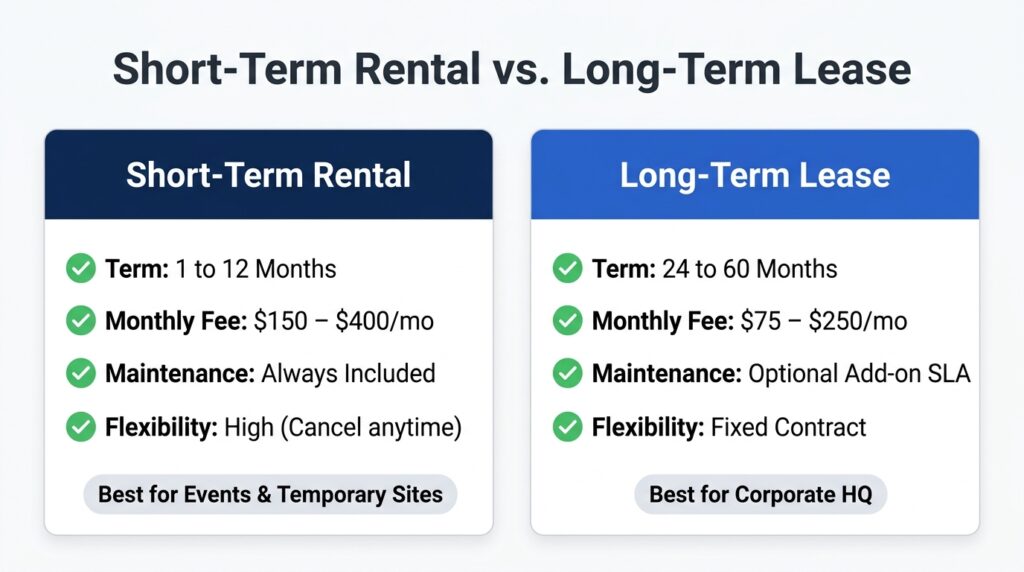
Short-term coffee machine rentals operate on month-to-month contracts that offer operational flexibility, whereas long-term leases span 24 to 60 months to deliver lower monthly hardware rates. Short-term rentals work best for seasonal offices, temporary construction trailers, or event venues because they allow equipment returns without early termination penalties.
Long-term commercial leases amortization schedule reduces monthly operational expenditures by spreading equipment hardware depreciation over several years. However, terminating a long-term lease prematurely incurs contract buyout fees because vendors lock in equipment financing schedules with third-party underwriters.
Fully Managed Service vs. Equipment-Only Rental
A fully managed office coffee service transfers all operational overhead—including bean restocking, milk powder refills, deep cleaning, and preventative repairs—to the vending vendor. Facilities teams prefer managed plans because automated vendor routing eliminates administrative inventory tracking and manual breakroom maintenance.
Equipment-only rentals provide the commercial machine, water filter, and emergency repair coverage, leaving daily cleaning and bean purchasing to internal company staff. This model lowers monthly rental invoices by 30% to 40% because the client assumes labor responsibilities for restocking consumables and executing daily wipe-down
Free-on-Loan Coffee Machine Contracts
Free-on-loan coffee machine agreements provide commercial dispensing hardware at zero monthly rental fee because the supplier recoups machinery costs through mandatory monthly consumable purchase volume commitments. Suppliers require clients to purchase a minimum quantity of proprietary coffee beans, milk powders, and cups directly from their catalog each month.
Free-on-loan contracts become cost-prohibitive if an office overestimates employee consumption because unused bean inventory accumulates while minimum monthly financial obligations remain static. Organizations analyzing long-term supply costs can review market dynamics in the coffee vending machine market 2025 report to benchmark wholesale consumable pricing.
How to Rent an Office Coffee Machine in 5 Steps
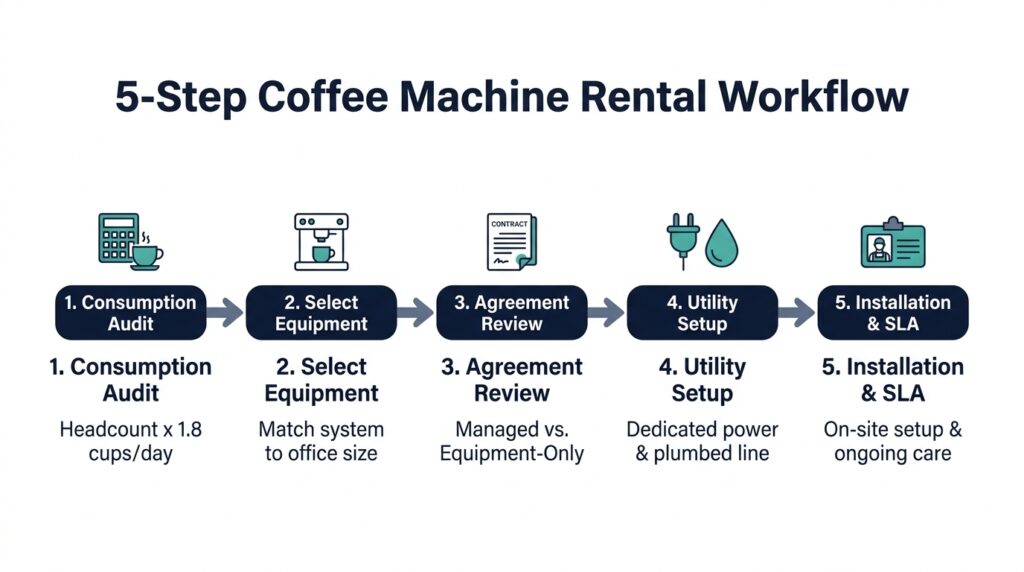
Step 1: Audit Daily Beverage Consumption and Employee Headcount
Calculating total daily cup demand requires multiplying the total employee headcount by the industry standard consumption metric of 1.8 cups per person per day. Peak operational volume occurs between 8:00 AM and 10:00 AM, requiring machinery that dispenses high hourly cup volumes without thermal recovery delays.
Under-specifying machine capacity leads to premature boiler burnout and frequent grinder jams because residential-grade internal components overheat during consecutive brew cycles. Over-specifying equipment wastes facility operational budget on high-capacity commercial boilers that exceed actual staff requirements.
| Office Category | Staff Headcount | Est. Daily Cup Volume | Recommended Boiler Capacity | Recommended System |
|---|---|---|---|---|
| Small Business | 5 – 25 | 10 – 45 cups | Single Thermo-block / 1.8L | Countertop Touchscreen |
| Medium Corporate | 25 – 100 | 45 – 180 cups | Dual Boiler / 3.5L Plumbed | Mid-Size Bean-to-Cup Vending |
| Large Enterprise | 100 – 500+ | 180 – 900+ cups | Commercial Dual Boiler / 8L+ | High-Capacity Freestanding Unit |
Step 2: Select the Ideal Commercial Machine Architecture
Commercial beverage hardware falls into three distinct structural categories: bean-to-cup espresso machines, liquid concentrate dispensers, and batch drip brewers. Bean-to-cup systems grind whole coffee beans on demand, producing premium specialty drinks like lattes, cappuccinos, and americanos through automated touchscreens.
Liquid concentrate and instant soluble dispensers process high-volume outputs rapidly because they dissolve concentrated coffee extracts without generating spent grounds. Companies determining the right mechanical architecture should consult the ultimate guide to office coffee machines to compare internal brewing mechanisms.
Step 3: Evaluate Supplier Service Level Agreements (SLAs)
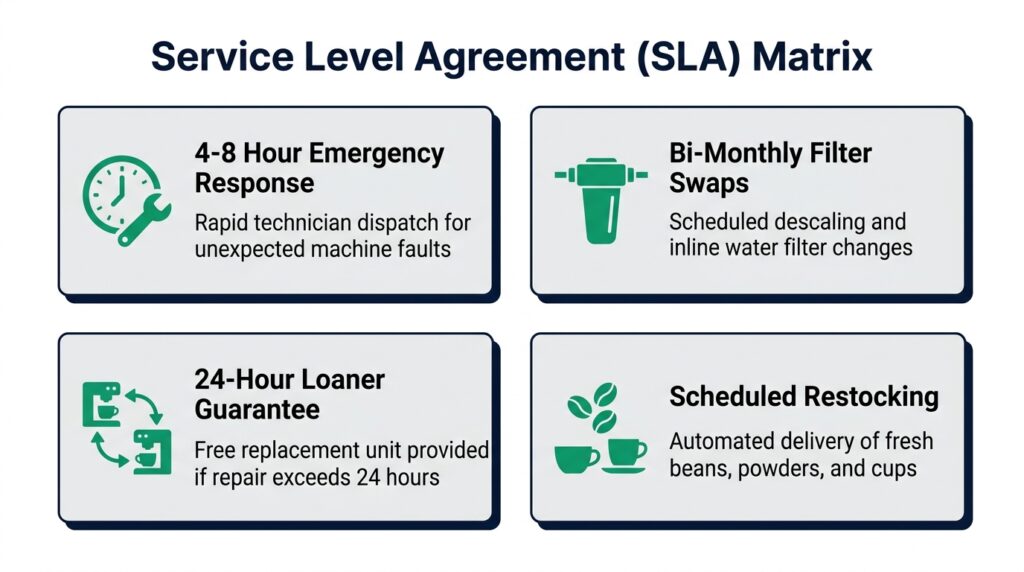
A commercial coffee machine service level agreement defines vendor response times for emergency equipment repairs, preventative maintenance schedules, and replacement machine guarantees. Reliable contracts mandate a 4-hour to 8-hour technician response window because equipment downtime directly disrupts office workflow.
Ensure the contract explicitly covers replacement parts, water filter cartridges, and burr replacements. Reviewing operational logistics detailed in coffee vending routes operations helps facilities teams understand how suppliers manage technician routing and parts delivery.
Step 4: Compare Total Cost of Ownership and Contract Terms
Evaluating rental quotes requires analyzing all recurring monthly fees rather than focusing solely on the base machinery rental price. Additional cost variables include delivery fees, installation charges, water filter replacement costs, and minimum consumable purchase commitments.
Request itemized proposals from at least three commercial coffee vending suppliers to compare line-item costs. Detailed breakdown metrics on pricing structures are available in the coffee vending machine rental cost framework.
Step 5: Prepare Breakroom Utilities and Coordinate Installation
Installing a commercial coffee machine requires verifying electrical voltage requirements, dedicated water line access, and cabinet weight capacities before equipment arrival. Plumbed bean-to-cup machines require a dedicated 3/4-inch cold water line with a shut-off valve within six feet of the machine.
High-output commercial brewers operating on 208V–240V power require NEMA electrical outlets and dedicated circuit breakers to prevent power trips during heating cycles. Complete physical space requirements are outlined in the coffee vending machine installation guide.
Evaluating Rental Costs and Financial Structures
Average Commercial Coffee Machine Rental Rates
Commercial coffee machine rental costs range from $75 to $450 per month depending on machine output capacity, beverage customization options, and included service tiers. Compact countertop units for small teams cost between $75 and $150 per month, while high-throughput bean-to-cup machines for large enterprise offices average $250 to $450 per month.
Industry Benchmark: An office of 50 employees spending $200 per month on a leased bean-to-cup machine pays approximately $0.12 per cup in equipment amortization, significantly cheaper than off-site coffee runs.
Facilities managers budgeting for breakroom upgrades can cross-reference pricing tiers across equipment formats in the vending coffee dispenser prices directory.
Hidden Costs in Office Coffee Lease Agreements
Hidden fees in coffee lease contracts typically originate from mandatory maintenance deductibles, water filter replacement fees, and auto-renewal clauses. Certain contracts contain strict auto-renewal terms that lock companies into another 12-month cycle if written notice is not submitted 90 days prior to contract expiration.
Carefully inspect contracts for “per-cup overage fees” that apply if daily drink volume exceeds pre-set lease thresholds. Reviewing complete cost breakdowns in the coffee vending machine price guide helps identify non-standard contract clauses.
Renting vs. Buying: Financial Breakdown
Renting a coffee machine preserves capital liquidity and guarantees ongoing maintenance support, whereas purchasing equipment delivers lower total lifetime costs but transfers maintenance risks to the buyer. Purchased machines depreciate over 3 to 5 years, requiring internal teams to handle repairs once manufacturer warranties expire.
Decision-makers weighing financial trade-offs between capital expenditure and operational lease models should consult the comprehensive guide to purchase office coffee machine before signing long-term agreements.
Selecting Equipment for Your Office Size
Small Office Solutions (1–25 Employees)
Small offices require compact, low-noise countertop machines that deliver barista-quality espresso drinks without occupying excessive breakroom counter space. These environments benefit from intuitive touchscreen interfaces that allow employees to select drinks without specialized operating knowledge.
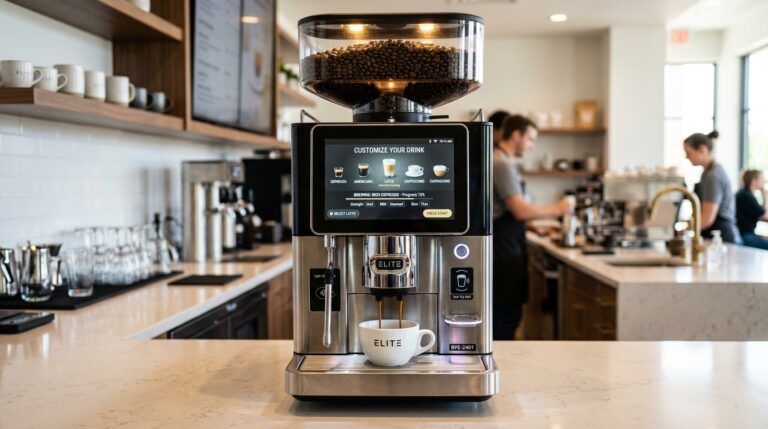
The Premium Countertop Touch Screen Coffee Machine ($4,850.00) is engineered specifically for small offices, boutique agencies, and executive suites requiring up to 150 services per fill. Featuring a 10.1-inch high-definition color touchscreen, dual powder hoppers, an integrated ceramic flat-burr grinder, and a dedicated decaf bean inlet, this unit produces customizable espressos, lattes, and hot chocolates at the push of a button. Operating on standard 120V electrical connections, it provides commercial-grade performance without complex utility retrofits.
Small Office Recommendation: Explore full product specifications for small workspace solutions in the commercial coffee vending machines collection.
Medium Office Solutions (25–100 Employees)
Medium-sized corporate offices require robust bean-to-cup systems with expanded bean hoppers, high-capacity internal waste bins, and direct water line connections. These systems handle continuous morning usage spikes without requiring constant refill interventions from office administrators.
The Pro Coffee Vending Machine delivers high-speed beverage dispensing engineered for mid-sized workplaces. Equipped with high-capacity ingredient canisters, precision bean grinders, and automated self-cleaning cycles, it maintains drink consistency across high daily volumes. Facilities managers looking for mid-size equipment benchmarks can review the curated guide to the best office coffee machines.
Large Enterprise Solutions (100+ Employees)
Enterprise headquarters and multi-floor corporate facilities require heavy-duty, high-throughput coffee stations or freestanding vending units capable of serving hundreds of drinks daily. These high-capacity systems feature automated cup dispensers, multiple ingredient canisters, and integrated cashless payment systems.
The CorePro Coffee Vending Machine is built for high-demand industrial breakrooms, corporate cafeterias, and enterprise campuses. Capable of dispensing up to 500 cups per fill, it features high-pressure extraction boilers, dual bean hoppers, automated cup drop mechanisms, and complete telemetric monitoring for live inventory tracking.
Enterprise buyers seeking specialized commercial configurations can browse options across the entire coffee vending machines collection.
Breakroom Placement, Utilities, and Installation Standards
Utility Connections: Plumbing vs. Internal Reservoirs
Direct water line plumbing eliminates manual water tank refills and protects internal water pumps from running dry during high-volume usage. Plumbed installations require an inline water filtration system to extract sediment, chlorine, and heavy minerals that cause internal boiler scale accumulation.
Manual water reservoir systems work well for temporary offices or locations lacking plumbing infrastructure. However, manual tanks increase staff labor demands because employees must refill reservoirs multiple times daily.
Ergonomics, Dimensions, and Traffic Flow
Positioning coffee equipment requires allocating adequate counter depth, overhead cabinet clearance, and surrounding floor space to accommodate peak traffic flow. Countertop commercial machines require 20 to 24 inches of depth and at least 8 inches of overhead clearance above bean hoppers for easy refills.
Positioning the coffee station near trash receptacles, milk refrigerators, and cup dispensers prevents breakroom congestion during peak morning hours. Facilities managers planning breakroom layouts can reference exact spatial guidelines in office coffee machine dimensions and select ideal room placement using the guide on the best location to place office coffee machine.
Maintenance, Hygiene, and Operational Best Practices
Daily Maintenance Protocols for Staff
Daily sanitation prevents milk bacterial growth, bean oil rancidity, and dispensing spout blockages in commercial coffee machinery. Office staff or floor captains must empty the spent grounds container, rinse fluid drip trays, and wipe down external touchscreens daily.
Automated milk systems must execute a steam flush at the end of every operating day. Staff members operating bean-to-cup units should follow step-by-step cleaning procedures outlined in how to use a coffee machine in office and refer to the complete coffee vending machine cleaning and maintenance guide.
Preventive Technician Servicing and Descaling
Preventative servicing conducted by certified technicians extends commercial coffee machine operating life and prevents catastrophic boiler failure. Water descaling removes calcium carbonate scale deposits that insulate heating elements and reduce brewing temperatures.
Technicians swap inline water filters every six months, replace worn silicone group head gaskets, and recalibrate internal grinder burrs. Establishing clear preventative protocols preserves machine uptime, directly supporting employee morale as detailed in how coffee machine helps in retaining employees.
Frequently Asked Questions
How much does it cost to rent an office coffee machine per month?
Renting a commercial office coffee machine costs between $75 and $450 per month depending on machine capacity and included service levels. Compact countertop units average $75 to $150 monthly, while enterprise bean-to-cup systems range from $250 to $450 per month.
What is included in a fully managed coffee machine rental agreement?
A fully managed coffee machine rental agreement includes the hardware lease, routine water filter replacements, emergency repair labor, preventative maintenance, and scheduled restocking of coffee beans, milk powders, and cups.
Is it better to rent or purchase an office coffee machine?
Renting is better for businesses seeking zero maintenance liability, free technical upgrades, and manageable monthly operating costs. Purchasing delivers a lower total lifetime cost but requires the business to cover repair expenses after warranty expiration.
What utilities are required to install a commercial coffee machine?
Commercial coffee machines require a dedicated 120V or 208V electrical outlet and a 3/4-inch cold water line with an accessible shut-off valve within six feet of the installation site.
How long do commercial office coffee machine rental contracts last?
Rental contracts typically range from 1-month flexible terms for short-term needs to 24, 36, or 60 months for long-term corporate leases offering lower monthly rates.
What happens if the rented coffee machine breaks down?
Under a standard rental SLA, the equipment vendor dispatches a technician to repair or replace the broken unit within 4 to 8 business hours at no additional charge to the client.
Can an office use its own coffee beans in a rented machine?
In equipment-only rentals, offices can use any compatible whole-bean coffee. In free-on-loan or managed agreements, clients must purchase approved beans directly from the vendor to maintain contract compliance.
How many daily cups can a commercial bean-to-cup machine dispense?
Commercial bean-to-cup machines dispense between 100 and 500+ cups per day depending on boiler volume, grinder burr size, and ingredient hopper capacity.
Are water filters necessary for rented office coffee machines?
Yes, commercial water filtration systems are mandatory because they remove minerals that cause boiler scaling and eliminate chlorine tastes that degrade coffee flavor.
How do cashless payment systems work on rented coffee vending machines?
Cashless payment systems integrate credit card readers, mobile tap-to-pay units, or employee badge scanners directly into the machine, enabling monetized or subsidized beverage programs as detailed in cashless payment systems for coffee vending machines.