Vending Machine Marketing Strategies – Proven Methods in 2026
Fundamentals of Automated Retail Marketing
Core Pillars of Unattended Retail Promotion
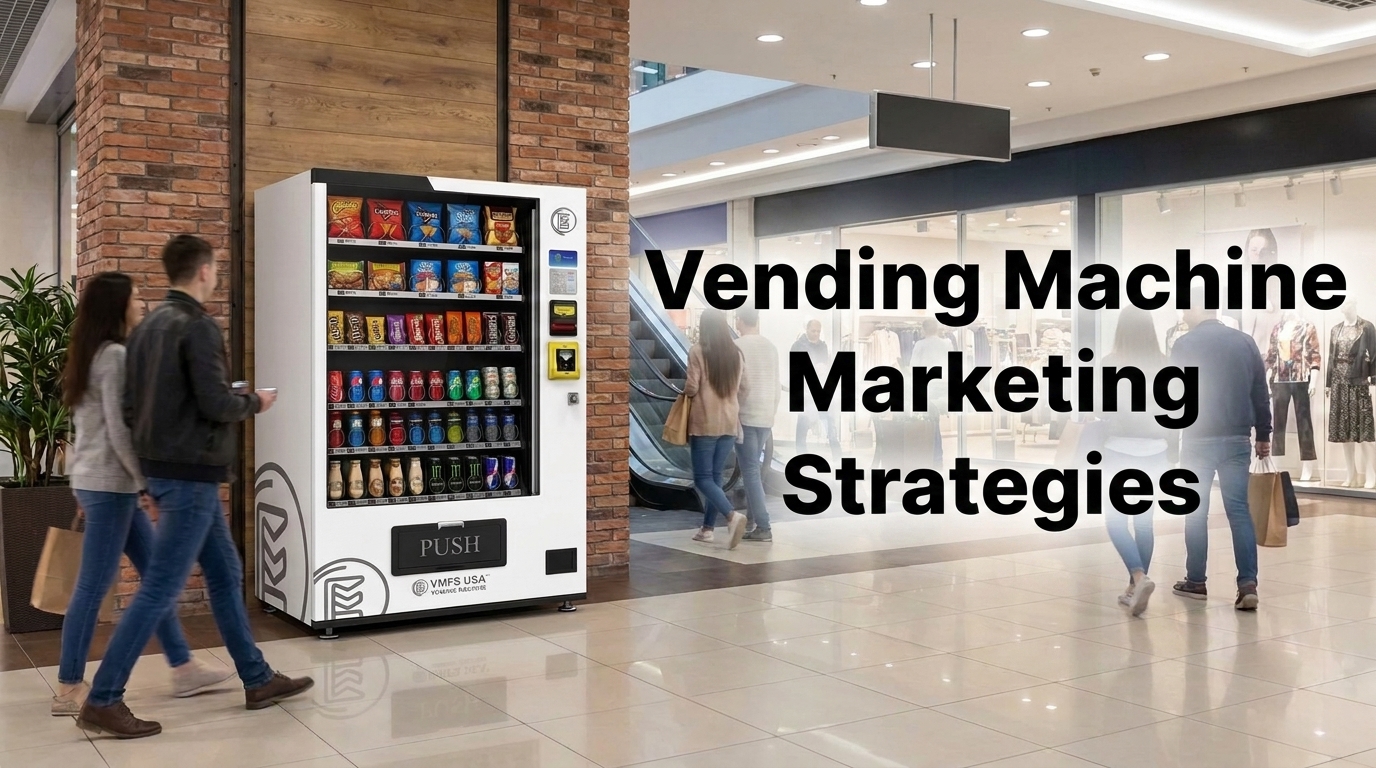
Vending machine marketing strategies encompass data-driven tactics designed to maximize sales volume, foot traffic conversion, and customer retention at self-service retail touchpoints. Unlike traditional brick-and-mortar retail, automated retail relies on hyper-local positioning, instant visual gratification, and frictionless transaction technology. According to research from the National Automatic Merchandising Association (NAMA), the U.S. convenience services market generates over $31 billion annually, driven largely by operators upgrading to smart retail technologies.
Effective marketing requires alignment between machine placement, product assortment, and point-of-sale engagement. Operators who integrate contactless payment systems, dynamic digital signage, and localized inventory curation experience significant revenue uplifts. Building a successful automated route starts with sourcing high-grade equipment from industry suppliers like VMFS USA, ensuring machine reliability across all operating locations.
Key Operator Takeaway: Marketing an automated retail machine is 80% location and visual placement, and 20% real-time product curation. If the target consumer cannot process your value proposition within 3 seconds, the transaction is lost.
Demographic Segmentation by Location Type
Demographic alignment dictates revenue velocity because consumer purchasing intent changes drastically across different micro-environments. A machine placed in a 24-hour gym requires a distinct stocking strategy compared to an equipment unit deployed in a corporate office building or hospital lobby.
| Location Category | Primary Consumer Persona | Target Product Categories | Marketing Key Performance Indicator (KPI) |
| Fitness Centers & Gyms | Health-conscious athletes, bodybuilders | Energy drinks, protein bars, hydration packs | Sales conversion per gym member |
| Corporate Offices | Salaried employees, desk workers | Specialty coffee, premium snacks, fresh meals | Daily repeat purchase rate |
| Healthcare Facilities | Shift workers, medical staff, visitors | Quick meal kits, caffeine products, healthy snacks | Night-shift transaction volume |
| Transit Hubs & Airports | Travelers, commuter rush | Travel-size personal care, premium beverages | Rapid transactional throughput |
Matching product selection to local consumer behavior dramatically increases machine turn rates. For example, deploying gym vending machines with targeted sports nutrition items captures captive audiences looking for immediate post-workout recovery options.
Location-Based Marketing and Host Outreach
Securing High-Traffic Placements and Contracts
Location acquisition marketing is the B2B process of pitching property managers, facility directors, and business owners to secure premium floor space for automated equipment. Winning high-foot-traffic locations requires presenting automated retail as a zero-cost amenity that boosts employee satisfaction and tenant retention.
Operators must evaluate daily foot traffic, competitor density, and dwell time before signing placement contracts. Understanding the equitable distribution between operators and hosts via a formal vending machine revenue split model prevents margin compression down the line. Property managers seeking vetted vending operators can utilize platforms built for location owners to match available commercial spaces with professional equipment managers.
Maximizing Physical Visibility and Wrap Branding
Physical machine presentation directly dictates impulse transaction volume because visual appeal builds consumer trust and draws eye attention in crowded corridors. Standard dark sheet-metal vending units blend into walls, whereas custom vinyl wraps generate immediate brand recognition.
- LED Accent Lighting: Bright internal illuminate glass fronts, increasing visibility by up to 35% in dim environments.
- Custom Graphic Wraps: Bold, high-resolution imagery showcasing core products establishes high perceived value.
- Clear Category Signage: Distinct headers defining machine offerings (e.g., “Fresh Grab & Go” or “Healthy Choice”) guide purchasing decisions.
Selecting flexible hardware like combo vending machines allows operators to market dual product lines—such as refrigerated cold beverages alongside ambient snacks—within a single machine footprint.
Product Mix Optimization and Dynamic Pricing
Impulse Buying Psychology and Planogram Design
Planogram optimization is the strategic placement of items on vending trays to exploit natural eye movement patterns and maximize high-margin sales. Consumers scan vending displays in a Z-shaped pattern, starting from the top-left shelf down to the bottom-right corner.
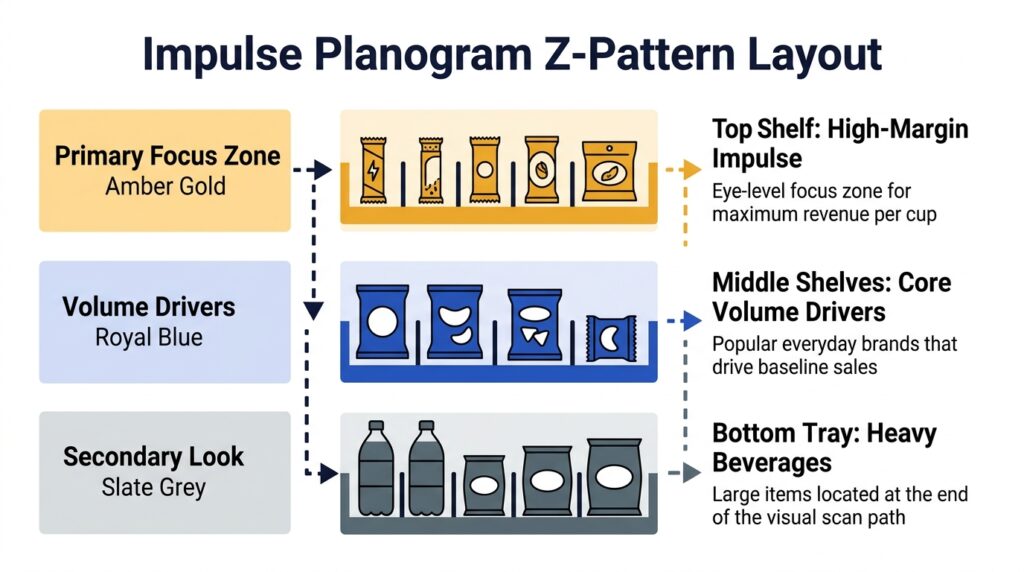
Placing top-margin impulse items at eye level increases revenue per transaction. Operators who consistently evaluate most profitable vending machine products adjust planograms quarterly to keep inventory fresh and aligned with seasonal shifts.
Data-Driven Pricing Tactics for High Margins
Pricing strategies must balance profit margins with local price sensitivity to avoid transaction drop-off. Setting prices based on localized convenience factors rather than traditional grocery retail benchmarks allows operators to maintain gross margins between 50% and 70%.
When evaluating how to price products for profit, operators must factor in wholesale product cost, spillage, merchant fees, and machine lease amortizations. Implementing slight $0.25 price adjustments across high-volume items yields substantial annual profit increases without triggering consumer pushback.
Technology Integration: Telemetry, AI, and Cashless Terminals
Telemetry Systems and Real-Time Inventory Control
Vending telemetry refers to cloud-connected hardware that transmits real-time sales, inventory levels, and error alerts from machines to central operator dashboards. Telemetry eliminates unnecessary service trips and prevents out-of-stock scenarios on top-selling SKUs.
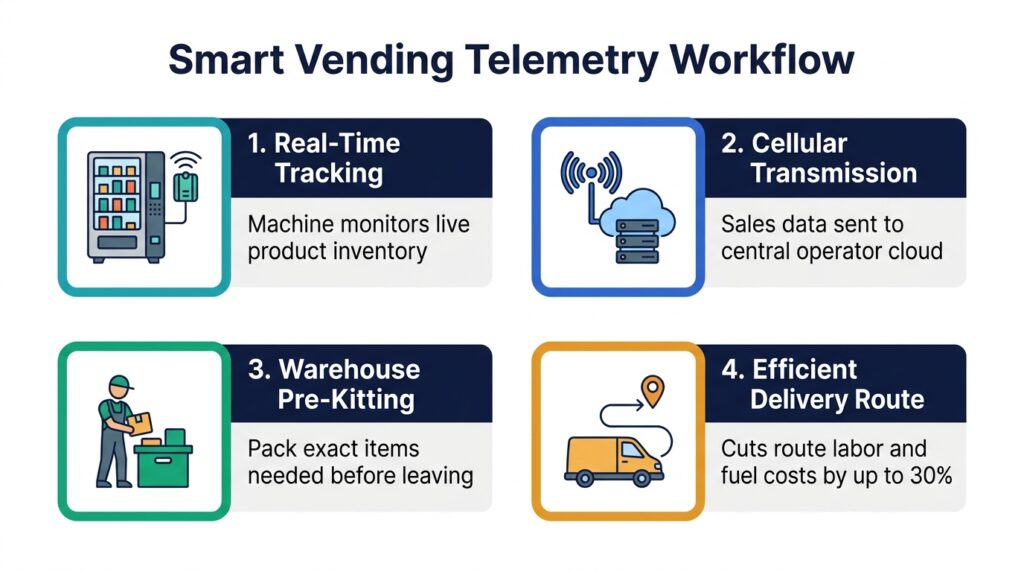
Implementing streamlined inventory control tracking enables operators to practice pre-kitting—packing exact restock inventory in warehouses before route drivers leave, cutting fuel and labor costs by up to 30%. Modern deployments often utilize automated systems like AI grab and go vending machines to track product removal instantly via computer vision sensors.
Digital Signage and Interactive Touchscreen Campaigns
Touchscreen interfaces and digital advertising displays turn passive machines into active media hubs. Industry trade data indicates that over 63% of modern vending installations feature cashless terminals supporting digital wallets, mobile apps, and promotional touchscreens.
Digital screens allow operators to run promotional upsells at checkout, display nutritional disclosures, and monetize third-party ad displays. Operators stocking organic or specialized dietary items leverage targeted healthy vending machine strategies on screen loops to attract wellness-focused consumers in schools and corporate settings. Dedicated deployments often utilize specialized healthy vending machines to meet institutional wellness mandates.
Legal Foundations and Route Scaling
Establishing Business Entities and Contracts
Proper legal structuring protects automated retail operators from personal liability and simplifies multi-machine expansion. Establishing an independent corporate entity ensures liability protection, tax efficiency, and seamless contract signing with commercial property hosts.
Before placing equipment on site, operators should formally form an LLC for a vending machine business to separate personal assets from corporate operations. Once structured, securing binding terms using a standard vending machine contract template guarantees machine protection, access rights, and clear utility responsibility.
Scaling Operations via Performance Metrics
Route scaling involves systematically evaluating key metrics—such as Revenue Per Machine (RPM), Route Density, and Inventory Turnover—to decide whether to expand, relocate, or remove low-performing assets.
Operational Insight: An underperforming machine generating under $100 per week should be relocated within 60 days. Reallocating equipment to higher-density locations yields better return on capital than attempting aggressive marketing on dead routes.
Operators seeking long-term growth must analyze asset allocation metrics to determine how to use real numbers to scale smarter. Beginner operators looking to purchase initial routes should first research where to buy vending machines from certified distributors to guarantee equipment longevity.
Strategic Comparison: Traditional vs. Smart Vending Marketing
Pros and Cons of Automated Retail Campaigns
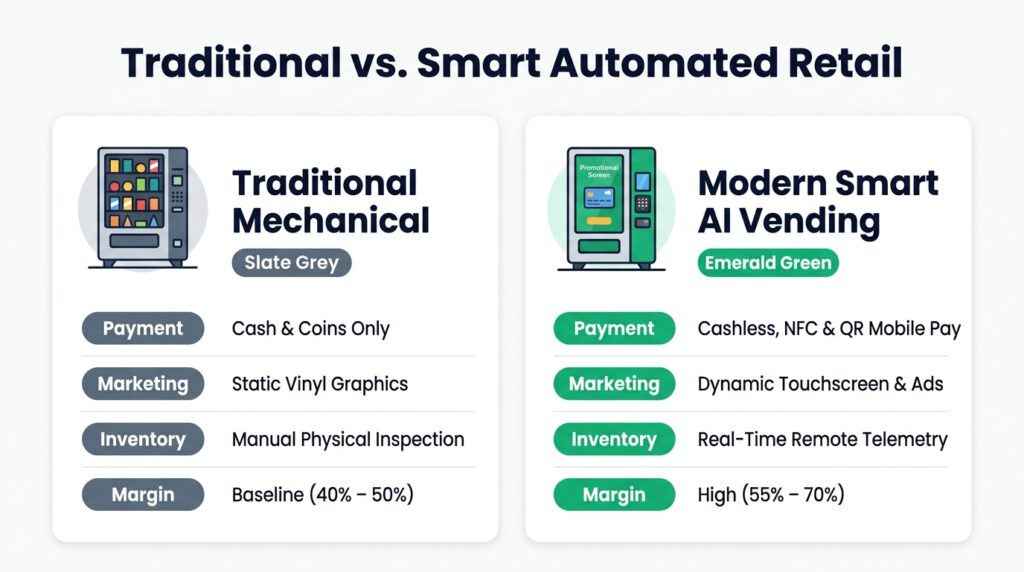
Comparing traditional legacy machines against modern smart vending systems highlights key trade-offs in capital expenditure, maintenance requirements, and overall marketing capability.
| Feature / Metric | Traditional Mechanical Vending | Modern Smart AI Vending |
| Initial Capital Expenditure | Low ($1,500 – $3,500 per unit) | Moderate to High ($4,500 – $9,000 per unit) |
| Payment Options | Cash and coin only | Cashless, NFC, Credit, QR Mobile Pay |
| Marketing Capability | Static graphics, basic labels | Dynamic touchscreens, targeted video ads |
| Inventory Visibility | Manual physical inspection | Real-time telemetry remote tracking |
| Average Profit Margin | Baseline (40% – 50%) | High (55% – 70% via dynamic pricing) |
Pros of Modern Smart Vending
- Higher Transaction Values: Cashless terminals increase average ticket sizes by 20% to 30% compared to cash transactions.
- Dynamic Promotions: Remote pricing updates enable off-peak discounts and automated product bundling.
- Reduced Shrinkage: Cloud inventory tracking isolates theft, machine jams, and mis-vends immediately.
Cons of Modern Smart Vending
- Higher Upfront Investment: Advanced telemetry hardware and touchscreen displays require higher starting capital.
- Software SaaS Fees: Telemetry and payment gateways incur monthly recurring network and processing costs.
- Technical Maintenance: Requires basic understanding of connectivity troubleshooting and digital hardware management.
Understanding the balance between costs, risks, and projected ROI is critical when reviewing how to start investing in vending machines as a scalable business.
Frequently Asked Questions
What are the most effective vending machine marketing strategies for beginner operators?
The most effective strategies focus on securing high-foot-traffic locations, installing cashless payment card readers, and applying custom machine vinyl wraps. Ensuring 100% stock availability of top-selling items prevents lost sales and builds customer trust.
How much do cashless payment readers increase vending machine sales?
Installing cashless payment readers increases total machine sales volume by 25% to 40%. Contactless credit card and mobile wallet transactions allow consumers to spend more per transaction without being constrained by paper cash.
How do I market my vending business to commercial property managers?
Pitch property managers by framing your vending equipment as a premium, zero-cost workplace amenity for tenants and employees. Highlight clean equipment, rapid restock schedules, cashless payment convenience, and revenue-sharing options.
What product margins should I target in my vending machines?
Operators should target gross product margins between 50% and 70%. Buying inventory in bulk from wholesale distributors keeps cost of goods sold (COGS) low while allowing competitive retail pricing.
What is a vending machine planogram and why does it matter?
A planogram is a visual diagram that dictates exact product placement on machine shelves to maximize sales volume. Placing high-margin items at eye level leverages natural impulse purchasing behavior.
How does telemetry technology improve vending machine profitability?
Telemetry provides real-time sales and inventory data via cellular connections, enabling operators to optimize restock routes, track popular SKUs, and eliminate unnecessary travel costs.
What is the best way to promote healthy vending machine options?
Promote healthy offerings by utilizing clear green category signage, displaying nutritional facts on digital touchscreens, and securing placements in schools, gyms, and corporate offices with wellness mandates.
How often should underperforming products be rotated out?
Underperforming products that rank in the bottom 10% of monthly sales volume should be replaced every 30 to 45 days to maintain high inventory velocity and avoid expiration waste.
Is dynamic pricing possible with modern smart vending machines?
Yes, smart vending machines equipped with digital price tags and cloud management software allow operators to alter prices remotely based on peak demand hours, inventory age, or promotional events.
Do custom vending machine wraps generate higher sales volume?
Custom graphic wraps increase sales volume by up to 30% by improving machine visibility, establishing brand credibility, and clearly communicating product offerings from a distance.