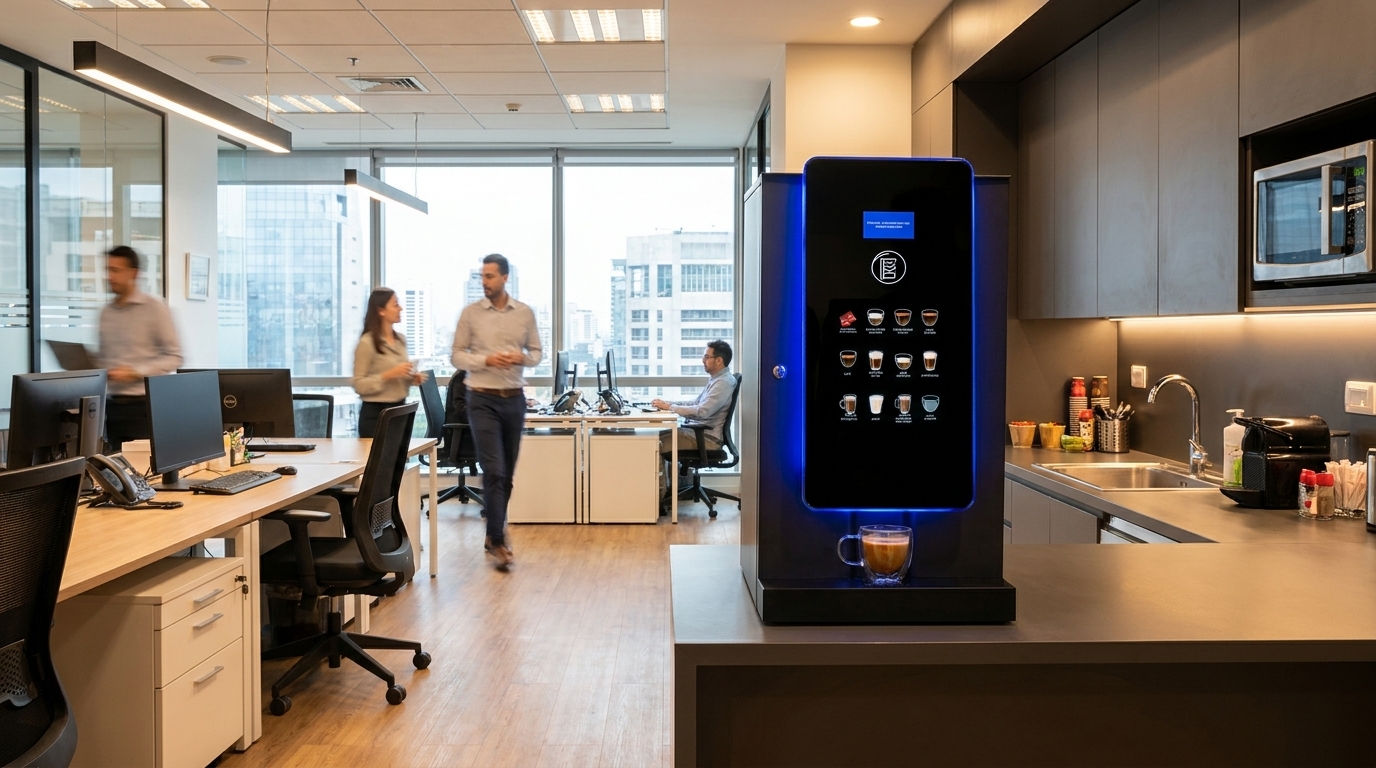
What Is the Best Commercial Coffee Machine for Office Use? Buyer Guide
Determining the Best Commercial Coffee Machine for Office Use
The best commercial coffee machine for office use is a high-throughput bean-to-cup espresso system or automated coffee vending machine capable of dispensing espresso-based drinks under 45 seconds while requiring minimal daily intervention. Finding the right system depends on daily cup demand, staff headcount, plumbing access, and whether the business intends to offer free drinks or recover costs using cashless payment systems.
Evaluating commercial hardware requires balancing upfront capital expense with long-term reliability and ingredient cost per cup. Workspaces that select commercial-grade units avoid the high failure rates and frequent repairs common with residential models used in business environments.
Reviewing a comprehensive guide to purchase office coffee machine helps establish operational baselines before investing in hardware.
Key Factors When Selecting Commercial Office Coffee Systems
Selecting office coffee hardware involves evaluating core mechanical and financial performance metrics:
- Daily Cup Throughput: The maximum number of consecutive drinks a machine dispenses without thermal lock, boiler depletion, or hopper exhaustion.
- Brewing Technology: Precision bean-to-cup grinders paired with high-pressure extraction pumps (15 to 19 bar) deliver authentic espresso, outperforming instant or pod-based dispensers.
- Milk System Design: Fresh milk systems provide café-quality microfoam, while automated soluble milk canisters eliminate daily sanitation routines and milk spoilage risks.
- Telemetry and Payment Hardware: Multi-Drop Bus (MDB) compliance enables integrated credit card readers, mobile NFC payments, and telemetry software for tracking machine performance and managing inventory.
Commercial Machine Classification by Office Volume
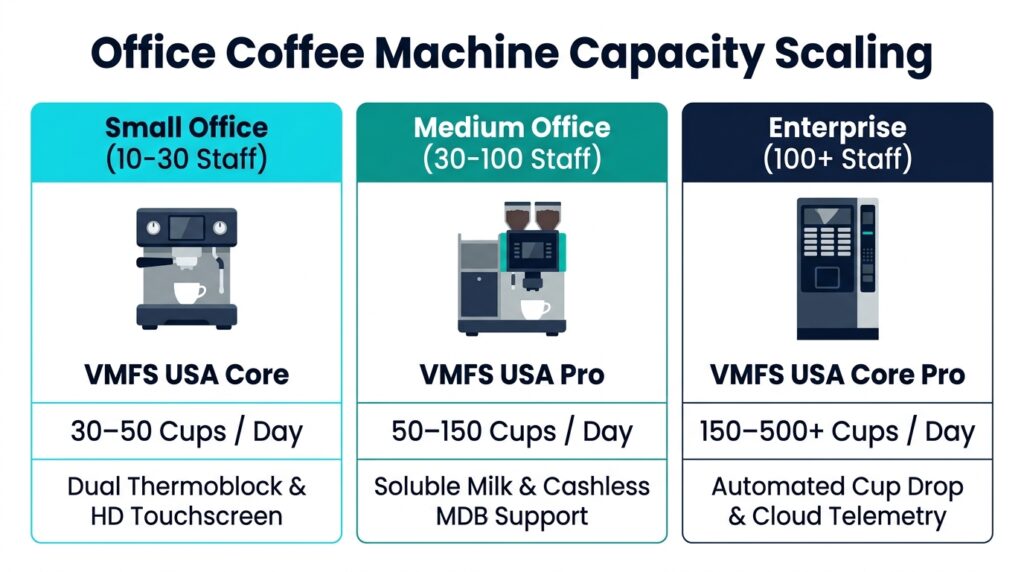
Office size directly dictates the mechanical capacity, boiler volume, and hopper size required for a commercial coffee machine. Matching equipment specifications to staff numbers prevents equipment overheating and shortens wait times during morning rush hours.
Small Offices (10 to 30 Staff Members)
Small offices need compact bean-to-cup machines that sit comfortably on standard breakroom counters without requiring dedicated plumbing. These units generate between 20 and 50 cups per day, operating via manual water reservoirs or direct water line connections.
Compact units prioritize low noise levels, intuitive touchscreens, and simple cleaning routines. Reading about the best coffee machines for home office provides additional perspective for smaller team setups.
Medium-Sized Offices (30 to 100 Staff Members)
Medium offices generate peak usage during morning arrivals and post-lunch hours, requiring machines built for 50 to 150 daily extractions. These machines feature dual thermoblock heaters, larger bean hoppers (1.2 kg to 2 kg), and direct water plumbing.
Units in this class often include multi-canister setups for cocoa, chai, and powdered milk. This allows the machine to dispense cappuccinos, lattes, and hot chocolate without requiring continuous liquid milk sanitation.
Large Offices and Corporate Facilities (100+ Staff Members)
Enterprise environments require high-capacity floor-standing or heavy-duty countertop coffee vending systems engineered for continuous operation. These machines handle 150 to over 500 cups daily, featuring automated cup droppers, telemetry tracking, and integrated payment processing.
High-capacity systems lower ingredient costs per cup by using bulk coffee beans and soluble powders. Reviewing the overall best office coffee machines offers a clear framework for comparing mid-tier and enterprise equipment options.
Top Recommended Commercial Coffee Machines for Office Workspaces
Commercial coffee dispensers must combine consistent extraction, durable components, and low maintenance requirements. VMFS USA engineers automated beverage equipment specifically designed for corporate breakrooms, commercial facilities, and vending operations.
The full lineup of enterprise dispensers is available on the VMFS USA Coffee Vending Machines Collection page.
VMFS USA Core Premium Countertop Touch Screen Coffee Machine (Best for Small Offices)
The VMFS USA Core Premium Countertop Touch Screen Coffee Machine delivers premium espresso beverages in a space-saving design built for small-to-medium offices and executive suites.
Equipped with a high-definition touchscreen interface, this machine lets users order lattes, cappuccinos, americanos, and lattes with a single tap. Its commercial ceramic burr grinder extracts consistent espresso flavors without burning the coffee beans.
Its compact footprint fits beneath standard 18-inch upper kitchen cabinets while supplying enough hot water for continuous brewing during peak morning hours. Understanding how to use a coffee machine in office environments ensures staff operate the unit safely and efficiently.
Pros and Cons
- Pros: Compact footprint, intuitive HD touchscreen, quiet grinder operation, dual thermoblock heaters for instant steam and brew cycles, easy-to-clean brew group.
- Cons: Requires manual restocking during high-volume events, smaller internal waste bin capacity compared to floor-standing units.
VMFS USA Pro Coffee Vending Machine (Best for Medium Offices)
The VMFS USA Pro Coffee Vending Machine provides durable, medium-capacity performance built for mid-sized corporate floors, call centers, and commercial suites.
This unit combines a whole-bean espresso brewer with high-capacity powder canisters for milk and chocolate. This design allows the machine to serve specialty espresso drinks, hot chocolate, and chai lattes without the maintenance demands of liquid fresh milk lines.
Its built-in MDB interface supports cashless payment devices, allowing businesses to subsidize drinks or run pay-per-cup programs. Exploring a coffee vending machine price guide helps financial managers model equipment costs alongside expected beverage revenue.
Pros and Cons
- Pros: Handles 150 cups daily, low maintenance soluble milk system, MDB cashless payment support, fast beverage dispense times (under 30 seconds).
- Cons: Larger footprint requires dedicated counter space or a specialized utility stand.
VMFS USA Core Pro Commercial Coffee Vending Machine (Best for Large Offices and Enterprises)
The VMFS USA Core Pro Commercial Coffee Vending Machine is an enterprise-grade beverage solution engineered for high-traffic corporate offices, manufacturing plants, and medical centers.
The Core Pro features a large touchscreen display, automated internal cup dispensing, and automated cleaning cycles. Its heavy-duty commercial brew group holds up to 14 grams of ground coffee per shot, delivering true double-espresso extraction for large travel mugs.
With cloud-based telemetry, facility managers can monitor inventory levels, track sales performance, and receive automated maintenance alerts remotely. Reviewing broader the ultimate guide to office coffee machines details how high-capacity systems help simplify facility operations.
Pros and Cons
- Pros: High volume capacity (500+ cups/day), automated cup drop system, full cloud telemetry and cashless payment integration, multi-beverage menu customization.
- Cons: Higher initial capital investment, requires a dedicated 15A/20A electrical outlet and direct water connection.
Comprehensive Feature & Specification Comparison
Comparing technical specs across hardware tiers helps buyers match machine capabilities with daily office demands:
| Feature / Specification | Small Office (VMFS USA Core) | Medium Office (VMFS USA Pro) | Enterprise Office (VMFS USA Core Pro) |
| Recommended Daily Volume | 30 – 50 Cups | 50 – 150 Cups | 150 – 500+ Cups |
| Grinder Mechanism | Precision Ceramic Burrs | Heavy-Duty Steel Burrs | Dual Commercial Steel Burrs |
| Display Screen | 10.1″ HD Touchscreen | High-Contrast Digital Touch | 21.5″ HD Interactive Touchscreen |
| Water Supply System | Dual (Plumbed + Tank) | Direct Plumbed Water Line | Direct Plumbed Water Line |
| Milk Technology | Liquid / Micro-Foam | Automated Soluble Milk | High-Speed Soluble / Dual Liquid |
| Soluble Powder Canisters | 1 Canister (Optional) | 2 – 3 Canisters | 4 Canisters (Chocolate, Chai, Milk) |
| Payment System | Free Pour | Optional Cashless / MDB | Standard Telemetry + NFC/Card |
| Avg. Brew Speed (Espresso) | 35 Seconds | 25 Seconds | 20 Seconds |
| Internal Waste Bin | 30 – 40 Pucks | 75 – 100 Pucks | 200+ Pucks / Continuous Chute |
Financial Analysis: Capital Expenditure, Leasing, and Cost per Cup
Investing in an office coffee system requires analyzing initial capital equipment costs, ingredient overhead, and long-term operating expenses.
Capital Purchase vs. Leasing Models
Buying commercial machinery outright minimizes the total cost per cup over a 5-year operating lifespan. Companies can deduct the equipment purchase price in Year 1 using Section 179 tax depreciation rules.
Leasing equipment turns capital expenditure (CapEx) into predictable operational expenses (OpEx). Renting works well for growing businesses that prefer bundling machine hardware, routine servicing, and ingredient replenishment into one monthly invoice. Reviewing coffee vending machine rental cost data helps financial planners evaluate lease terms.
Cost per Cup Calculations
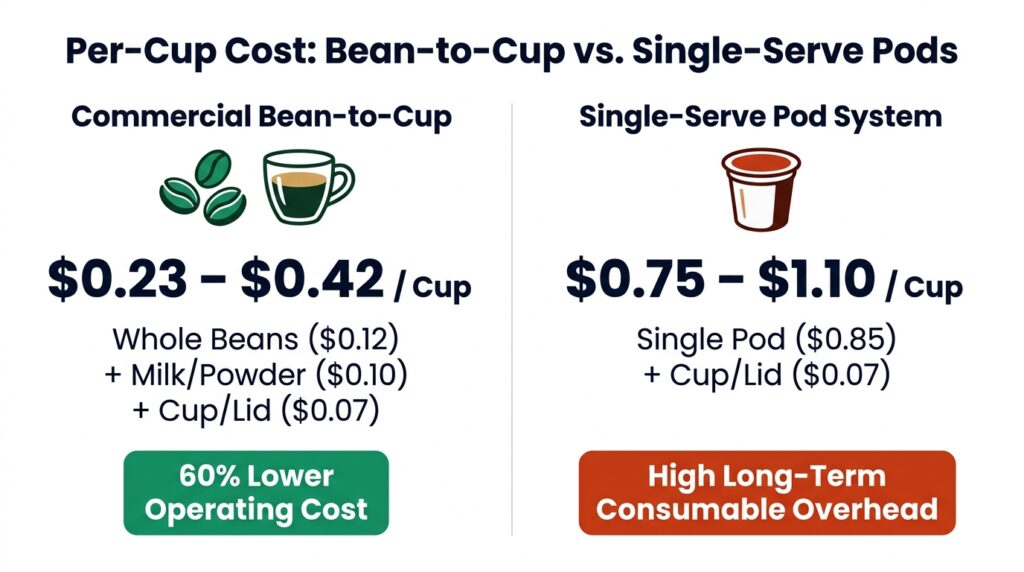
Understanding ingredient expenses shows how bean-to-cup machines deliver lower long-term costs than coffee pods or off-site cafe purchases:
- Whole Coffee Beans (10g shot): $0.10 – $0.18
- Fresh Milk / Soluble Milk (150ml): $0.08 – $0.15
- Commercial Cup & Lid: $0.05 – $0.09
- Estimated Total Cost per Cup: $0.23 – $0.42
Traditional single-serve pod systems average $0.75 to $1.10 per cup, making commercial bean-to-cup units 50% to 65% cheaper per beverage served.
Cost Recovery and Profitability via Cashless Payments
Adding cashless card readers and telemetry systems turns a standard workplace amenity into a self-funding asset. Offices can offer subsidized drinks ($0.50/cup) or set prices to cover ingredient costs and generate auxiliary revenue.
Installing cashless payment systems for coffee vending machines allows staff to pay using credit cards, Apple Pay, or employee ID badges. Analyzing whether are coffee vending machines profitable offers insight into setting pay-per-cup pricing structures.
Office Placement, Plumbing, and Ergonomics
Strategic placement of office coffee machinery reduces breakroom clutter, improves foot traffic, and ensures convenient access to power and water utilities.
Space Requirements and Footprint Planning
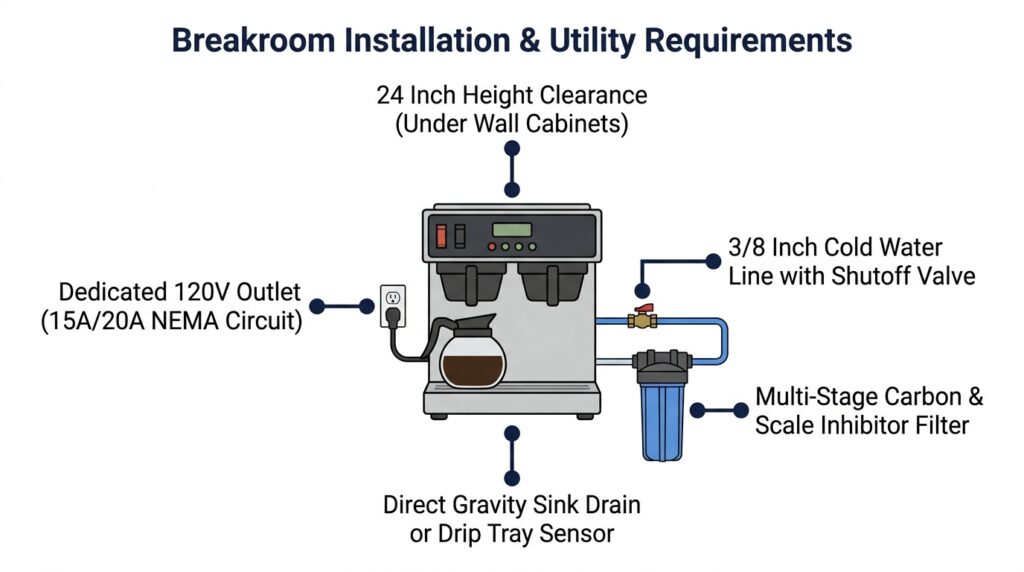
Countertop units require at least 18 to 22 inches of depth and 24 inches of vertical clearance to allow bean hopper refilling. Floor-standing vending machines require dedicated 3×3-foot floor spaces near main breakroom walkways.
Checking exact office coffee machine dimensions beforehand ensures the equipment fits comfortably without blocking doorways or counter work areas.
Plumbing and Water Filtration Architecture
Direct plumbing supplies water continuously to machine boilers, eliminating the need to refill water tanks manually. Connecting machines directly to water lines requires installing commercial water filtration systems to strip out scale-forming calcium and magnesium minerals.
Using proper water filtration prevents limescale accumulation inside internal boilers and heating blocks, protecting temperature stability and extending pump life.
Boosting Workplace Productivity and Employee Retention
Providing high-quality espresso in the office reduces time lost to external coffee runs. Employees save an average of 15 minutes per trip by making coffee in the breakroom rather than visiting outside cafes.
Quality coffee amenities demonstrate tangible appreciation for staff, improving daily morale and office culture. Research on how coffee machine helps in retaining employees underscores the value of upgrading breakroom beverage services.
Maintenance Protocols, Sanitation, and Machine Longevity
A structured preventative maintenance routine prevents mechanical breakdowns, ensures food safety, and keeps beverage flavor profiles consistent.
Daily and Weekly Maintenance Routines
Daily maintenance takes under five minutes when staff follow simple cleaning procedures:
- Rinse and sanitize milk lines or powder dispensing spouts.
- Empty internal coffee puck containers and drip trays.
- Wipe down exterior touchscreens and dispensing nozzles.
Weekly maintenance involves removing the brewing group assembly, rinsing off accumulated coffee oils, and clearing powder residues from hopper chutes. Following a detailed coffee vending machine cleaning and maintenance guide helps keep equipment running reliably.
Water Hardness Mitigation and Boiler Care
Limescale accumulation causes up to 70% of all commercial coffee machine service calls. Mineral buildup coats heating elements, restricting water flow and forcing boilers to consume more electricity to maintain extraction temperatures.
Facilities should test local water hardness and replace water filter cartridges every six months. Standardizing operational rules using an office coffee machine policy template helps staff maintain clear responsibilities for daily refills and sanitation schedules.
Frequently Asked Questions
What is the best commercial coffee machine for a small office of 20 people?
The VMFS USA Core Premium Countertop Touch Screen Coffee Machine is ideal for small offices, offering bean-to-cup espresso, dual thermoblock heaters, and an intuitive touchscreen in a compact footprint.
How much does a commercial office coffee machine cost?
Commercial office coffee machines cost between $1,500 and $3,500 for compact countertop units, $3,500 to $7,000 for mid-sized machines, and $7,000 to $12,000+ for enterprise floor-standing vending systems.
Should an office coffee machine be plumbed or use a water tank?
Plumbed water lines are best for medium and large offices because they ensure continuous water delivery without requiring staff to refill internal water tanks manually throughout the workday.
What is the difference between fresh milk and soluble powder coffee machines?
Fresh milk systems provide café-quality microfoam but require daily cleaning of milk lines, whereas soluble powder systems deliver quick cappuccinos and lattes with lower daily sanitation requirements.
How many cups per day can a commercial coffee machine produce?
Commercial coffee machines handle anywhere from 30 cups daily on entry-level countertop units to over 500 cups per day on high-capacity floor-standing vending systems.
Can an office charge employees for coffee using card readers?
Yes, commercial coffee vending machines built with MDB interfaces support credit card readers and mobile NFC payments, allowing offices to subsidize drinks or run pay-per-cup programs.
How often does a commercial office coffee machine need descaling?
Plumbed commercial coffee machines using active water filtration systems require descaling every 3 to 6 months depending on local water hardness levels and overall cup volume.
Is bean-to-cup cheaper than pod-based office coffee machines?
Yes, bean-to-cup systems cost between $0.23 and $0.42 per cup, making them significantly cheaper over time than coffee pods, which range from $0.75 to $1.10 per serving.
How much space is needed for a countertop commercial coffee machine?
Countertop commercial units require a minimum space of 18 inches wide, 22 inches deep, and 24 inches high to allow clearance for bean hopper refilling and ventilation.
What maintenance is required for an office bean-to-cup machine?
Routine maintenance requires emptying the coffee grounds bin daily, rinsing the milk line or powder spouts, and washing the removable brew group weekly.