
Marketing & Positioning | Water Refill Vending | By the VMarketed Team | September 2026
A snack machine competes with a shop. A coffee machine competes with a cafe. A hot food machine competes with a restaurant, or with driving somewhere at two in the morning. In every case the alternative costs money, which means your job is to be more convenient or better value than something the customer was going to pay for anyway.
Water refill machines are the exception, and it is the hardest positioning problem in vending. Your main competitor is free, and it is usually in the same building.
There is a tap in the restroom. There is very often a drinking fountain in the corridor. Somebody can fill their bottle in thirty seconds without paying you anything, and they know it. No amount of clever copy makes that go away, so the entire marketing approach has to be built around it rather than around ignoring it.
Where this comes from: marketing vending operations is our core business. Refill machines require a genuinely different approach because the alternative is free, and pretending otherwise is how these machines end up ignored.
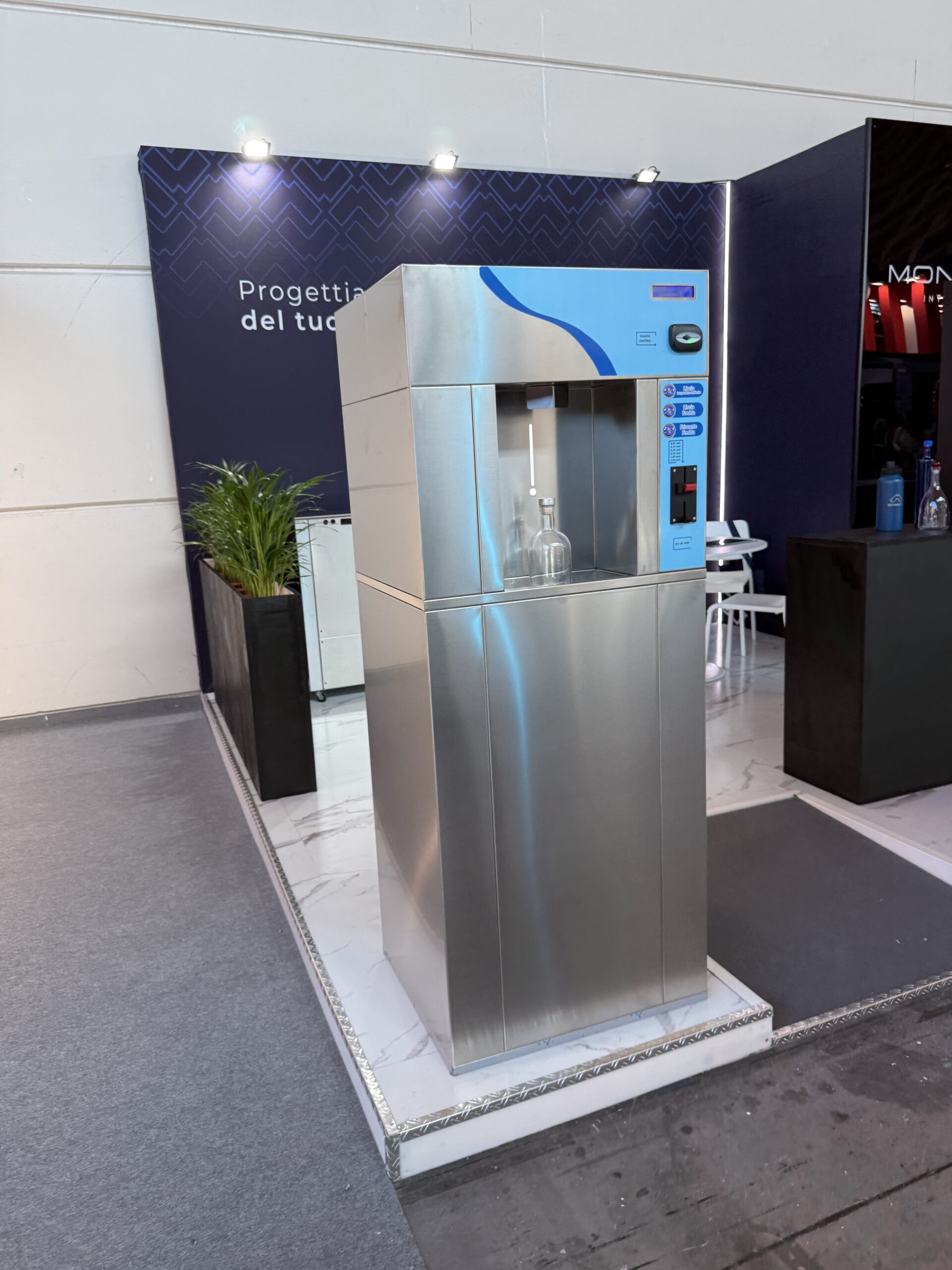
Do Not Sell Water. Sell the Three Things a Tap Cannot Do.
The mistake operators make is positioning against the fountain on availability. That argument cannot be won, because the fountain is also available and costs nothing.
What a tap genuinely cannot deliver is a short and specific list, and every piece of copy on the machine should come back to it:
- Sparkling. The strongest argument you have and the one operators consistently underplay. No fountain in the country does this, plenty of people want it, and it is worth paying for in a way that plain water is not. If your machine offers it, this should be the largest thing on the panel.
- Genuinely cold. Not the lukewarm output of a wall fountain. In a gym, on a campus in summer, or in a warm building, properly chilled water is a different product rather than the same product delivered differently.
- Filtered, and specifically so. Say what has been removed and how, in plain language. Taste, chlorine, sediment. Vague claims about purity persuade nobody and, as we will come to, can create obligations you did not intend.
- Clean at the point of dispense. A stainless bay you fill from directly is a better proposition than a fountain spout dozens of people have touched, and that is a legitimate point to make politely.
The positioning in one line: the fountain is your baseline, not your competitor. You are selling the upgrade, and an upgrade only sells when the difference is stated plainly rather than implied. A machine that just says water is competing directly with something free and will lose.
Price Communication Matters More Than Price
This format has an unusual problem. Because you sell by volume rather than by unit, customers have no reference point at all, and uncertainty in front of a machine reliably produces a walk away.
So the panel has to do work that other machines do not:
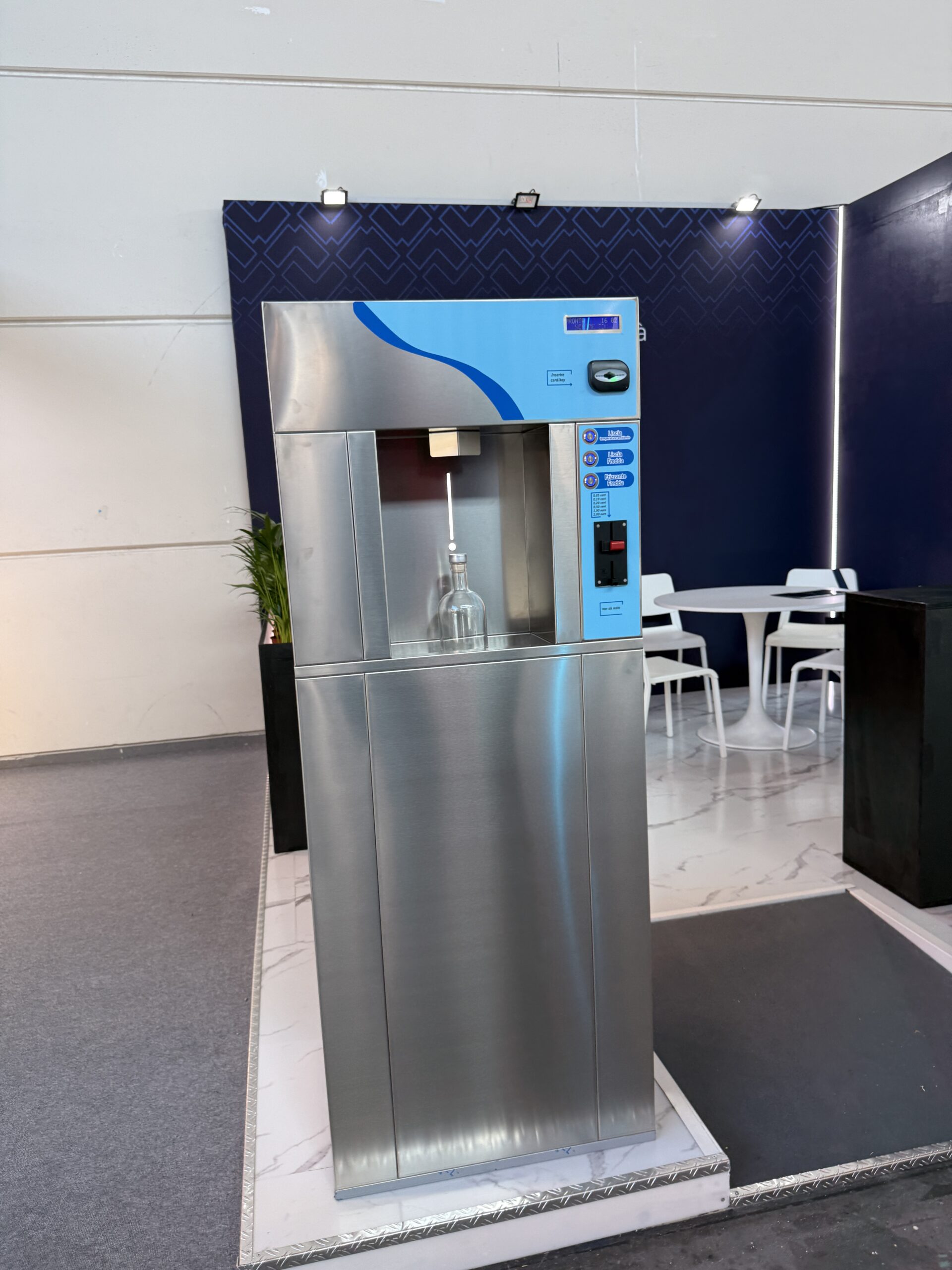
- Show what a normal bottle costs. Not only a price per litre, which nobody can convert mentally while standing there. Show the cost to fill a typical bottle, because that is the decision being made.
- Anchor against bottled water, not against the tap. Comparing your price to what the vending machine next door charges for a plastic bottle is a comparison you win comfortably. Comparing it to free is one you cannot.
- Make the sparkling premium explicit. If sparkling costs more, say so clearly. People accept paying more for it and resent discovering it afterwards.
- Show that cards work, prominently. Nobody carries coins, and an assumption that the machine needs them is a silent refusal you never see.
- Consider a prepaid or subscription option. A card key changes the psychology completely, because the payment decision happens once rather than every single fill, and repeat use is the whole model here.
That last point deserves emphasis in institutional settings. A campus or employer buying a term of refills for their people removes the per fill decision entirely and turns unpredictable footfall into predictable revenue.
Careful With the Word Pure
A warning that belongs in a marketing article rather than a legal one, because this decision gets made by whoever writes the wrap.
In several states, describing vended water as purified, pure, or anything implying it is not a marketing choice at all. It is a regulated claim with a specific numeric standard attached and a testing obligation at every service visit. Somebody picking pure because it sounds better than filtered can commit the business to conductivity testing for the life of the machine without anybody in the room realising.
The practical approach:
- Describe the process, not the outcome. Carbon filtered, chilled, sparkling. All accurate, all persuasive, none of them regulated claims.
- Avoid naming contaminants unless your filtration is certified for that specific removal. A filter certified for taste is not evidence for anything else.
- Have the wrap reviewed before printing. It costs nothing at draft stage and is expensive once installed across a route. Our partners at VAdviced check this for water operators.
- Remember the panel is labelling. Everything printed on the machine about the water is regulated content rather than copy, which is a different standard from any other format we work on.
This is exactly why we build machine graphics for water operators alongside a compliance check rather than after one.
Give the Bottle Away
Here is the most underused tactic in this category, and it addresses the actual constraint rather than the one operators worry about.
Your machine cannot serve somebody who is not carrying a bottle. That is not a pricing problem or an awareness problem, it is a physical one, and no amount of panel copy solves it. A person walking past with empty hands is not a customer you failed to convert, they are a customer who was never available.
Which makes branded reusable bottles the highest return marketing spend available here:
- Every bottle you distribute creates a customer who did not exist. Not a customer you persuaded, one you manufactured. That is a genuinely different return from ordinary promotional spend.
- Put the venue’s name on them, not only yours. A campus or gym will frequently co fund bottles carrying their own branding, which halves your cost and gets them actively promoting the machine.
- The bottle advertises continuously. Somebody carrying it around a building all day is doing more for awareness than anything you could print on the machine, and they are doing it in front of exactly the right audience.
- Include a free fill or two. The bottle plus a reason to try the machine immediately is far stronger than the bottle alone.
- Time it to the calendar. Orientation week on a campus, new member intake at a gym, or an onboarding pack at an employer. Habits form at the start of something.
The Counter Is Your Best Marketing Asset
Many refill machines can display a running total of single use bottles avoided. Operators treat this as a novelty. It is the most valuable marketing feature on the machine and it works on two audiences at once.
On customers, it converts an individual purchase into participation in something. Somebody filling a bottle is not merely buying water, they are adding to a number on a screen, and that reframing genuinely affects repeat behaviour.
On the venue, it is considerably more powerful. A university sustainability office, a hospital facilities director or a corporate environmental lead needs numbers they can report. A machine that generates its own metric is producing exactly the evidence they are short of.
- Send the venue the number monthly. Unprompted, in a short note. Almost no operator does this and it makes renewal conversations trivial.
- Give them something publishable. A figure they can put in a newsletter, on a screen, or in an annual report. You are supplying content to somebody who needs it.
- Mark milestones. Ten thousand bottles avoided is a reason for the venue to post about it, which is free promotion from an account your customers already follow.
- Use it in the next pitch. A real number from a comparable site is the most persuasive thing you can put in front of a prospective venue.
Pitching the Venue Is a Different Conversation Entirely
Here is where this format is genuinely easier than the rest of vending, and the advantage is worth taking seriously.
You are not pitching a vending machine. You are offering an environmental initiative that generates revenue rather than consuming budget, which is an unusual sentence to be able to say to a facilities director.
- Find the sustainability decision maker, not the vending contact. Sustainability officers, campus administration, facilities directors with environmental targets. Different person, different budget, different conversation.
- Lead with the problem they already have. Most organisations have plastic reduction commitments and few visible ways to demonstrate progress. You are handing them one.
- It solves a thing they have already discussed. Plenty of institutions have talked about reducing bottled water sales and stopped because there was nothing to offer people instead.
- Bring the testing documentation. Institutions ask about water quality early, and arriving with your regime already documented reads as competence rather than reassurance.
- Have the water cost answer ready. It comes off their meter and it is the first question. Not having a position on it undermines everything else.
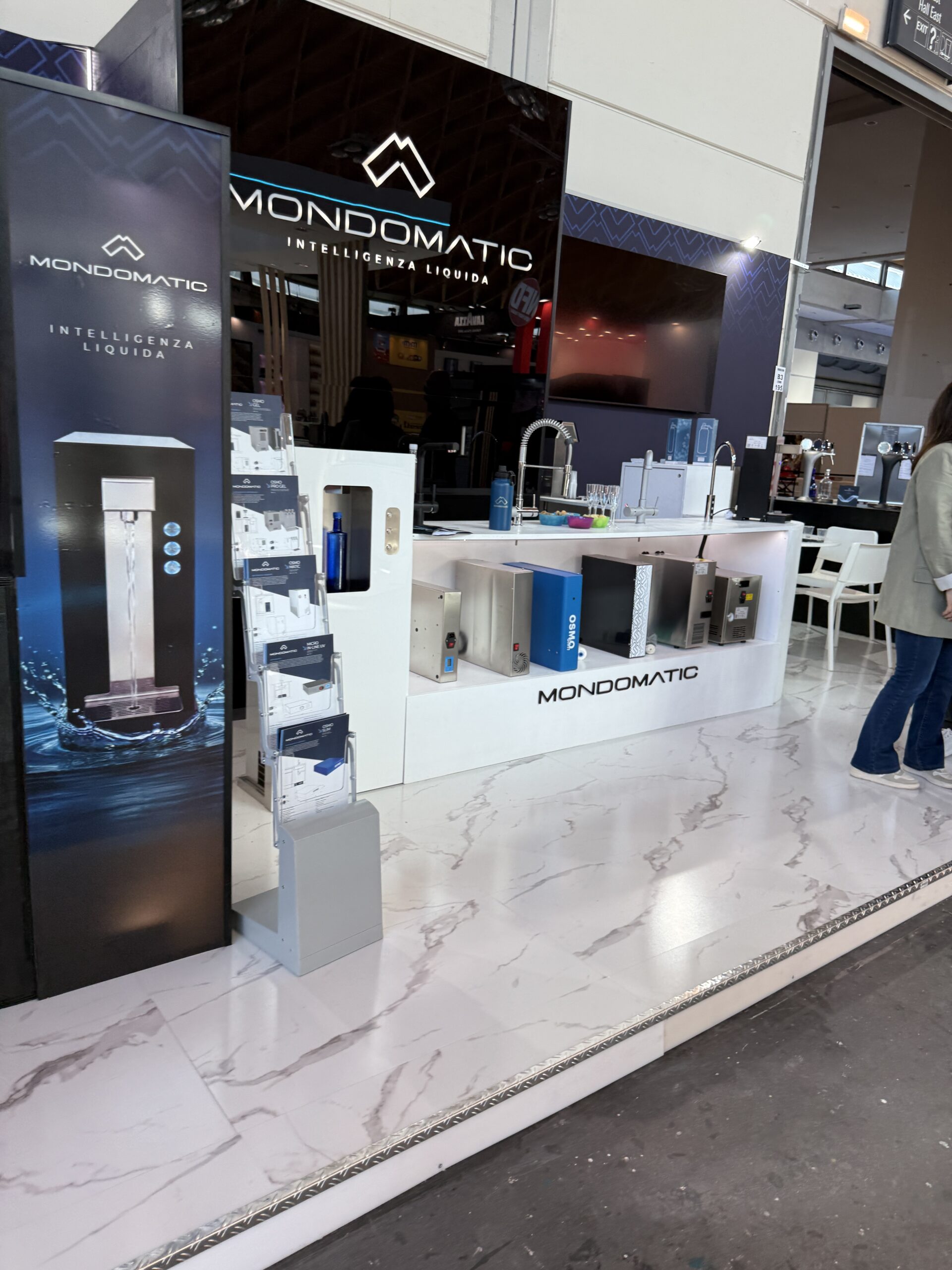
Put that into something forwardable, because the person you meet is rarely the only one deciding. A media kit with photography, the environmental case and your documentation does that job, and identifying the sites where it lands is what our partners at VPlaced handle.
Let the Machine Look Like What It Is
An unusual recommendation from a marketing team. On this format, restraint outperforms decoration, and it is the opposite of what we would advise on a capsule machine or a snack cabinet.
Stainless steel reads as clean, hygienic and serious. Those are precisely the associations a water product needs, and covering the machine in bright vinyl actively works against them.
- Keep the finish visible. Wrap the panels that carry information rather than burying the material the product credibility rests on.
- Clean, clinical typography. This is a hygiene product. It should look like one rather than like a soft drink.
- Keep the dispense bay spotless. More important here than any graphic. A grubby bay on a water machine destroys the entire proposition instantly, and no amount of design compensates.
- Show the treatment. A simple diagram of the filtration stages does more for credibility than any adjective.
- Do not hide that it is plumbed in. Connected to the mains and filtered on site is a stronger story than anything that implies bottled water, and it is also true.
Search, and the Audience Nobody Optimises For
Two audiences search here, and only one of them is obvious.
The obvious one is people with an empty bottle looking for somewhere to fill it, which is a real and growing search behaviour. A maintained business profile and a listing on VendingFinder both help those people find you.
The one nobody optimises for is institutional. Sustainability officers and facilities managers research this category before they procure, searching for refill station providers and water vending suppliers in their area. That is a low volume, extremely high value audience, and reaching it is what SEO and a credible website are genuinely for in this format. One campus contract justifies the whole effort.
Building the Habit
This format lives or dies on repeat use. A customer who fills three times a week is worth vastly more than a hundred who try it once, so the launch should be built around habit rather than awareness.
- Give the first fills away. The barrier is not price, it is trying something unfamiliar. Free launch fills get people past that, and the ones who like it come back.
- Get bottles into hands. Branded reusable bottles at launch, ideally with the venue’s name on them. A customer without a bottle is not a customer, and this solves that directly while advertising the machine.
- Ask the venue to announce it. A campus email or a gym noticeboard reaches exactly the right people at no cost, and the environmental framing makes venues happy to do it.
- Never let it be out of service. A machine that failed once loses a habitual user permanently, because they go back to the fountain and stay there.
- Keep the sparkling working. It is your differentiator and it is the component most likely to need attention. A refill machine with sparkling out of order is just an expensive fountain.
Ongoing visibility runs through social media management, and the environmental angle gives you something to post about that most vending operators simply do not have.
A Realistic First Ninety Days
| When | What |
|---|---|
| Before pitching | Media kit with the environmental case, testing documentation, water cost position |
| Before launch | Wrap reviewed for claims, price shown per bottle fill, sparkling made prominent |
| Launch week | Free fills, branded bottles distributed, venue announcement |
| Month one | Zero downtime, sparkling always working, learn the peak hours |
| Month two | First bottles avoided figure to the venue, test a prepaid option |
| Month three | Milestone post with the venue, then use the numbers to win the next site |
You can see how we package this on our services page or pick individual pieces from the shop. On the equipment side, whether a machine offers sparkling and whether it can display a bottles avoided counter both directly affect what you can market, so it is worth choosing deliberately from the VMFS USA shop or looking at the water refill machine directly.
Frequently Asked Questions
How do you market a water refill machine against a free tap?
By selling what the tap cannot deliver rather than by competing on availability. Sparkling is the strongest argument because no fountain offers it, followed by genuinely cold water and specific filtration. Treat the fountain as your baseline and sell the upgrade explicitly.
What should the price display show?
The cost to fill a typical bottle, not only a price per litre, because nobody converts that mentally while standing there. Anchor against what a plastic bottle costs from the machine next door rather than against free water, and make any sparkling premium explicit before somebody pays it.
Is the bottles avoided counter worth using?
It is the most valuable feature on the machine for marketing purposes. It turns a purchase into participation for customers, and it gives the venue a reportable number they are usually short of. Send that figure to the site monthly and renewal conversations become straightforward.
Should the machine be wrapped?
Less than you would think. Stainless steel reads as clean and hygienic, which is exactly what a water product needs, and covering it in bright vinyl undermines that. Wrap the panels carrying information, keep the finish visible, and keep the dispense bay spotless because that matters more than any graphic.
Selling Against Free
We build the panel copy, the environmental pitch and the launch plan for a format where the alternative costs nothing. Tell us where the machine is going and what it competes with.