
Marketing & Merchandising | Mystery Ball Vending | By the VMarketed Team | September 2026
Somebody walks toward a drinks machine because they are thirsty. Somebody uses a coffee machine because they want coffee. Somebody buys from a hot food machine because it is two in the morning and they have not eaten. In every case the wanting existed before the machine did, and marketing’s job is to be there when it shows up.
Capsule machines have none of that. Nobody leaves the house wanting a mystery capsule. There is no thirst, no hunger, no errand. Effectively every sale in this category is unplanned, and the desire that produces it is created in about two seconds, at the glass, by a child who was walking past thinking about something else entirely.
Which makes this the only format we work on with no pre-existing demand to capture. You cannot advertise your way to a want that does not exist yet. The machine has to manufacture it on the spot, every single time.
Where this comes from: marketing vending operations is our core business. Capsule machines invert almost everything that works elsewhere, because the marketing has to happen at the machine rather than before somebody gets there.
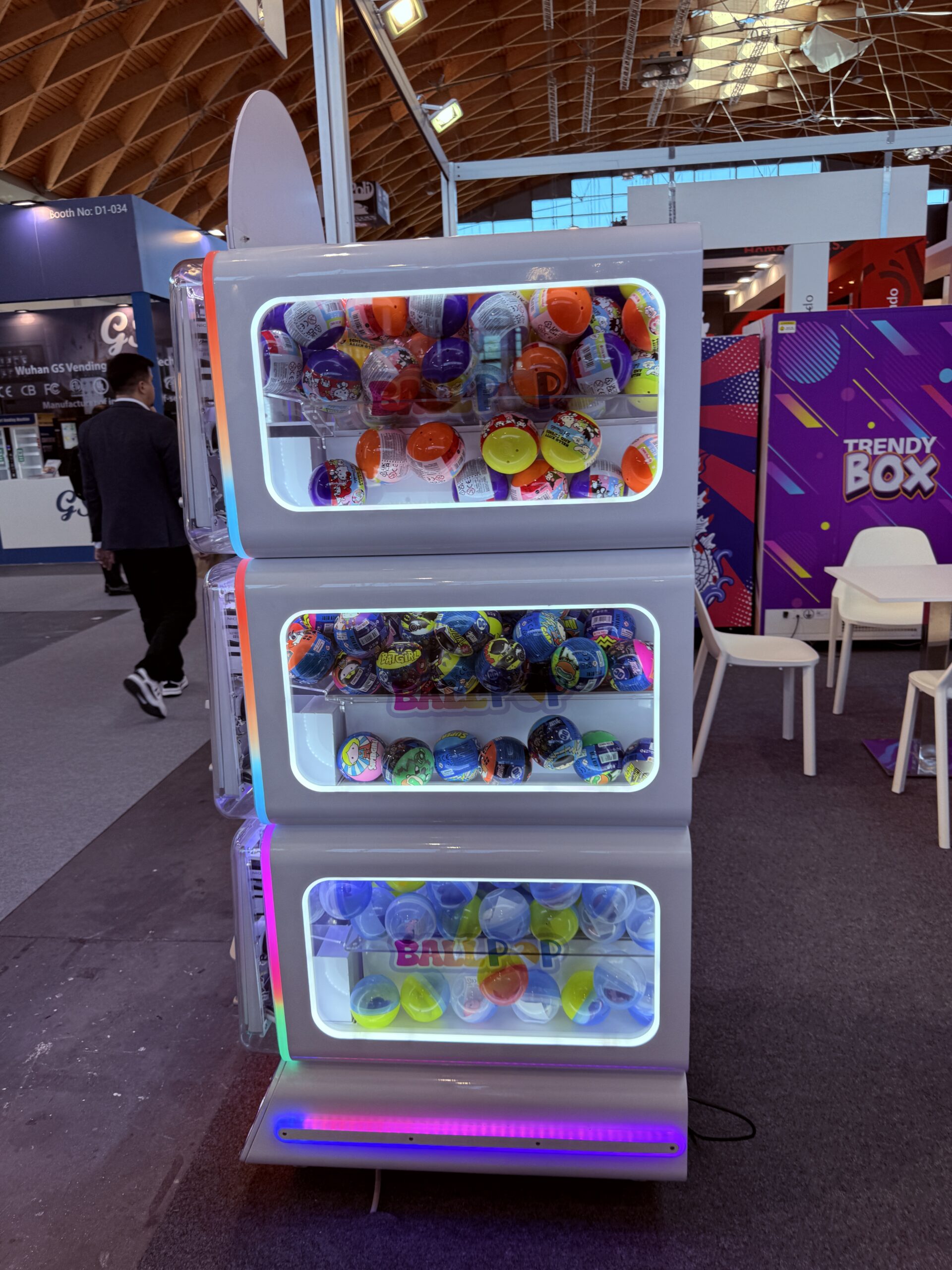
The Window Is the Whole Funnel
For most machines the wrap is one part of a wider effort. Here it is close to everything, because the entire journey from unaware to purchased happens in front of the glass in under thirty seconds.
So merchandise the window deliberately rather than pouring capsules in and hoping:
- Keep it full, visibly. A half empty window reads as picked over and neglected. Density signals abundance and choice, and it is the single easiest thing to get right on every service visit.
- Face the printed side out. Capsules with graphics have a front. A window of capsules turned the wrong way is a window of blank plastic, and this is the most common merchandising failure we see.
- Colour blocks beat confetti. Grouped colour reads as intentional from a distance and scattered colour reads as mess. Counterintuitive in a category that feels like it should be chaotic.
- Let the desirable item be visible. If your set has a standout, make sure somebody can actually see it in there. A goal you can see is a goal you can aim at.
- Clean the glass every visit. Small children put their hands and faces on it constantly. A smeared window is genuinely costing you sales rather than just looking untidy.
All of that is presentation work rather than advertising, which is why in this category we treat machine graphics and merchandising material as the primary spend rather than a finishing touch.
Light and Movement Are Doing Real Work
The colour changing trim on the units in these photographs is not styling. On this audience it is the mechanism that starts the transaction.
A static object in a busy room does not pull a child’s attention. A slowly cycling light does, from across a lobby, from a seat, from a queue. That is the entire top of your funnel, and it costs nothing to run.
- Never let the lighting fail. A dark machine in this category is not a slightly less attractive machine, it is an invisible one. Treat a failed light as an urgent fault rather than cosmetic.
- Slow cycles outperform fast ones. Gentle movement reads as inviting. Rapid flashing reads as an arcade machine and venues frequently object to it.
- Check it against the room. A machine that looks striking in a dim showroom can disappear under bright retail lighting, which is worth testing on site rather than assuming.
- Ask the venue before you arrive. Some family restaurants and clinics have strong views on flashing light, and agreeing it up front avoids being asked to disable the thing that drives your sales.
Market to the Parent, Not the Child
Here is a distinction that changes what you put on the machine. The child creates the demand. The parent authorises it. Those two people need completely different information, and almost every capsule machine we see speaks only to the first of them.
Think about the moment a parent says no. Frequently it is not a real refusal, it is uncertainty. They do not know what it costs, they do not know what is inside, they do not know whether it takes cash they are not carrying, and saying no is simply the faster answer.
Every one of those is removable, at adult eye level, in large type:
- Show the price plainly. A parent who can see it costs a couple of dollars decides differently from one who assumes it might be ten. Hiding the price does not protect the sale, it kills it.
- Show what is inside. Not the surprise element, the category. Toy, sticker, figure, whatever it is. Uncertainty about the contents is a real barrier for a parent.
- Show that cards work. Large and obvious. A significant share of refusals are simply people who assume the machine wants coins they do not have.
- Show the age guidance. Reassuring, and separately something you are likely obliged to display anyway, which our partners at VAdviced can confirm for your specific product.
- Keep the whole panel legible from a few feet back. The parent is usually standing further away than the child is.
The most valuable line on the machine: a clearly displayed price. Every operator instinctively wants to make the machine exciting, and the thing that actually converts is removing the parent’s reason to hesitate. Excitement gets you the request. Clarity gets you the sale.
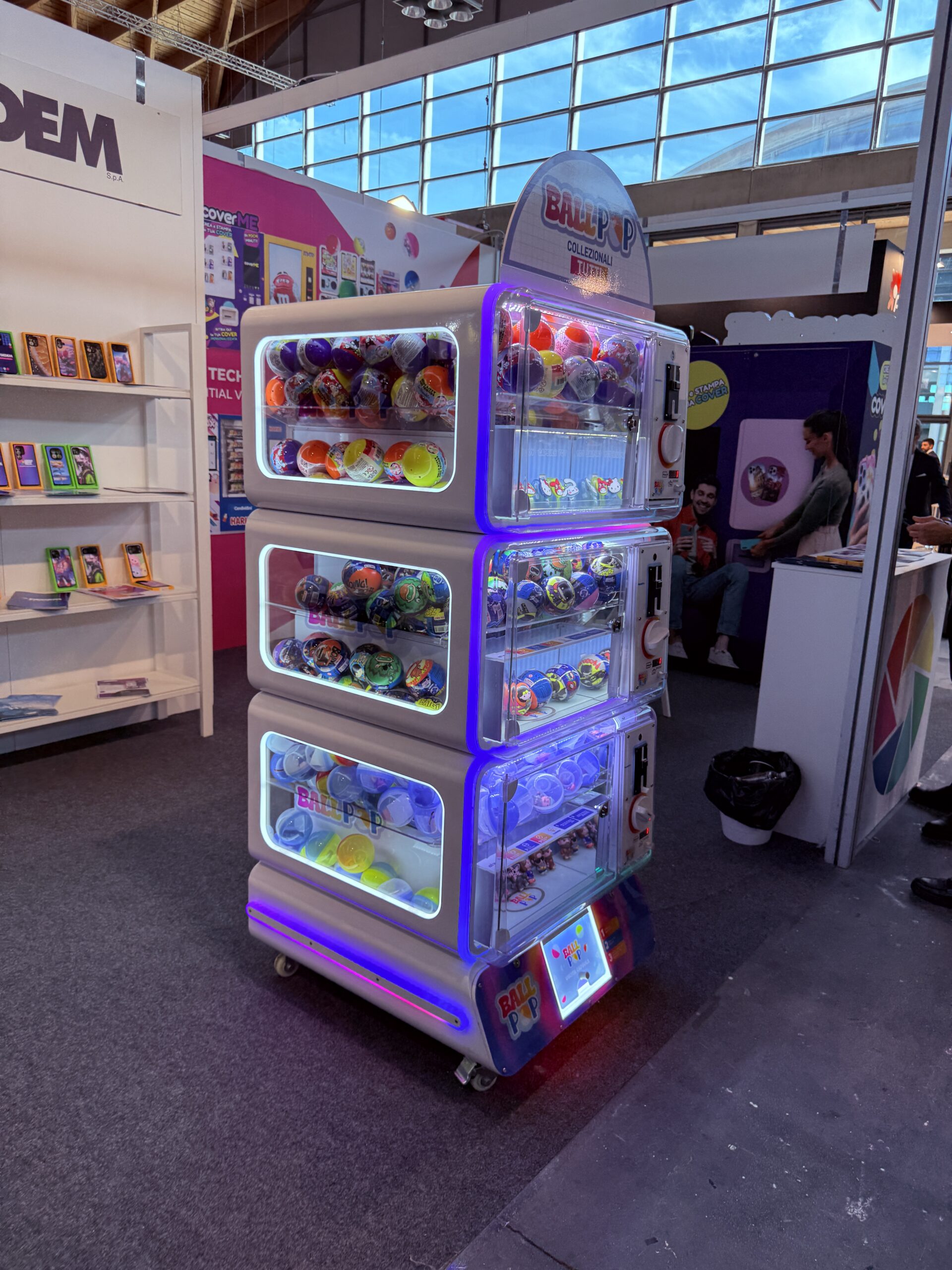
The Set Is the Only Thing That Creates Return Demand
Everything above wins the first purchase. This is what wins the fifth.
A machine full of unrelated novelties sells one capsule to each customer who passes. A machine holding a defined set of six or eight related items sells repeatedly to the same customers, because an incomplete collection is a reason to come back that the product itself supplies. You are not marketing at that point, the set is doing it for you.
Which makes the way you communicate the set a marketing decision rather than a packaging one:
- Show the whole set on the machine. All six or eight, pictured, so somebody can see what they are collecting and how far along they are. This single piece of artwork does more for repeat purchase than anything else you can add.
- Number them. A numbered set is a checklist, and checklists are extremely hard to leave incomplete.
- Announce the next series. Coming soon on a machine gives a returning customer a reason to keep checking, and gives you a natural moment to rotate.
- Date the change. Regulars who know a new series lands monthly build a habit around it, which is the closest this format gets to a subscription.
- Do not let a set outstay its welcome. Once your local regulars have completed it, the machine is finished at that site until you change it, regardless of how full it looks.
That last point is the quiet killer in this category. A capsule machine can look perfectly healthy, full and lit, while having nothing left to offer the people who pass it every week.
Price for the Second Capsule, Not the First
Most vending pricing is a single decision. What is one item worth. In this category that is the wrong question, because a meaningful share of your revenue comes from customers buying more than once in the same visit.
So the number that matters is not what somebody will pay for a capsule. It is the point at which a parent who has already said yes once will say yes again without thinking hard about it. Those are different numbers, and the second one is lower than most operators assume.
- Price so a second attempt feels trivial. A parent doing quick mental arithmetic before the second capsule is a parent who stops at one. Below a certain threshold the sum stops being a decision at all.
- Use tiers to widen the range, not to confuse it. A lower priced module gives a hesitant parent an easy yes, and a premium module captures the customer who was always going to spend more. Three tiers at similar prices achieves neither.
- Round numbers reduce friction. Awkward pricing makes people think about money, and thinking about money is what you are trying to avoid at the moment of the second purchase.
- Read the module data before changing anything. Per module reporting will tell you whether your premium tier is genuinely adding revenue or simply moving the same spend around, which is a question that cannot be answered by instinct.
- Do not undercut yourself out of the category. Pricing too low signals cheap contents and undermines the perceived value of the toy, which matters when the parent is deciding whether this is a treat or tat.
This is also where the physical layout pays off. A stacked unit lets a customer trade up or down within the same footprint, which is impossible with a single machine and is one of the strongest reasons to run modules rather than a standalone cabinet.
The Opening Is Content, and It Is Free
There is a genuine asset here that operators leave on the table. The moment somebody cracks open a capsule is inherently watchable, and unboxing is one of the most durable content formats there is.
You do not have to manufacture it, only make it easy:
- Put a handle on the machine. Every video filmed at your machine should carry a route back to you, and people will film them without being asked.
- Make the machine photograph well. Lit, clean, colourful and uncluttered. It is already the most photogenic format in vending and most operators do nothing with that.
- Reshare what people post. A parent tagging your machine is social proof you could not buy, and acknowledging it costs nothing. We run this side as social media management.
- Announce new series where collectors look. A small following that knows when you rotate is disproportionately valuable, because those people travel.
- Get the venue posting. A family restaurant or attraction will happily share something new for children, and their audience is precisely yours.
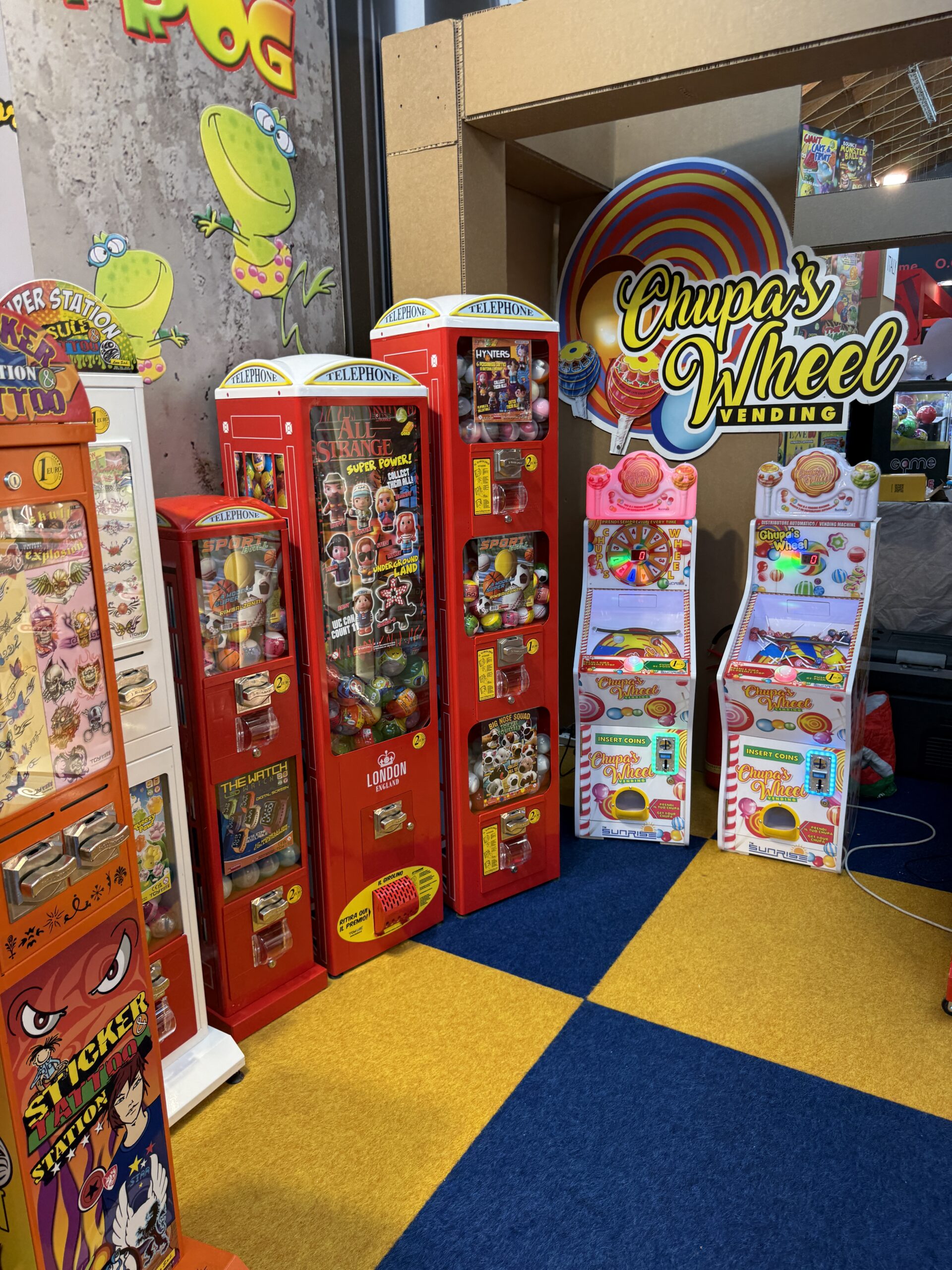
Search Works Here, Just Not the Way You Expect
Nobody searches for a capsule machine because they are bored in a waiting room. That customer is reached at the glass or not at all. But two other audiences do search, and both matter.
The first is venues. A restaurant owner or practice manager considering your proposal will look you up before replying, without exception. If what they find is thin, a good pitch dies quietly and you never learn why. A credible presence when somebody searches your company name is worth more than ranking for any consumer term, which is what SEO and a proper website are actually for in this category.
The second is collectors, and they are a genuinely underrated audience. People chasing a particular series will travel to a machine, and they search by series name rather than by machine. Listing machines and their current series on VendingFinder puts you in front of exactly those people, and a maintained business profile helps them find the venue once they know it exists.
Pitching the Venue
Capsule machines have an unusually easy pitch if you frame it correctly, because you are solving a problem the venue already has rather than asking for floor space.
- You keep children occupied. A restaurant with waiting families, a clinic with anxious young patients, a dealership with bored children in the lounge. All of them benefit directly, and none of them have a good solution today.
- It takes almost no space. The most common objection at small venues is room, and this format removes it before it is raised.
- It costs them nothing. No capital, no staffing, no stock risk, minimal power.
- It makes them look family friendly. Which for a restaurant, salon or dealership is a positioning benefit rather than a vending arrangement.
- You will answer the safety question first. Raise it before they do. Age grading, warnings and certification, ready to hand over. In family venues this frequently decides the placement on its own.
Put that into something forwardable, because the manager you meet is often not the only person deciding. A media kit with photography, the offer and your safety documentation does that job, and finding the venues themselves is what our partners at VPlaced handle.
Keeping It Alive After Month One
Because nothing expires here, nothing forces you to act. That is the format’s greatest operational advantage and its biggest marketing trap.
- Put rotation in the calendar before launch. A date you decided in advance, not a reaction to falling sales. By the time sales fall your regulars have already stopped looking at the machine.
- Move sets between sites. A series that is finished at one location is brand new at another, which refreshes both without buying anything. This is a genuine advantage of running a cluster.
- Tie series to the calendar. Seasonal themes, school holidays and family film releases all give you a reason to change and something to announce.
- Watch the data per module. Lane and module level reporting tells you which tier and which price point works at each site, which is impossible to guess and immediately actionable.
- Send the venue a short note occasionally. Most operators never do, and it makes renewal conversations almost automatic.
A Realistic First Ninety Days
| When | What |
|---|---|
| Before pitching | Media kit built, safety documentation ready, photography done |
| Before launch | Price and card symbols at adult height, set artwork on the machine, lighting agreed with venue |
| Launch week | Venue announcement, window merchandised properly, machine full |
| Month one | Keep it full and lit, clean the glass every visit, learn the peak days |
| Month two | Read module data, adjust the tier mix, plan the first rotation |
| Month three | Rotate the set, announce it, use the numbers to win the next site |
You can see how we package this on our services page or pick individual pieces from the shop. On the equipment side, window size, lighting and module configuration directly determine what merchandising is even possible, so it is worth starting with the right build from the VMFS USA shop or the compact options in their mini vending machines range.
Frequently Asked Questions
How do you market a mystery ball vending machine?
Almost entirely at the machine itself, because there is no pre-existing demand to capture. Nobody sets out wanting a capsule, so the window, the lighting and the on machine information have to create the want and close it in under thirty seconds. Merchandising is the marketing in this category.
What is the single highest impact change?
Displaying the price clearly at adult eye level. Operators instinctively focus on making the machine exciting, which wins the child’s request, but many parental refusals are uncertainty rather than genuine objection. Removing the reason to hesitate converts more than adding excitement does.
How do you get repeat customers?
Through the set rather than through advertising. Show the whole collection on the machine, number the items so it reads as a checklist, and rotate on a schedule you decided in advance. An incomplete collection is a reason to return that the product supplies for you.
Does social media actually help?
More than in most vending categories, because the opening moment is inherently watchable and people film it unprompted. Put a handle on the machine, keep it photogenic, reshare what customers post, and announce new series where collectors look, since collectors will travel for a specific set.
The Machine Has to Do the Selling
We build the graphics, the set artwork, the pitch materials and the launch plan for a format where marketing happens at the glass or not at all. Tell us where the machine is going.