
Marketing & Placements | Smoothie Vending | By the VMarketed Team | August 2026
Here is a problem unique to this category. You are asking somebody to pay smoothie bar prices for a drink that comes out of a machine, and every instinct they have says a machine means cheap, packaged and slightly disappointing.
That gap between what you are charging and what people expect from vending is the entire marketing challenge here. Close it and you have a premium product with genuinely attractive economics. Fail to close it and your machine gets walked past by people who would happily have paid the same money at a counter forty feet away.
Which means your job is not to advertise a vending machine. It is to stop people thinking of it as one.
Where this comes from: marketing vending operations is our core business. Smoothie machines behave differently from anything else we work on, because they compete against staffed counters rather than against other machines.
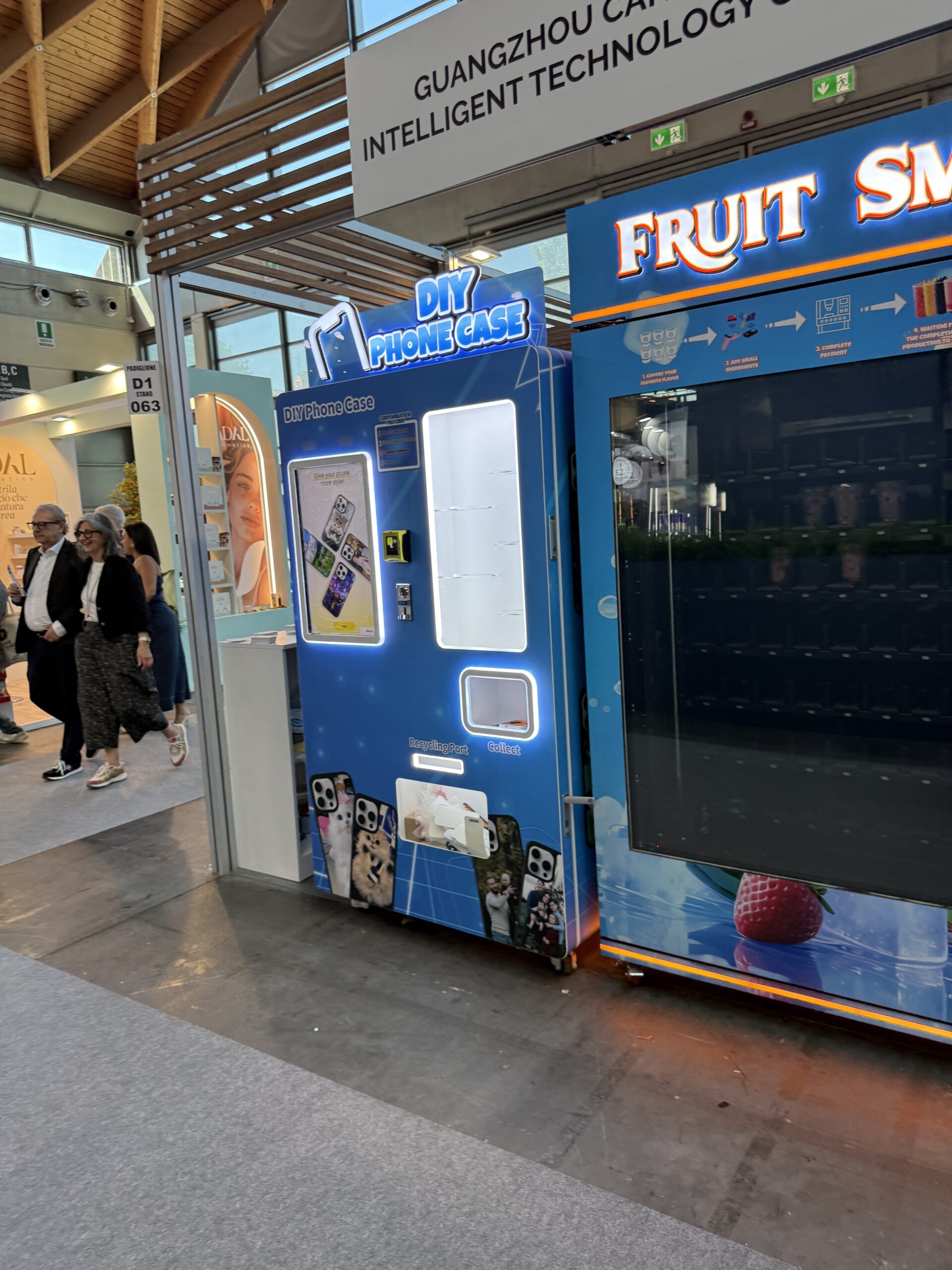
You Are Competing With a Smoothie Bar, Not a Soda Machine
Get this framing right and most other decisions follow from it. Your customer is not choosing between your smoothie and a bottle of water. They are choosing between your smoothie and the juice bar on the corner, or between your smoothie and going without.
Against a staffed counter you have three genuine advantages and you should lead with all of them:
- You are here. They are in the gym, and the juice bar is a fifteen minute round trip they will not make. Proximity at the exact moment of wanting is worth an enormous amount.
- You are open. Six in the morning, ten at night, Sunday. The counter is not. For anybody training outside conventional hours you are not the cheaper option, you are the only option.
- You are faster. Under a minute with no queue, no order, no waiting for somebody ahead of you to change their mind about the kale.
The message that does the most work: real fruit, blended fresh, right here, right now. Four ideas, and every one of them attacks the assumption that a machine means compromise. Get that onto the machine itself in large type and you have done more than any campaign will.
Prove It Is Real, Because Nobody Believes You Yet
The single biggest objection in this category is disbelief. People assume a machine smoothie means powder, syrup or concentrate, because that is what machines have always meant. Until you overcome that, your price looks absurd.
So make the proof impossible to miss:
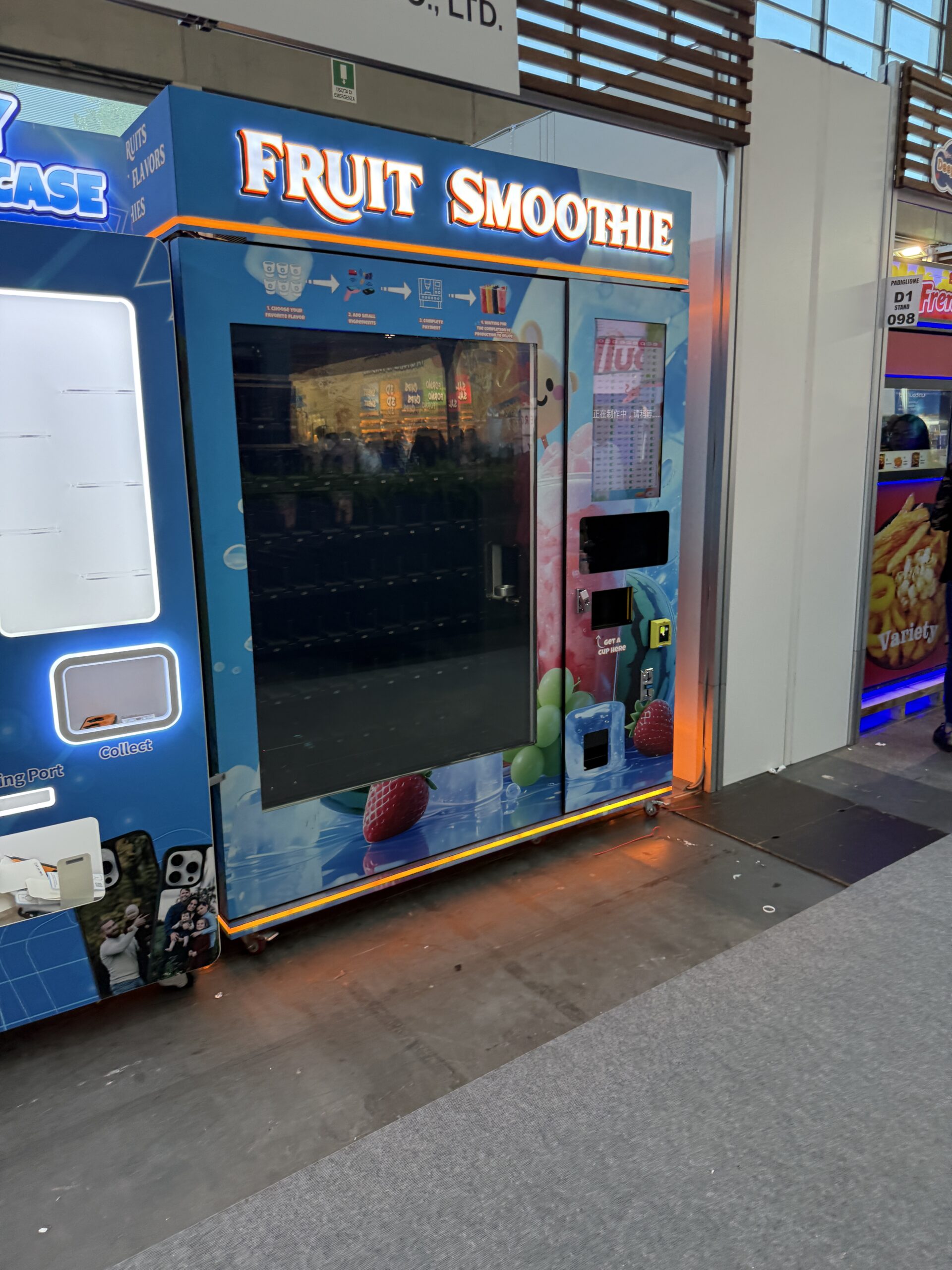
- Show the fruit, not the drink. Photography of whole strawberries, mango chunks and blueberries communicates real ingredients faster than any sentence. A glossy render of a finished smoothie looks like every packaged drink ever made.
- Say the words plainly. Real frozen fruit. No concentrate. Blended when you order it. Do not be clever with this, be direct, because you are correcting an assumption rather than building an image.
- Let people see it work. If the machine allows any view of the blend happening, do not cover it. Watching is proof, and proof is the thing you are short of.
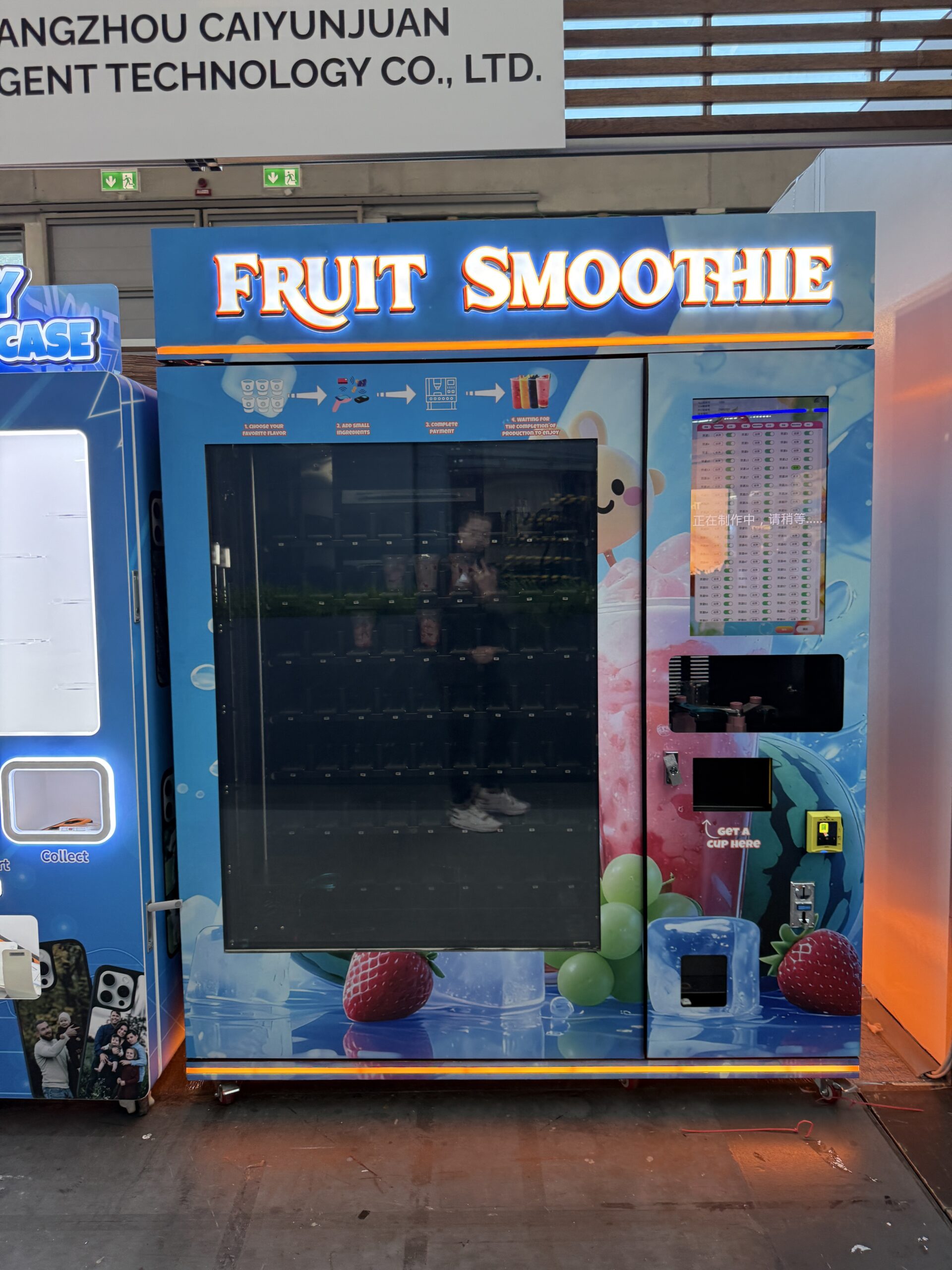
- Name the ingredients on screen. Short lists build trust in this category. A customer who can read exactly what is in the cup stops suspecting there is something else in it.
- Show the time. Under a minute. It signals fresh preparation rather than something waiting on a shelf.
All of this lives on the machine itself, which is why the wrap matters more here than in almost any category we work on. It is not decoration, it is the entire argument for your price, and it is what machine wraps and marketing material exists to get right.
One warning worth taking seriously. Health claims are regulated, and the language operators reach for instinctively is often the language that causes problems. Describing what is in the drink is safe. Promising what it does for the body is where trouble starts, so run screen and wrap copy past VAdviced before it goes live rather than after.
The First Free Smoothie Is Your Best Marketing Spend
We say this about a lot of machines but it is truest here, because the product genuinely is better than people expect and the only way to prove that is to put it in their hand.
Somebody who tastes it once stops arguing with the price. They now know it is real fruit, that it is thick rather than watery, and that it took under a minute. Every one of their objections has been answered by the drink itself, and you cannot achieve that with copy at any length.
So build launch week around tasting rather than announcing:
- Be on site for the first few days. Run free samples at peak hours, demonstrate the machine, and answer questions in person. This converts better than anything else available to you.
- Target the regulars specifically. In a gym, the people who come four times a week are worth twenty times a casual visitor. Get those individuals to try it first and the habit forms fast.
- Get the trainers on side. Personal trainers and instructors are the most influential people in a gym by a distance. A trainer who recommends the machine to clients does more for you in a week than a poster does in a year. Give them samples before launch, not after.
- Have the venue announce it. Gyms, campuses and offices will happily tell their members about a new amenity, and their audience is precisely yours. Ask for this as part of the placement agreement rather than hoping for it.
- Overstock the opening fortnight. Running empty during launch week is the most expensive mistake in the category, because you paid for the attention and then had nothing to sell.
The Thirty Day Habit Window
A smoothie machine does not live on impulse, it lives on routine. Somebody who buys one after every workout is worth a hundred people who tried it once, and the difference between those outcomes is decided in the first month.
The mechanics are simple and unforgiving. A member tries it, likes it, and if it is available and working the next three times they look, it becomes part of their session. If they hit an empty machine or a fault twice early on, they stop checking. They do not complain, they simply stop, and you will never know it happened.
Which means reliability in month one is a marketing activity, not an operations one. Stock levels, uptime and speed of fixing faults do more for your revenue in this window than any promotion you could run, and it is worth over servicing a new site deliberately for the first few weeks.
Winning the Placement Is Marketing Too
Before you market to members you have to market to whoever owns the building, and this category has an unusually strong pitch available if you frame it correctly.
You are not asking a gym for floor space. You are offering to improve their facility at no cost, no staffing and no risk to them. That is a completely different proposition, and the arguments that land are:
- It upgrades their offering. A gym with a smoothie machine looks better than one without, in tours, in photographs and in reviews. Members notice amenities.
- It is on brand rather than a compromise. Every operator before you asked to put snacks in their lobby. You are offering the opposite of that, and it is worth saying so directly.
- It costs them nothing. No capital, no stock risk, no staff hours, and a revenue share on top.
- It answers a complaint they already have. Many gyms have had members ask for post workout options and have never found a workable way to provide it without staffing a counter.
- You handle everything. Cleaning, stocking, compliance, faults. Their involvement is a power outlet and a signature.
Put that into something forwardable, because the manager you meet is rarely the person who signs. A proper media kit with photography, the offer and your compliance answers does that job, and sourcing the venues themselves is what our partners at VPlaced handle.
The Offer That Closes Corporate Sites
Worth knowing before you walk into an office or a large employer, because it is a revenue model that barely exists elsewhere in vending.
Companies running employee wellness programmes have budget allocated to exactly this kind of thing, and they are frequently short of tangible ways to spend it. Offer to let the employer subsidise part of the price so staff pay a reduced amount, and suddenly you are not a vending supplier asking for lobby space, you are a wellness benefit with a line in their budget.
The same logic works at universities with student wellbeing budgets and at hospitals with staff retention initiatives. It changes who you are talking to, it changes the size of the conversation, and it makes your volume far more predictable than consumer demand alone.
Build the Menu Like a Counter Would
How you structure and present the range does real work on both conversion and average spend, and most operators treat it as an afterthought decided by whatever the supplier had available.
- Fewer options, better described. Six well presented blends outperform fourteen badly presented ones. Long lists on a screen create hesitation, and hesitation in a queue behind somebody costs you the sale entirely.
- Name them by what is in them. Mango and passionfruit beats Tropical Sunrise. People buying a premium fresh product want to know what they are getting, and invented names read as marketing rather than ingredients.
- Cover the obvious jobs. Something green for the health focused, something berry for the crowd pleaser, something with protein for the gym crowd, something a child will drink. Each one is a different customer you would otherwise lose.
- Give one option a reason to cost more. A premium blend with an added ingredient lifts your average transaction and, just as usefully, makes the standard price look reasonable by comparison.
- Put a bestseller badge on something. First time buyers facing an unfamiliar product will take a recommendation gratefully, and it removes the decision that was about to make them walk away.
On pricing itself, resist the instinct to undercut the local juice bar heavily. Pricing well below a counter quietly confirms the suspicion that your product is a lesser version of the same thing. Sitting close to counter pricing, with proximity and opening hours as your advantage, positions you as an equivalent rather than a substitute, which is exactly where you want to be.
Getting Found by Members and by Venues
Search works in two directions in this category and both matter.
The first audience is venues. A gym owner or facilities manager who receives your email will look you up before replying, without exception. If what they find is thin, your pitch dies quietly and you never learn why. A credible presence when somebody searches your company name is worth more than ranking for any consumer term, which is what SEO and a proper website are for here.
The second audience is consumers, and this behaves differently from most vending. People genuinely search for fresh options near them, and a gym listing that mentions a smoothie machine can appear in that search. A maintained Google Business Profile helps, and encouraging the venue to mention the machine in their own listing helps even more, since their listing has far more authority than yours.
Keep It Earning After Month One
Launch sells itself. Month six is the real test, and this is where operators quietly lose sites they worked hard to win.
- Rotate the menu seasonally. A machine offering the same four blends all year gives regulars no reason to look again. New flavours are the cheapest reactivation available.
- Watch what actually sells by hour. Morning buyers and evening buyers frequently want different things, and the data is sitting in the machine waiting to be read.
- Keep the trainers supplied. Ongoing goodwill with the most influential people in the building costs very little and pays continuously.
- Report to the venue monthly. A short note with sales and member engagement makes renewal conversations almost automatic. Most operators never do this, which is exactly why it works.
- Run promotions tied to their calendar. New year intakes, campus welcome weeks, corporate wellness months. Align with what the venue is already promoting and you get their reach for free. Ongoing social is handled through social media management.
- Fix faults fast and visibly. A machine out of order for a week in a gym destroys a habit you spent a month building.
A Realistic First Ninety Days
| When | What |
|---|---|
| Before pitching | Media kit built, compliance answers documented, subsidy offer prepared |
| Before launch | Wrap and screen content finished, claims checked, venue announcement agreed |
| Launch week | On site with free samples at peak hours, trainers targeted, overstocked |
| Month one | Never run empty, fix faults same day, learn the peak hours |
| Month two | Adjust the menu on real data, first seasonal flavour, first venue report |
| Month three | Use the numbers from site one to win site two |
You can see how we package this on our services page or pick individual pieces from the shop. On the hardware side, screen size and photography quality directly affect conversion on a premium product, so it is worth starting with the right vending machines rather than discovering the limitation after installation. Venue owners can go direct to VPlaced.
Frequently Asked Questions
How do you market a smoothie vending machine?
Position it against a smoothie bar rather than against other vending, and lead with the three advantages you have over a counter: you are here, you are open and you are faster. Then prove the product is real, because the biggest obstacle is people assuming a machine means powder or concentrate.
How do you justify the price?
By changing the comparison. Nobody thinks a smoothie should cost the same as a bottle of water, so the price only looks high while people are mentally filing your machine alongside a soda cabinet. Show real fruit, say no concentrate plainly, and let them taste it once. After that the price stops being the conversation.
What is the best launch tactic?
Free samples on site during peak hours, aimed deliberately at regulars and at trainers. The product is better than people expect and tasting it answers every objection at once. Getting instructors on side is worth more than any poster, because members act on what their trainer recommends.
How do you pitch a gym owner?
Not as vending. Frame it as a facility upgrade at no cost, no staffing and no stock risk, that happens to be on brand rather than a compromise. Many gyms have had members ask for post workout options and never found a way to provide it without staffing a counter, so you are answering a question they already have.
Why does month one matter so much?
Because this product runs on habit rather than impulse. Someone who buys after every workout is worth far more than a hundred one time triers, and that habit forms or fails in the first few weeks. Two empty machines early on and people stop checking without ever telling you, which makes reliability a marketing activity rather than an operational one.
Make It Look Like a Counter, Not a Cabinet
We build the wrap, the screen content, the pitch materials and the launch plan that turn a smoothie machine into part of somebody’s routine. Tell us where it is going.