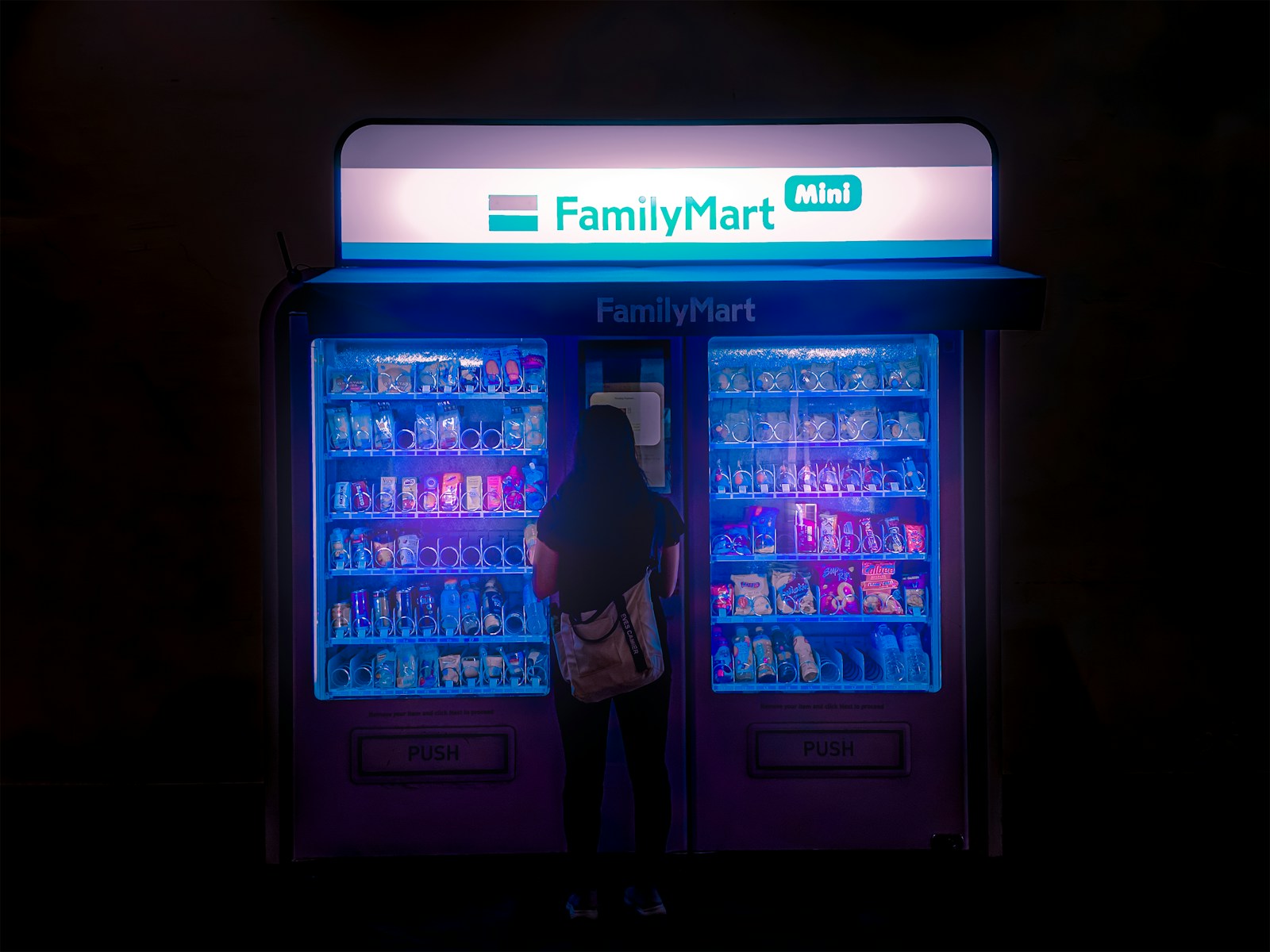

Running a food vending machine business is genuinely different from operating a snack or beverage route. You are not selling chips and soda. You are solving a real, immediate problem for people who need a hot meal, a fresh food option, or a quick lunch and have nowhere obvious to get one.
That is a powerful value proposition. The problem is that most food vending operators never figure out how to communicate it clearly to the location managers and decision-makers who control the best placements.
This guide gives you a practical food vending machine marketing strategy that matches the actual business: the locations that perform, the channels that move the needle, and the tools that make the whole thing easier. As vending business marketing specialists with three years of direct experience working with operators across the US, we built this specifically for the food vending model, not generic small business advice repackaged with vending photos on top.
In This Guide:
- The Real Problem With Food Vending Machine Marketing
- Best Locations for a Food Vending Machine Business
- 6 Marketing Strategies That Actually Work
- What Operators Are Saying on Reddit (and What You Can Learn)
- How VMarketed Helps Food Vending Operators Grow
- Legal and Placement Essentials You Cannot Skip
- The Right Food Vending Machines Make Marketing Easier
- Frequently Asked Questions
1. The Real Problem With Food Vending Machine Marketing
Here is the honest diagnosis of why most food vending operators struggle with marketing:
Problem 1: They market the machine instead of the solution.
A facility manager does not care that you have a food elevator vending machine. They care that their third-shift warehouse workers currently have zero food access between midnight and 6am. Lead with the problem you solve, not the equipment you sell.
Problem 2: They target the wrong audience.
End users do not choose where the machine goes. Location managers do. Most operators spend their effort on consumer-facing content and almost nothing on the B2B relationship that actually controls their revenue.
Problem 3: They treat food vending like snack vending.
A hot food vending machine in a corporate break room is a completely different pitch from a candy machine by the elevator. The location type, the product story, the pricing conversation, and the decision-maker all change. Operators who use the same generic pitch for both lose on both.
Problem 4: They have no system.
One round of outreach, silence, and then nothing. Successful food vending marketing is a repeatable system: target list, pitch, follow-up, close, reference. Without a system, growth is random.
Every section below is a solution to one or more of these problems.
From the Field: Ryan Carter, VMarketed
“The food vending operators who grow fastest are not doing anything exotic. They are solving problems their competitors are ignoring: night-shift access, hospital break rooms, university buildings between dining hours. Once you frame your machine as the answer to a specific problem at a specific location type, the pitch almost writes itself. The challenge is having a repeatable system for getting in front of enough decision-makers to find the ones who are ready to say yes.”
2. Best Locations for a Food Vending Machine Business
Location selection is not just an operational decision. It is your most important marketing decision, because the right location is the difference between a machine that sells out twice a week and one you are visiting to clear expired product.
The highest-performing locations for a food vending machine business share a common trait: people need a meal and their options are limited.
- Corporate offices without an on-site cafeteria: Mid-size companies with 50 to 300 employees often have no food service at all. A hot food vending machine becomes the only lunch option in the building. That kind of captive demand is gold for a food vending operator.
- Hospitals and medical centers: Round-the-clock staff, shift workers who cannot leave the floor, and a cafeteria that closes at 8pm. A hot food vending machine in a hospital break room runs all night and serves a need that nothing else in the building fills after hours.
- Factories, warehouses, and manufacturing plants: Long shifts, physical labor, and often no nearby food options. Workers need real meals, not snacks. A food elevator vending machine handling hot meals or fresh-packaged food in a warehouse break room is one of the highest-volume placements available in the food vending category.
- Universities and college campuses: Students eat at all hours, dining halls close, and vending is a normal part of campus life. A ramen vending machine on a university campus is not just a vending machine. It is a cultural moment that generates photos, social shares, and word-of-mouth organic marketing every single week.
- Apartment complexes and student housing: Residents who do not want to leave the building late at night are a reliable repeat customer base. Amenity rooms and lobbies with a food vending machine become a genuine perk that property managers can advertise to prospective tenants.
- Transit hubs, airports, and transportation facilities: Travelers need food fast. A hot food vending machine at a transit facility solves a real, urgent problem that customers will pay a premium for.
- Gyms and fitness centers: Pairing a hot foods vending machine with high-protein meal options in a gym creates a product-location fit that most snack vending cannot match. Gym owners appreciate the added member value and you get a motivated, repeat buyer.
Operator Insight: Ryan Carter, VMarketed
“Hospital placements are consistently some of the strongest performers we see for food vending operators, but they are also the most paperwork-intensive. Health department permits, food handler certification, and a solid placement contract are non-negotiable before that machine goes in. The operators who do the compliance work upfront close those placements faster and keep them longer because the building’s facility team knows they are dealing with someone serious.”
Finding these locations and getting in the door is one of the most time-consuming parts of the business. Vplaced.com helps food vending operators identify the right location types in their market and get to the right decision-makers faster, so less time is spent cold calling the wrong buildings.
3. Six Marketing Strategies That Actually Work for Food Vending Operators
Strategy 1: Lead With the Problem, Not the Product
Your pitch to a facility manager should start with their pain, not your machine. “Your third-shift staff currently has no hot food access after 9pm” is a hook. “We have a hot food vending machine available” is noise. Map the problem to the location before you ever mention equipment, and your pitch conversion rate will improve immediately.
Strategy 2: Build a Google Business Profile That Works for You
A fully optimized Google Business Profile for your food vending operation is free local SEO that runs without you. Use keywords like “food vending machine,” “hot food vending service,” and “automated meal vending” in your description. Upload real machine photos from real locations. Post monthly updates about new placements or product offerings. Request reviews from location managers who are happy with your service. Most food vending operators have no GBP at all, which means even a basic one puts you ahead in local search.
Strategy 3: Social Media Content That Shows the Food, Not Just the Machine
Food content performs naturally on social media. A video of a hot meal dispensing from a ramen vending machine at 1am in a hospital break room is inherently shareable. Content ideas that work:
- “What comes out of our ramen vending machine at midnight” (curiosity + food appeal)
- “Restocking our hot foods vending machine in a hospital break room” (behind-the-scenes, builds authority)
- “We just placed our first food vending machine in a factory with 200 night-shift workers” (story-driven)
- “The most popular meal in our food elevator vending machine this week” (engagement + data storytelling)
Instagram Reels and TikTok are your strongest organic channels. LinkedIn is your B2B channel for reaching facility managers and property decision-makers directly.
Strategy 4: Direct B2B Outreach With a Location-Specific Pitch
Generic vending pitches go nowhere. A pitch that references the specific building, identifies the specific gap in food access, and presents your machine as the exact solution to that gap gets meetings. Keep it short: one paragraph about their situation, one paragraph about what your machine provides, one clear next step. Follow up twice. Most operators give up after one email and leave deals on the table.
Strategy 5: Let Your Machine Market Itself at the Location
Your machine is a physical billboard inside a building full of your target demographic. Make sure it is working for you beyond just dispensing food:
- Clear, branded signage on and around the machine
- A QR code linking to your website, social media, or a “request a machine for your building” page
- A short display message rotating on the screen promoting your other locations or upcoming product additions
- A feedback QR code so you stay connected to what buyers actually want
Strategy 6: Video Content That Shows What Your Machines Actually Do
A 60-second video of a real person ordering a hot meal from your machine, paying contactlessly, and walking away with a fresh hot dish explains your product better than any text ever will. Post your machine demo videos on YouTube, embed them on your website, and include a link in every pitch email you send. A location manager who can watch your machine in action before the meeting arrives more prepared and more convinced.
4. What Operators Are Saying on Reddit (and What You Can Learn)
The food and vending operator communities on Reddit are refreshingly honest. Real operators sharing what is working, what flopped, and what they wish someone had told them earlier. Here is the distilled version of the most useful recurring insights:
On Location Selection
- “Always ask what they have now before you pitch.” Walking into a pitch knowing the building currently has nothing, or has a broken machine nobody is happy with, changes the entire conversation. Do your homework before the first contact.
- “Night shift is underserved everywhere.” Operators consistently report that locations with extended hours, hospitals, factories, security firms, are among their best performers precisely because food access after 9pm is almost nonexistent in most buildings.
- “Universities will negotiate. Factories usually will not.” Campus placements often involve longer approval chains but higher long-term volume. Corporate and manufacturing placements tend to be more straightforward.
On Marketing and Pitching
- “Email is fine. Walking in is better. Calling and following up is best.” Multi-touch outreach consistently outperforms any single channel. Most deals that close required three or more contacts before the location manager said yes.
- “Show them real numbers from a comparable location.” If you can say “our food vending machine in a similar-size office does X in monthly revenue, costs them nothing, and gets restocked twice a week,” you are no longer selling. You are presenting evidence.
- “Get the contract right before anything else.” Multiple operators mention losing a machine or a placement because the original agreement was vague on who handles maintenance, what the removal terms are, or whether exclusivity applies. Getting proper contracts through vending legal and contract support before you pitch saves serious headaches later.
On Product and Pricing
- “Price for the location, not your cost.” A hot ramen meal in a hospital at 2am commands a completely different price than the same product in a gym at noon. Operators who price everything the same leave real margin on the table.
- “Rotate product more than you think you need to.” Especially for food vending, novelty and freshness matter more than in snack vending. Operators report that machines that feel stale in their selection see steep volume drops within weeks.
Where to Find These Conversations
The r/vendingmachines subreddit is the most active operator community for practical, unfiltered vending business discussion. For broader small business marketing and growth tactics that apply directly to food vending operators, r/Entrepreneur regularly surfaces useful threads on B2B outreach, local marketing, and scaling service businesses.
5. How VMarketed Helps Food Vending Operators Grow
Most marketing agencies do not understand the vending machine business. They will sell you a generic social media package, run some ads to the wrong audience, and hand you a report full of impressions that did not turn into a single placement.
At VMarketed, we work specifically with vending operators. We understand that your customer is a facility manager, not a consumer. We know that your marketing needs to generate placement leads, not just website traffic. And we build strategies around the actual food vending business model, including the location pitch process, the product differentiation story, and the SEO that puts you in front of the right searches in your market.
What we help food vending operators with:
- Placement-focused B2B outreach systems: Target lists, pitch email sequences, follow-up cadences, and LinkedIn outreach strategies built specifically for reaching property managers and facility directors.
- Local SEO and Google Business Profile optimization: So that when someone in your city searches “food vending machine for office” or “hot food vending service,” you show up.
- Content and social media strategy: Operator-relevant content that builds your brand authority and generates inquiries from location managers who are already researching vending options.
- Video and visual marketing support: Helping you turn your machine in action into marketing assets that close deals faster than any pitch deck.
If you are ready to stop guessing and build a real marketing system around your food vending machine business, reach out to the team at VMarketed and we will walk you through what that looks like for your specific operation and market.
6. Legal and Placement Essentials You Cannot Skip
On the Legal Side
Food vending carries a higher compliance burden than snack or beverage vending. Before your first food vending machine goes into any location, make sure you have:
- A business license for your operating state and city
- A food handler or food service permit where required (most states require this for hot or fresh food vending)
- Health department registration in jurisdictions that apply it to vending operations
- General liability insurance that covers on-site equipment and food service incidents
- A signed placement agreement for every location covering maintenance responsibilities, removal terms, and revenue arrangements clearly
VAdviced.com handles the full legal and compliance side for vending operators specifically, from food service permits and health department registration to placement contract templates and state-level compliance requirements. Getting this right early is far less expensive than correcting it after a problem surfaces.
On the Placement Side
The best food vending locations are not found by driving around and hoping. The operators who fill routes fastest use a systematic approach to identifying high-potential location types, finding the right contact at each one, and managing outreach through a consistent follow-up process. Vplaced.com gives food vending operators access to placement tools and location research built specifically for the vending industry, so you are not spending hours manually researching buildings that are never going to convert.
7. The Right Food Vending Machines Make Marketing Easier
Your machine is your product. A food vending machine that looks modern, handles a variety of hot and fresh offerings, and operates reliably is a machine that sells itself to location managers. Here is the food vending machine lineup worth building a serious operation around:
- Food Elevator Vending Machine: Built to handle delicate food items like boxed meals, fresh sandwiches, and packaged dishes without damage. The elevator dispensing mechanism makes this the go-to choice for operators running fresh or prepared food in high-volume locations.
- Hot Food Vending Machine: Serves genuinely hot meals on demand, which is the biggest product differentiation available in the vending category. This is what closes placements in hospitals, factories, and office buildings where the pitch is “your staff can get a hot meal at 3am without leaving the building.”
- Hot Foods Vending Machine (Multi-Item): A higher-capacity hot food unit built for locations with more variety demand. Works well in locations with diverse buyer demographics like universities, large corporate offices, or transit facilities.
- Ramen Noodle Vending Machine: One of the most visually distinctive and socially shareable machines in the food vending category. A ramen vending machine on a university campus or in a late-night office building does not just sell ramen. It creates a moment that gets photographed, posted, and talked about. That organic attention is free marketing that no snack machine can generate.
Browse the full food vending machine collection at VMFSUSA.com to see specifications, capacity details, and the full range of automated food retail equipment available. For general vending machine research across all categories, VMFSUSA.com is the resource to bookmark.
Frequently Asked Questions About Food Vending Machine Marketing
How do I market a food vending machine business?
Lead with the problem your machine solves for the specific location you are pitching, not the machine itself. Build a Google Business Profile optimized for local food vending searches, use social media content that shows real food dispensing from your real machines, and develop a B2B outreach system targeting facility managers at offices, hospitals, universities, and industrial sites. The team at VMarketed builds operator-specific food vending marketing strategies for operators who want a system, not a guess.
What are the best locations for a food vending machine?
Any location where people need a meal and have limited access to one: corporate offices without cafeterias, hospitals with 24/7 staff, factories and warehouses with long shifts, universities between meal service hours, transit hubs, and apartment complexes. Vplaced.com helps operators identify and secure the highest-potential locations in their specific market.
Is a food vending machine business profitable?
Yes, significantly more so than snack vending in the right locations. Hot food vending machines, ramen vending machines, and food elevator units command higher price points, serve a genuine meal-replacement need, and face almost no direct competition in most placements. Profitability scales with location quality, and the food vending machine options at VMFSUSA are built to hold up in high-volume, revenue-generating environments.
Do I need permits to run a food vending machine?
Yes. Food vending is subject to health department regulations, food handler permits, and temperature compliance standards that standard snack vending is not. Requirements vary by state and city. VAdviced.com covers the full compliance and legal side for food vending operators, from permits and licenses to contract templates and state-specific requirements.
What type of food vending machine performs best?
It depends on your target location. A hot food vending machine is the strongest performer in hospitals and late-night industrial settings. A food elevator machine handles fresh and packaged meal placements best. A ramen vending machine excels on university campuses and in late-night locations where the novelty factor drives organic marketing. Match the machine to the location and you get the best of both.
Start Marketing Your Food Vending Machine Business the Right Way
The food vending machine business has a clear marketing formula: solve a real meal-access problem, put it in front of the right location decision-maker, back it up with the right equipment, and build a repeatable system around it.
Operators who treat food vending like snack vending and use the same generic pitch for every building will keep grinding without traction. Operators who lead with the problem, match their machine to the location type, and show up professionally with legal paperwork and a clear contract get placements faster and keep them longer.
Get the right machines from VMFSUSA.com. Secure your permits, food service licenses, and placement contracts through VAdviced.com. Find and lock in your best locations with Vplaced.com. And when you are ready to build a marketing system that generates placement inquiries on autopilot, the food vending marketing experts at VMarketed are here to build it with you.
The locations are out there. The demand is real. Now go get them.

Ryan Carter
Digital Marketing Strategist • VMarketed
Ryan Carter is a digital marketing strategist at VMarketed with three years of hands-on experience building marketing and lead generation systems for vending machine operators and automated retail businesses across the United States. He specializes in local SEO, B2B outreach strategy, and content marketing built specifically around the vending operator business model, including hot food vending machines, food elevator vending, and ramen vending operations. Ryan has worked directly with food vending operators running routes from single-machine startups to multi-location food vending businesses in corporate, healthcare, hospitality, and university settings.